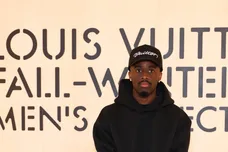


As he strolled through Paris Fashion Week with a leather-bound journal, all eyes were on Kai Cenat. He held up the book with his fashion brand's name, Vivet. Paparazzi cameras surrounded him as he trekked among the crowds, often showing off the pages of his latest vision. It looked like a well-orchestrated scene out of a rollout, because it was.
The reaction was skeptical. That moment, and the symbolism of parading around his Vivet journal, ignited questions. Online, people dissected the optics and timing, calling out the theatrics of it all. What might’ve once read as ambition was now being criticized as a "corny" and "performative" method.
Read More: Kai Cenat Unveils New Clothing Line, Fans Not Impressed
Recently, Cenat announced his departure from streaming...sort of...despite being one of the most visible figures on Twitch. “I quit,” he told viewers. This wasn't because the numbers were bad. Cenat stated he was ready to grow. The pivot, which he has opened up about on his new YouTube channel, included sewing lessons and reading out-loud videos. Each step is being documented and released strategically.
Despite the pushback, this has been the formula for years. Cenat had always been in performance mode. Streaming made him famous, but it also set the frame. The camera was always on, so this shift didn’t necessarily break the routine.
Leaving Streaming, Not The Spotlight
The internet was shocked when Kai Cenat suggested he was hanging up his streaming hat. After breaking Twitch records with Mafiathon 3, he posted a video titled “I Quit.” The announcement wasn’t ambiguous. He said he was stepping back from the version of himself that had been performing on livestream nonstop for years. He spoke about burnout and the pressure to always be on.
Cenat had become one of the most visible entertainers in streaming culture. His chaotic marathons featured celebrity guests, creating memeable moments, which turned him into a fixture. His streams were long and often relentless. Still, his fame increased, the numbers kept climbing, and no matter what, cameras stayed rolling. Yet, in his "quit" video, he told his audience he was changing direction. He said he wanted to expand outside of that frame.
Read More: Kai Cenat Takes His Vivet Brand To Paris Fashion Week
“I feel like sometimes, people need to self-reflect and take a step back from the broad perspective of what their life has been,” Cenat stated in the clip. “I believe that there is more to the world than is much greater than myself. The energy and passion to want to do more and create is within me. That’s why I quit.”
He added, “I quit overthinking. I quit staying in my head about the goals I have and if I pursue them, whether they are going to work or not. I want to push limits to see what I can truly create in life.” This didn't come as a surprise. Cenat has been speaking publicly about sharing goals and new directions while receiving negative feedback. It was something that was taking a toll on his mental health.
Videos of Cenat reading aloud started to surface. He talked about struggling with literacy and wanting to improve. The immediate response was praise by supporters who reveled in Cenat's transparency.
Then came the detractors, who didn't believe he was being authentic. Commentators started calling it calculated and performative. They weren’t just watching someone learn, but also someone marketing their education. The strategy had always been there. Streaming is performance, and the Harlem native had been performing for years.
Read More: Kai Cenat: All About The Famed Streamer & Super Influencer
Vivet As Content: Craft Or Curation?
Kai Cenat built a separate YouTube channel dedicated to Vivet and used it to release a steady stream of carefully edited videos. He documented his ideas and frustrations, as well as his learning process. The clips showed him meeting with mentors and touring warehouses. Cenat even shared several videos of his one-on-one sewing lessons. For many viewers, it felt too rehearsed. They blamed it all on his breakup, minimizing his intention to create a legacy beyond streaming.
Fashion, especially in Hip Hop, has always been more than just clothing. Kanye West turned his Yeezy line into a cultural machine. Pharrell brought decades of influence through Billionaire Boys Club and now, as creative director at Louis Vuitton Men’s, presents each collection as a curated performance. Tyler, the Creator’s Golf le Fleur label uses campaign shoots and cinematic videos to build identity. In each case, the artist is positioning it as an extension of who they are and how they want to be remembered.
Read More: Kai Cenat Bombarded With Homophobia Allegations After Tense Livestream Moment
Cenat is working in that tradition, whether intentionally or not. However, unlike those artists who came from music or visual storytelling, he came up through livestreaming, where performance is live and often messy. What made him compelling was how raw it all felt. Viewers saw his reactions in real time. His sleep-deprived rants would go viral. The world watched as he rose through the ranks, attracting celebrities eager for a piece of his exposure. Soon, Cenat was calling those famous faces his friends.
Some of the backlash to Vivet isn’t really about the brand at all. It’s about the tone people believe Cenat is presenting with his new venture. When he streamed himself learning how to sew, his own fans questioned whether he would be involved in the actual construction of the clothes. There were those who doubted the sincerity of the lessons, while others floated the idea that he was fronting for a brand that would ultimately outsource labor overseas. People also wanted the access they were accustomed to, demanding to see where the work was really happening and who was doing it.
Read More: Kanye West Disses Adin Ross And Praises Kai Cenat In The Same Tweet
Who Gets To Grow?
There’s a deeper question beneath the criticism. What does growth look like for someone whose entire life has been streamed? Cenat didn’t emerge from a major label or a film studio. He came up on Live, evolving in real time. For years, his value came from being unscripted and always online. Now that he’s slowing down and switching lanes, and more importantly, reshaping his image, some fans feel like they’re being left out of the process they helped build.
Still, the word itself, "performative," has become a catch-all. Occasionally, it's used to call out fake activism or opportunistic branding. Other times, it's a way to contest the timing of someone’s transformation. Here, it became a wall between what Cenat says he's doing and what people are willing to believe.
Read More: Kai Cenat Admits His Cameraman Texted A Minor In Emotional Video: Watch
"As I was very consistent in streaming there were certain times I realized that I was losing touch of reality," Cenat tweeted last month. "I needed to take a step back and fully reset. I started to realize I wasn’t even spending time with close friends and family behind the scenes as much as I wanted to."
Meanwhile, Kai's supporters argue that calling people performative is its own form of sabotage. It punishes awareness and tells people to change in private or not at all. For Black men, especially, who are often denied the space to learn publicly without ridicule, the demand for complete polish can be suffocating. If Cenat had grown quietly, he’d be accused of abandoning his roots. If he shares the process, he’s accused of engineering a rollout.
There is no version of this that doesn’t require performance. He was a streamer. Again, streaming is and always will be performance. That, and the fact that it's profitable, is why your favorite rappers are dipping their toes into streamer culture. These artists know how to put on a show for an audience, but even rappers aren't used to the constant visibility that streaming culture demands.
The Kai Cenat Rebrand Was Always Coming
Transforming in public isn’t easy, especially for someone who became famous by being spontaneous. Livestreaming trained audiences to expect access. They wanted to watch him win, but also see him trip up. Now, that unpredictability is gone. The content feels different and controlled. It can be read as maturity, but many call it marketing. People don't understand that in the industry, it's never one or the other.
There’s no clear line between real and performed when the career has always been built on both. That’s the part people wrestle with. Plenty of artists and entertainers have adjusted their careers in full view. Snoop Dogg went from Long Beach Gangsta Rap to cookbooks with Martha Stewart. Ice Cube transformed from N.W.A.'s most militant voice to a Hollywood staple, writing and starring in everything from Friday to family comedies. 50 Cent leveraged his Rap legacy into a TV empire with Power and BMF.
This has been done gradually, while some careers seem to have flipped overnight. Young Black men online face spaces where the ability to evolve without doubt is shrinking. Audiences want consistency, not shifts. Then, they say they want growth, but only if it still looks like the person they started watching.
Read More: Wale Admits His Run-In With Kai Cenat Affected His Mental Health
Cenat is still online, still posting and building, still performing. The difference now is what he's being performative for, and how many people think they no longer have continued access to his new chapter, as they did the last one.