

Reactions were immediately split after Chris Brown and Usher announced the Raymond & Brown Tour. Two legendary stars linked up for what could easily become one of the biggest tours in recent years. Naysayers saw Brown’s name attached to another major arena run and asked the same question that resurfaces every few years: How is he still here like this?
It's because the controversy around Chris Brown never really disappears. It arrives every time there’s a new album or any public moment involving his career. The conversations are familiar by now as people discuss the 2009 assault case involving Rihanna or the restraining order filed by Karrueche Tran. Then, there are the allegations of violence and sexual assault, accusations of colorism, rumors of gang ties, and years of headlines that continue to follow him no matter how much time passes. Still, his career moves forward.
Read More: Chris Brown Beefs: A Look At His Most Tense Moments
Still, it doesn't take long for Brown's concerts and tours to sell out. One look at his social media pages shows fans flooding his comments. Although his meet-and-greets can cost a pretty penny, sometimes thousands of dollars, they continue to circulate online because people keep paying for them. His albums still stream in record numbers. Artists still collaborate with and celebrate him. Even now, as Breezy's latest project, titled Brown, hits the streets, the rollout itself has become part of the debate, especially after people saw the featured artists attached to it.
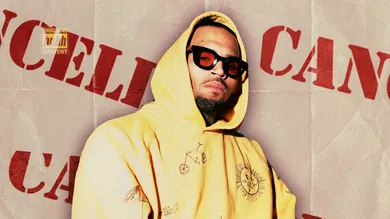
That contradiction is what makes the conversation around Chris Brown difficult to pin down. For years, people have referred to him as “canceled.” At the same time, he continues to chart, tour, collaborate, and maintain the kind of loyal fan base most artists would struggle to build over decades. Public outrage exists around him, but so does public demand. Can Chris Brown really be canceled if the industry, and a large part of the audience, never fully let him go? It doesn't look as if that is possible.
Chris Brown’s History Has Never Fully Left The Conversation
The dialogue around Brown always circles back to the same place because the incidents themselves never fully left public memory. For a lot of people, the defining moment remains 2009, when Brown pleaded guilty to felony assault after physically attacking Rihanna ahead of the Grammy Awards. The incident became part of pop culture history, permanently altering how he was seen publicly.
Read More: Chris Brown Reveals Star-Studded Features List For New Album "BROWN"
One of the most serious later incidents came in 2017, when Karrueche Tran was granted a five-year restraining order against Brown. She testified in court that he had physically abused her and threatened her life. That situation reopened talks about how often public sympathy toward Brown seemed to reset even after new allegations surfaced. And the controversies kept coming.
Brown has faced multiple allegations of assault and sexual misconduct over the years. There are also lawsuits and public disputes that continue to attach violence and instability to his public image. More recently, he’s faced legal action connected to allegations that a woman working at his property was seriously injured in an attack involving his dogs. He’s also remained tied to public feuds, altercations, and long-running conflicts with other artists, adding to a reputation that often feels chaotic even when the music itself is succeeding.
Read More: Chris Brown Fires Security Guard Over Alleged Shooting Outside Of Home: Report
And Yet, the Industry Never Really Left Him
The part that complicates the conversation around Chris Brown the most is that, despite all the backlash, public criticism, and years of controversy attached to his name, the industry never fully closed the door on him. If anything, it kept finding ways to bring him back into the center of things.
The newly announced Raymond & Brown Tour with Usher is only the latest example. A major arena tour attached to another R&B star with decades of credibility doesn’t happen in a vacuum. It signals support, business confidence, and the belief that audiences will still show up in large numbers despite everything surrounding Brown’s reputation. Historically, they have, and will continue to. He's tapped into a sort of flow state with his audience that keeps him grounded, and because of his experience in the industry, he knows how to feed his fans without rocking the boat.
Read More: Chris Brown Hit With Paternity Suit Involving Diamond Brown's Four-Year-Old Daughter
Artists across R&B, Rap, Afrobeats, and Pop have continued working with him, sometimes quietly, sometimes very publicly. Every time a major artist aligns themselves with Brown, it reopens the same debate around accountability and industry tolerance. Even critics who argue that the music itself has become repetitive or bloated acknowledge that the audience has remained unusually dedicated.
In previous eras, sustained backlash could cut artists off from visibility, radio, sponsorships, and access. Brown never fully lost those things at the same level that people often associate with being excommunicated from the industry. The criticism stayed loud, but so did the support.
Breezy Fans Aren't Budging
A large part of the reason Chris Brown has remained commercially strong is simple. The fan base never disappeared. That support has outlasted scandals, lawsuits, backlash cycles, and years of online debate over whether he should still maintain the level of visibility he has. Every time the controversy conversation around Brown hits a headline, there’s another discussion happening alongside it from fans who remain deeply committed to his music and the version of him they feel connected to.
Read More: Chris Brown Goes Off On "Fake Woke" Female Critics Of His Usher Tour
People grew up with C Breezy. Songs like “Run It!,” “Yo,” “With You,” and “Forever” are tied to a very specific era for many listeners, especially millennials who watched him arrive as a teenager and evolve into one of R&B’s biggest stars. His talent is undeniable, with comparisons to Michael Jackson continuing to haunt him. That kind of attachment doesn’t disappear easily, even when public perception changes.
Further, another recurring chat around Brown now is whether the work still matches the level of support he receives. Critics regularly argue that his more recent albums have become too long, unfocused, or repetitive, especially in the streaming era, where larger tracklists can drive more numbers. Yet, those criticisms rarely seem to damage his core audience in a meaningful way.
Read More: Chris Brown Gets Into It With Content Creator Blasting Him For His Past
At a certain point, the fan base becomes infrastructure. Not casual listeners, but people invested enough to defend him publicly, dismiss criticism, defend him in comment sections, or separate the art from the allegations entirely. His loyalists frame him as someone who has been unfairly targeted for years. They believe the backlash itself has become performative, especially when compared to how other artists accused of violence or abuse continue moving through the industry with less scrutiny.
The Contradiction Around Chris Brown
Moreover, part of what keeps Brown at the center of these conversations is that he rarely stays silent when backlash begins to build. After criticism surrounding the Raymond & Brown Tour picked up online, Brown responded directly on social media. He pushed back against what he described as “rage bait pages” and “fake woke” outrage around the tour announcement. In one post, he mocked what he called “Karens and the self hating hoes,” framing the criticism as performative rather than genuine accountability. That response follows a pattern that’s been part of Brown’s public image for years.
Read More: Chris Brown & Usher Will Embark On "Raymond & Brown" Joint Tour
He has repeatedly suggested that people refuse to let him move on from his past, while supporters often argue that the outrage directed at him is selective. This Brown album became another example almost immediately after he revealed the featured artists attached to the project. That’s the contradiction Chris Brown has occupied for more than a decade now. He remains one of the most criticized figures in modern R&B, while also remaining one of the most commercially durable. The outrage will never fully disappear. Neither will the support.