

Plenty of people are tired of streamer culture, but the numbers keep telling a different story. The audience and money are still there. The influence is stronger than ever. That says more than the usual panic over whether livestreaming has peaked. It got richer, but far more exhausting to watch. The biggest names can pull massive audiences and move internet conversations in real time.
Still, a lot of streamer culture now feels like watching the internet wear itself out. The fatigue comes from everything wrapped around that success. So much of the culture now runs on overexposure, clip farming, fake intimacy, and the constant pressure to turn a live moment into a monetized one. New audiences keep showing up, but the content often feels trapped inside its own demands.
Read More: Is Kai Cenat’s Vivet Pivot Performative?
The road to this point was shorter than it feels. Streamer culture began to take shape in the early 2010s, when Twitch launched in June 2011 as a platform built around live video for gamers. By 2014, Amazon had bought the company for about $970 million, a clear sign that livestreaming was becoming a serious business rather than an internet subculture with a loyal niche.
The next major shift came in 2020, when pandemic lockdowns pushed even more people online, and livestreaming viewership surged. Stream Hatchet reported that video game livestream hours watched grew 69 percent that year. Then, streaming moved beyond gameplay into comedy, politics, music, gossip, and IRL moments. As we sit in the 2020s, streamers and influencers have almost become the center of the entertainment industry.
How Streamers Became the New Celebrities
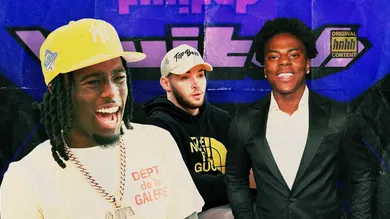
Part of streaming’s hold came from how many roles it could absorb at once. It made room for gamers, comedians, political commentators, lifestyle creators, shock performers, and internet personalities who did not fit neatly anywhere else. Kai Cenat built his rise on humor and chaotic marathon streams. IShowSpeed pushed that energy into a louder, more mobile form of entertainment, where gameplay gave way to travel and stunts. Hasan Piker made livestreamed political commentary feel central to the format. Pokimane, Ludwig, Amouranth, Ironmouse, and others showed that loyalty could be made through very different kinds of performance, which is part of why the medium expanded so quickly.
That variety mattered because streaming offered something older forms of fame had begun to lose. Audiences were no longer waiting for a finished product or a tightly managed press appearance. They could watch people react in real time, drift off topic, say too much, recover badly, and keep the camera rolling. The appeal was not perfection but presence. In that environment, personality stopped functioning as support for the content and became the content itself.
Read More: DDG Meets A Chloe Bailey Lookalike At "Streamer Prom" Event
Hip Hop picked up on that shift fast. Rappers did not need to rely solely on radio or the traditional press to shape a moment, when streamers already had the kind of live, youthful audience the industry spends so much time chasing. A guest spot on the right stream could feel less rehearsed, more culturally current, and more useful than a conventional promo run. That exchange helped elevate streamers beyond internet novelty. They became hosts, connectors, rollout partners, and in some cases tastemakers in their own right.
Rappers Saw The Value & Moved In
As livestreaming grew into one of the internet’s most reliable engines for attention, rappers had every reason to treat it as more than a side stop on a promo run. A stream could deliver something standard press no longer guarantees. That made certain streamers especially valuable to Hip Hop, not simply as interviewers or fans, but as people who could help set the temperature around a release, a beef, a guest appearance, or a personality. Billboard has noted Cenat’s growing importance to music culture through appearances from artists including Drake, Nicki Minaj, and Ice Spice, while Complex’s 2025 roundup of major Hip Hop streamers placed creators like DDG and Plaqueboymax inside that same ecosystem of influence.
Some artists went further, treating livestreaming as an extension of their own brand. DDG and Blueface remain two of the clearest examples because their public identities have long moved between Rap and creator culture. Soulja Boy, years earlier, understood the same logic in an earlier form of the internet. The point is larger than any one artist. Streaming became too effective and immediate for Rap to ignore. Once that happened, the line between streamer and artist started to blur.
Read More: Drake Delivers Heartfelt Closing Speech At Kai Cenat's Streamer University
Why The Culture Feels Burned Out
Reach comes with its own distortion. The more attention streaming pulled in, the more pressure creators faced to stay visible and keep churning out content before the last moment had even settled. What once felt loose and immediate now often feels overworked. Too many streams are built around the same ingredients of reaction clips, staged tension, romantic ambiguity, public oversharing, and the low-hanging-fruit chaos of trying to make every live session produce something worth reposting.
Moreover, that strain shows up in the way the performance never seems to end. A creator is expected to remain legible to the algorithm, emotionally available to viewers, and constantly on the verge of a moment. Research on livestream commerce has found that parasocial interaction and social presence can directly influence impulsive viewer behavior, helping to explain why intimacy now feels so central to the business model. Closeness is part of the product, and exhaustion comes from how often that closeness must be performed to stay profitable.
Read More: DDG, Kai Cenat, India Love & More Top Streamer University's Most Watched Channels List
Further, TikTok Live has become one of the clearest examples of a space where livestreaming often loses whatever glamour it had and reveals the basic transaction underneath. TikTok’s own LIVE system is built around virtual gifts and Diamonds, and reporting on the platform’s gifting economy has shown just how large that world has become.
Outrage Became A Business Model
Once attention became the point, outrage stopped looking incidental. For some creators, it became the content. Adin Ross moved into livestreaming built on provocation and proximity to people and ideas that carry heat. Business Insider reported that Twitch banned Ross in 2023 after he failed to delete racist and antisemitic comments in a chat.
Clavicular represents a younger, uglier version of the same economy, where misogyny and shock collapse into one brand. He's a creator tied to “looksmaxxing," and his notoriety has been fueled by a string of deliberately inflammatory acts and associations, including partying to Ye’s “Heil Hitler,” aligning himself with Andrew Tate and Nick Fuentes, livestreaming an incident in which he apparently hit a pedestrian with his Tesla Cybertruck, and later facing battery charges after authorities said he took part in an assault that was also posted online.
Read More: Soulja Boy & DJ Akademiks Clash Over Divisive Take On Rappers And Streamers
Others in the same orbit help show that this is not just about two personalities. N3on's attention came through inflammatory stunts, including faking his own death, while HSTikkytokky created a following around flirting with and insulting women and has faced suspensions for homophobic slurs and explicit content. In each case, the shock does the same work. It cuts through the feed, keeps the audience talking, and turns disgust into distribution. That is what makes this part of streamer culture so corrosive. The cruelty is not hidden inside the product because it is the product.
Streaming Alone Is Not Enough For Some Bigger Streamers
The clearest sign that streamer culture has limits may be the way its biggest stars keep building beyond it. The people at the top are not acting like livestreaming is a complete system. They are treating it like a launchpad. Cenat remains one of the most dominant figures in the space, but his ambitions have already moved into larger territory, most recently with his fashion brand and Streamer University.
That pattern matters because a creator can stay relevant there for years, but the smartest ones still look for ways to convert that relevance into something more durable, like merch, media ventures, tours, partnerships, or brands that do not require being live for hours just to hold public attention.
Read More: Kick Streamer Konvy Survives Shooting While Live Streaming
Yet, streaming formats keep expanding, and the culture around them keeps adapting to whatever holds attention the fastest. That meant more shock, emotional performance, bait, pressure to stay visible, and ways to turn access into revenue. At its best, streaming still offers a kind of live connection that older media struggles to fake. At its worst, it looks like a machine feeding on overexposure, controversy, and manufactured intimacy. Streamer culture is not dying. It is burning through itself in public, one live moment at a time.