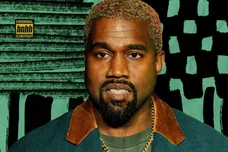


There was a time when a Kanye West release felt like a welcome interruption. Whether you loved or rejected it, engagement was unavoidable. Fans and critics argued in real time, debating whether each new project belonged alongside his earlier work, especially his still-unmatched debut, The College Dropout. Praise often entered the conversation before the music had time to settle. His albums didn’t just arrive, they demanded response. That reaction has noticeably shifted in recent years.
This isn’t to say West, now moving as Ye, no longer commands attention. The release of his latest effort, Bully, has still generated headlines and pulled listeners in out of curiosity or loyalty. However, the energy surrounding the music feels different. Early reactions point to a production that embraces the tension that once defined his work, with applause ringing from Ye's peers.
Yet Hip Hop fans have also expressed that the writing doesn’t invite the same kind of dissection. For an artist long regarded as one of Hip Hop’s most influential artists, Bully lands with a massive rollout and impressive numbers, but lacks the fanfare. Some attribute this to Kanye West fatigue, stemming from the barrage of controversial incidents that have cast a shadow over his releases, if not his legacy.
Read More: Kanye West Surpasses J. Cole Thanks To “BULLY” Streaming Success
That matters more than any individual review. Outrage keeps an artist in conversation, and indifference removes them from it. Right now, the culture doesn’t sound angry with Kanye. It sounds tired.
The Pattern We Can’t Ignore
Any conversation about Kanye West that begins and ends with the music is incomplete. At this point, it reads as avoidance. The pattern, unforgiving to many, is documented and spans years, far back to his days of declaring that "George Bush doesn't care about Black people" in response to the devastation of Hurricane Katrina.
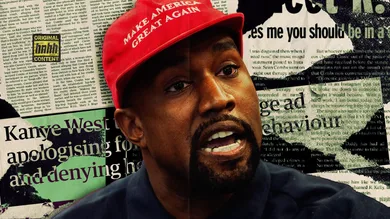
During a TMZ Live interview in 2018, Ye described slavery as “a choice,” a statement that sparked immediate backlash and forced a public reckoning around how he was engaging with Black history. That same year, his alignment with Donald Trump became more visible, from wearing the red MAGA hat to his Oval Office appearance, where he delivered a surreal, freewheeling monologue that continues to haunt him.
By 2020, during his presidential campaign rallies, he made deeply personal and distressing revelations about his family, including comments about a near-abortion involving Kim Kardashian. Those moments blurred the line between political theater and private harm, with millions watching in real time.
Read More: Kai Cenat Shares His Unfiltered Take On Kanye West’s “BULLY”
Then came 2022, the year that moved everything. In October, he wore a “White Lives Matter” shirt at his Yeezy fashion show in Paris, a slogan that was a white supremacist phrase created in reaction to Black Lives Matter. Around the same period, he posted and deleted comments criticizing BLM.
He posted that he was going “death con 3 on Jewish people,” a statement that led to widespread condemnation and the loss of major partnerships, including Adidas and Balenciaga. In interviews that followed, he did not retreat but escalated. On Alex Jones’ platform, he openly praised Hitler, while seated in a full face covering that evoked extremist imagery. Around the same time, he circulated swastika fashion designs, further pounding the intent behind the rhetoric. Prior to this, West had dined at Mar-a-Lago with Donald Trump and Nick Fuentes, a Holocaust denier and white supremacist, aligning himself not only with inflammatory language but with far-right figures and platforms that traffic in that ideology.
Then, the public harassment of ex-wife Kim Kardashian has also been ongoing, particularly throughout 2022, during her relationship with Pete Davidson. There were social media posts, music videos, interviews, and public statements targeting both of them in ways that felt obsessive and, at times, threatening.
None of these moments exists in isolation. They build on each other. Now, audiences, including fans who have held down the Ye fort for decades, are expected to dismiss the behavior and keep pushing toward the music.
Read More: Kanye West's "Bully" Receives Astronomical First Week Sales Projections
That accumulation is what shifts the conversation, because this is no longer about a headline or a misunderstanding. It is about a sustained, visible pattern of behavior that continues to unfold, with little evidence of interruption or accountability. People are responding to that, not just the individual incidents.
Hip Hop Has Forgiven Before
Still, Hip Hop has never required perfection from its stars. History shows that the culture will make room, even when that contradiction is uncomfortable. Chris Brown remains one of the clearest examples. After his 2009 conviction for assaulting Rihanna, his career did not disappear but recalibrated. Over time, a loyal fanbase allowed him to maintain relevance, even after ex-girlfriend Karrueche Tran accused him of physical abuse, and there have been allegations of violent behavior throughout his career. The incidents never left his name, but they also never stopped his momentum.
The late XXXTentacion faced serious abuse allegations before his death. However, he also built a following that connected deeply to his vulnerability and sound. After he was killed in 2018, that connection intensified. Collective grief changed the conversation. For many fans, the music became the focus, and the allegations receded into the background.
Read More: Kanye West Pays Tribute To Mother Donda On "Bully"
Then there is Kodak Black, who exists in a space where controversy and support move side by side. After pleading guilty to sexual assault in a 2016 case, his career continued with visible industry backing, including a federal pardon in 2021. Despite his unhinged behavior that has concerned some of his peers, audiences have seemed to set his problematic behaviors and history aside.
Then there is Dr. Dre, whose past includes admitted violence against women, including the assault of journalist Dee Barnes in the early 1990s. That history did not disappear, but it became secondary to his legacy as a producer, executive, game-changer, and architect of West Coast Hip Hop. His influence crafted how his past was remembered, or overlooked.
Each of these cases reveals something specific about how the culture processes harm. Time plays a role, and output matters. Further, loyalty carries weight. In some cases, the music creates enough distance for listeners to compartmentalize what they know from what they hear. Forgiveness in Hip Hop is rarely formal. It is negotiated, quietly, through continued engagement.
From Kanye To Ye, And What We Lost Along The Way
Meanwhile, West has always made music in conversation with his own mythology. Each era carried its own set of tensions, and for a long time, the work was strong enough to hold them.
The College Dropout introduced him as self-aware and defiant, a producer-rapper pushing against industry expectations. By Graduation, he was chasing scale, competing with stadium Rap, and redefining what mainstream success could look like. Then came 808s & Heartbreak, where grief and emotional fracture reshaped his sound after the death of his mother in 2007. That openness expanded further on My Beautiful Dark Twisted Fantasy, a project built in the aftermath of the 2009 VMAs incident and breakup with Amber Rose.
Even his more chaotic periods produced work that demanded attention. Yeezus arrived abrasive and confrontational, leaning into his public image as a disruptor. The Life of Pablo felt unfinished and alive at the same time, mirroring a mind that refused to be still. There were controversies in each era, ego, outbursts, and public missteps, but the music kept reframing the narrative. It gave context and a reason to stay.
Read More: Kanye West's "Bully" Album Divides The Ye Fanbase After Streaming Release
However, what changed is not just the behavior. It’s the balance. Donda arrived in 2021, and the spectacles had started to eclipse the substance. The listening events were grand, and in true Ye fashion, symbolic, but the music itself felt uneven. Still, there was enough there for listeners who wanted to hold on and argue for his place. Bully arrives without that cushion.
It doesn’t reframe him nor challenge the narrative that has been built around him over the last several years. Instead, it sits inside it. That makes the listening experience different. You’re not encountering an artist rewriting his story. You’re hearing music that exists alongside everything people now associate with his name, from antisemitism to far-right policies to White Lives Matter to social media posts and calling out his family and former friends, to spiraling in front of a global audience. That, from Kanye West as a cultural force to Ye as a figure defined by his own turmoil, has changed the terms of engagement.
Read More: Bully - Album by Kanye West
The question isn't whether the art can be separated from the artist. That debate assumes the art is still pulling its weight. What Bully exposes is something quieter and more final. The audience has already started to pull away. So, the question becomes less about forgiveness and more about distance. He's recently arrived with apologies for his outlandish, offensive behavior—but have we forgiven Kanye West? Do we have to? Does it matter in the grand scheme?
Forgiveness suggests a moment. It's a reckoning after acknowledging harm, followed by some form of repair. That moment has never clearly arrived. There has been no sustained pause or language that signals reflection. Aside from sitting with a rabbi to say I'm sorry, there's no attempt to reconcile with the weight of what has been said and done. What has happened instead feels more passive, especially given the state of global affairs both inside and outside the U.S.
Read More: Kanye West Reveals The Meaning Behind New Album "Bully"
Some listeners have disengaged without announcement. They no longer check for the music or defend him in conversation. Others remain, but with a different posture. There's less enthusiasm, but there is still a segment that continues to support him fully, framing his behavior as provocation or the byproduct of something deeper.
Ye's legacy is already secured, and what he's built will never disappear. What remains uncertain is his relationship to the present. That divide tells its own story, because what we’re witnessing may not be forgiveness at all. A slow, collective recalibration where the culture decides, individually and quietly, how much access it is willing to give him. A comeback not only makes people listen again, but it also makes them care about what's being created. At the moment, audiences don’t seem to have decided on whether it still does until reconciling his past becomes more than a suggestion.