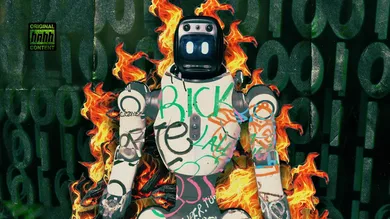


The cleanest way to understand what happened with 21 Savage and the bot allegations is to name it for what it is: a correction to the public record. Spotify has a long-standing policy against artificial streaming, or plays that do not reflect genuine listening intent, including activity driven by bots, scripts, or paid third-party services that “guarantee” streams. When Spotify detects that kind of activity, it removes the streams from the count and strips any royalty value from them.
So, when reports circulate that millions of streams were removed from a 21 Savage album, and that this was the second time it happened, that is not a minor adjustment. It is a reminder that the numbers fans debate, media headlines amplify, and the labels used to justify budgets can shift after the celebration has already happened. That is where this hits Hip Hop harder than other genres.
Read More: Nicki Minaj's MAGA Posts Accused Of Being Amplified By Bots
Rap treats metrics like receipts, and not just “interesting data,” receipts. The culture has trained itself to believe that numbers prove who matters, who is up, who fell off, who is generational, and who deserves the crown, who is the GOAT. First-week totals become identity and chart debuts become talking points. Streaming milestones become evidence in arguments that are really about power.
When a platform quietly erases millions of plays because they were never real listens, it tugs at the threads of a narrative the culture already accepted. Moreover, Spotify is not the only entity saying this is a real problem. IFPI, the recorded music industry’s global trade body, defines stream manipulation as artificially creating plays that do not represent genuine listening, often done to boost chart positions or siphon money from the royalty pool. In the last couple of years, the public conversation has moved past “bots on songs” into the broader fraud economy around streaming, including streaming farms and AI-generated uploads designed to game payouts.
Read More: 50 Cent Claims “Bots” Are Telling Him To Respond To T.I.
The point is not to yell “everybody’s cheating.” It's to tell the truth about incentives and consequences. Artificial streaming can be driven by artists, management, labels, outside marketers, people chasing a quick payout, and sometimes by bad actors who attach themselves to a release without the artist’s direct involvement. Whatever the origin, the outcome is that inflated metrics distort what the public thinks is happening in the culture. Once the public thinks an album is “unstoppable,” that belief spreads faster than any correction ever will.
Numbers Became Hip Hop’s Scoreboard
Hip Hop has long measured success in ways that could not be graphed. Reputation traveled by word of mouth. A DJ broke a record in the club, and the city felt it. A mixtape circulated through barbershops, car trunks, and corner stores. If an artist had the streets, everybody knew. No chart was required to confirm it. That system began to shift in the early 1990s with the arrival of Nielsen SoundScan.
Read More: Young Thug Allegedly Confirms Use Of Bots For "BUSINESS IS BUSINESS" In Leaked Jail Call
Before SoundScan, Billboard rankings relied on reporting from record stores and radio stations. Those numbers were loose, sometimes influenced by industry relationships or guesswork. Hip Hop records often appeared smaller than they really were because the places selling them, independent shops in Black neighborhoods and "urban" markets, were not always counted.
Then, SoundScan changed that. The system tracked actual purchases through barcode scans at the register. For the first time, the industry could see exactly what people were buying. The results shocked the gatekeepers. Hip Hop and Country music surged up the charts once the real numbers came into view. Albums that had been underestimated suddenly revealed massive sales. The culture that executives once dismissed as niche was moving millions of units. From that moment, numbers took on a new meaning in the Rap game.
Read More: 21 Savage Denies Using Bots After Spotify Allegedly Scrubs His Album Of 25 Million Streams
Sales were no longer quiet business metrics inside label offices. They became cultural proof. An artist with a platinum plaque carried a visible marker of dominance. First-week sales turned into bragging rights. Billboard debuts became ammunition in Rap debates.
When Jay-Z rapped about “Platinum albums,” it was a declaration of stature. 50 Cent sold nearly a million copies of Get Rich or Die Tryin’ in its opening week; the number became part of the album’s legend. Even the phrase “went Diamond” carries the weight of a crown. Numbers turned into a scoreboard, and the culture embraced it. There was logic in that embrace. Once success is measured publicly and constantly, every artist is competing on the same statistical field. Fans track numbers like sports fans track scores. Media outlets publish sales totals within hours of a release. Social media debates hinge on streaming counts and chart placements. It seems that what began as validation slowly evolved into a ranking system.
Read More: Spotify Hit With Lawsuit Claiming Billions Of Drake's Streams Came From Bots
The Streaming Era & The Rise Of Artificial Popularity
The streaming era changed the math of success in music. Before it, a sale meant a single transaction. A fan bought an album once, maybe twice if they lost the CD or wore out the cassette. The number attached to that album reflected a direct purchase, a decision made at a store counter or online checkout.
Streaming introduced a different economy of attention. One listener could generate dozens of plays in a single day. An album left running overnight might produce hundreds of streams before morning. The same record could repeat endlessly across phones, laptops, gaming consoles, and smart speakers. Popularity began to accumulate through repetition rather than purchase.
Read More: NBA YoungBoy Fans Claim NLE Choppa's Using Bots After Dropping His Diss Track
That difference opened the door to something the industry had never faced at this scale. Artificial listening activity became easier to generate and hide, and far more valuable. Streaming farms are the clearest example. These operations rely on networks of devices, often phones or virtual machines, running accounts that continuously play songs. Each account functions like a listener in the system’s data. Thousands of accounts running simultaneously can generate massive streaming numbers within hours.
Moreover, automation expanded the reach even further. Scripts can loop tracks around the clock. Some services create accounts in bulk, and others place songs on playlists designed to repeat endlessly, inflating play counts without any real audience behind them.
Read More: 21 Savage Allegedly Gets Stripped Of 25 Million Spotify Streams
The financial incentive explains why the practice persists. High streaming numbers influence nearly every layer of the modern music business. They affect chart positions, algorithmic recommendations, playlist placements, label investments, and media narratives. When an album appears unstoppable on the charts, momentum builds quickly. Fans respond to that momentum. Media outlets boost it as labels double down on it. Perception begins to move faster than reality.
That dynamic matters deeply in Hip Hop, where numbers carry symbolic weight. Streaming totals now function as modern equivalents of Platinum plaques and first-week sales. Artists celebrate them publicly while their fans track them like sports statistics. Entire debates about who runs the genre can hinge on a dashboard metric. If streaming totals shape how the culture measures greatness, what happens when the numbers themselves cannot always be trusted?
Read More: TD Jakes Alleges 44K AI Bots Are Responsible For Linking Him To Diddy Rumors
The GOAT Economy
Hip Hop has always loved a good scoreboard. Since the earliest days of the culture, competition shaped the way artists spoke about themselves and their peers. Battles in parks and clubs determined who had the sharpest lyrics, the loudest crowd reaction, the tightest crew behind them, the strongest bars, the heaviest weight. Bragging rights were part of the performance. Victory had to be declared, loudly and often.
When the music industry began attaching hard numbers to success, that competitive instinct found a new language, with sales serving as proof. A Platinum plaque meant more than commercial success. It meant cultural reach. An album that moved millions of copies carried evidence that the streets, the clubs, and the suburbs were listening at the same time. Artists began weaving those numbers directly into their mythology.
Read More: Kanye West Reacts To Alleged Bots Boosting Kendrick Lamar & SZA's "luther" Music Video
Kanye West once declared, “I guess every superhero need his theme music,” while celebrating chart success during the era when his albums routinely debuted at No. 1. 50 Cent built an entire public persona around first-week sales battles, turning release dates into public competitions with other artists. Drake has repeatedly pointed to streaming records as evidence of his dominance in the modern era. Hip Hop statistics are rarely treated as neutral data.
Read More: Spotify Cracks Down On Botted Streams But Won't Reveal Which Artists They Punished
Fans use them to crown kings of different eras. Conversations about the greatest rapper alive often begin with a familiar checklist. How many No. 1 albums and Platinum records? How many billions of streams? The logic feels simple. Bigger numbers suggest a bigger audience. A bigger audience suggests greater impact. However, that logic only holds if the numbers themselves are trustworthy.
Read More: Pusha T Targeted By Bots, Fans Think Drake Is Behind It
Who Controls The Narrative
Additionally, the problem with artificial streaming is that it rarely stays theoretical. Every few months, another example surfaces, pulling back the curtain on how fragile the scoreboard has become. In some cases, the admissions come from inside the culture itself.
Young Thug stirred controversy when leaked jail phone calls suggested he paid for artificial streams to help push Gunna's album to the top of the charts. In the recording, Thug reportedly tells associates that Gunna’s No. 1 album did not happen organically, claiming he paid for the boost to help it surpass competing releases.
Read More: Atlantic Records Accused Of Bot Engagement On Lil Uzi Vert, Don Toliver & Other Videos
During the public feud between Drake and Kendrick Lamar, Drake’s legal filings accused industry partners of using bots and paid promotion to artificially inflate the streaming numbers of Lamar’s diss track “Not Like Us.” The petition alleged that the song’s popularity was boosted through coordinated tactics designed to make the record appear larger than its organic reach. Drake, himself, has been accused of botting his way to the top of the charts.
Spotify and Universal Music Group denied the accusations and stated they found no evidence of manipulation. The dispute still revealed something deeper. Even the most successful artists in the genre now publicly question the legitimacy of streaming numbers.
Read More: Kendrick Lamar Stream Botting Accuser Allegedly Debunked After Sharing "Proof" Of Payment
Now, not every accusation proves true. Yet the frequency of these claims shows how deeply skepticism has entered the culture. Streaming platforms themselves acknowledge the scale of the problem. Spotify regularly removes artificial streams and penalizes accounts connected to fraudulent activity. The company says fake plays “dilute the royalty pool,” diverting revenue away from legitimate listeners and artists.
Somewhere in Hip Hop’s evolution, the scoreboard became the archive. First-week numbers became proof of greatness. Streaming totals became evidence of cultural power. Entire debates about legacy now hinge on statistics that refresh by the minute. When the bots disappear, the charts may adjust. The harder question is whether the history built around those numbers ever will.