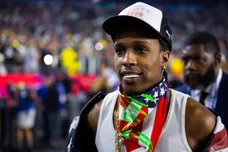


Somewhere between Testing and 2026, A$AP Rocky bagged Rihanna, had three kids with her, caught a high-profile case in Sweden that drew commentary from President Trump's inner circle, and ultimately beat an assault case involving former A$AP Mob member A$AP Relli. He also inserted himself into what became an industry-wide beef with Drake, who prophetically rapped, “I ain't even know you rapped still ’cause they only talkin’ ’bout your fit again/ Probably gotta have a kid again 'fore you think of droppin' any shit again.”
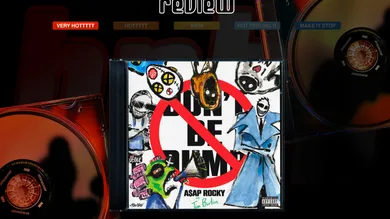
For years, a new Rocky album felt perpetually promised yet permanently delayed. But instead of chasing urgency or responding to external pressure, Rocky appeared to absorb the aura of his partner: unbothered, unrushed, and uninterested in placing public expectation over personal standards. Don’t Be Dumb arrives as a reflection of that posture, even if some have considered it a comeback statement.
The album does the most effective job yet of blending Rocky’s many influences into something cohesive. Where his experimentation once felt compartmentalized, those borders finally dissolve here, forming a sound that reads as a new era without forcing reinvention. Across 17 tracks, the album justifies its extended gestation period through the type of clarity that supercedes spectacle. Don’t Be Dumb isn’t groundbreaking like Live.Love.A$AP or as grandiose as Long.Live.A$AP, but it feels like Rocky’s clearest vision since the passing of A$AP Yams, a North Star absence that’s lingered across multiple projects in the latter half of his career. If those albums, like Testing and At.Long.Live.A$AP, represented tension and searching; this one feels like resolution.
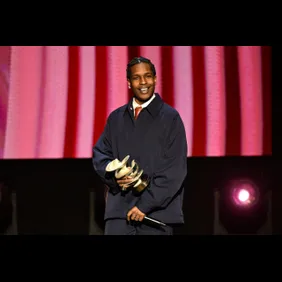
More than anything, Don’t Be Dumb reframes what Rocky is actually interested in detailing. The high-fashion name-drops and European luxury brands still exist, but they’re no longer the centerpiece. The doomy opener, “Order Of Protection,” wastes little time addressing the anxieties that have shadowed the album’s rollout: legal battles, betrayal, leaks, and prolonged silence. A faint tremor of Auto-Tune gives his vocals a fragile edge, as if the accumulated weight of those years is finally settling in. That vulnerability contrasts sharply with the crystalline production and crisp drums, grounding Rocky’s reflections in lived experience rather than distant anecdote.
What makes the project especially effective is Rocky’s decision to reconnect with collaborators who helped establish his sound in the first place. Rather than nostalgia for nostalgia’s sake, these reunions feel intentional. The jazzy passages throughout the album feel Harlem unmistakably, even as digital production continues to erase regional boundaries. Doechii’s appearance on “Robbery” brings elegance without sanding down the grime, while Westside Gunn’s unmistakable ad-libs on “Whiskey (Release Me)” cut through hazy keyboards and jittery hi-hats like a reminder of hip-hop’s textural possibilities.
The muddier, lo-fi moments lean heavily into blog-era aesthetics. Sauce Walka’s chemistry with Rocky on “Stop Snitching” feels especially significant, reinforcing the Harlem–Houston connection first hinted at on “Purple Swag” and “Peso.” At a time when accusations of appropriation circulate freely in hip-hop discourse, this collaboration highlights the difference between borrowing and building. Tracks like “No Trespassing” feel spacious and understated, as if soundtracking the party beneath the party. Alongside “Don’t Be Dumb / Trip Baby” and “Playa,” there’s a clear yearning for a version of ’90s nostalgia filtered through early-2010s cloud rap, when golden-age reverence met ethereal sampling and internet-era freedom.
Lyrically, Don’t Be Dumb carries more substance than much of Rocky’s previous work. Artists who prioritize aesthetics over intention often hit a wall, but this album feels like a genuine snapshot of where his mind is now. “Stay Here 4 Life,” featuring Brent Faiyaz, contextualizes Rocky’s life as a father of three and partner to one of the most visible women on the planet. Faiyaz’s usual toxicity dissolves into something gentler, romanticizing domestic moments and redefining what permanence looks like. That emotional clarity extends to “Punk Rocky,” where indie textures and psychedelia converge into something uniquely his. These inward-looking moments yield some of Rocky’s most thoughtful writing. For an artist often accused of being “fake-deep,” the reflections here feel earned. Life lessons are not broadcast for effect, but seemingly collected for legacy.
Elsewhere, Rocky’s global influences take center stage. “STFU” channels trance-leaning European electro-house with a frenetic energy that could soundtrack a Misfits montage, while “Air Force (Black Demarco)” jumps from dreamy psychedelia into glitchy electronic chaos. These tracks finally realize the punk ethos Rocky has long championed, even when it only lived in his imagery. The absurdity of lines like “They say Haitians eatin' cats, I make sure my dogs eat” underlines the unapologetic embrace of chaos during some of the most polarizing moments on the album.
Despite its experimentation, Don’t Be Dumb remains accessible in ways that differ from Testing. “Helicopters” and “Stole Ya Flow” feel positioned as 2026’s party starters, with the latter offering more than headline-ready soundbites. Rocky’s greatest strength here isn’t necessarily his penmanship, but his flows—the way cadence and rhythm become textures that lock seamlessly into the production. At times, that reliance on delivery feels like a crutch, but the album never stagnates. While tracks like “STFU” may be divisive—some have already labeled it among his weakest—the run from “Stole Ya Flow” through “Stop Snitching” stands as one of the strongest sequences in his catalog.
Ultimately, the project’s cohesion rests on its production team. Kelvin Krash and Loukeman anchor the album sonically under Rocky’s guidance, joined by contributions (some rumored, others confirmed) from Soufien 3000, SpaceGhostPurrp, Harry Fraud, Hit-Boy, Tyler, The, Creator, and more. Their collective understanding of A$AP Rocky’s sonic DNA helps reintroduce the “old Rocky” sound without freezing it in time. There’s no Clams Casino appearance, but Don’t Be Dumb doesn’t feel incomplete without it.
Don’t Be Dumb doesn’t redefine A$AP Rocky, which is what many artists attempt after a decade-long hiatus. Instead, it finds him comfortable within his wheelhouse, reaffirming his ear for production, his eye for talent, and a sense of taste that resists easy categorization. There’s no urgency here, no grab for relevance. Just an artist living visibly in his truth, content to let the music arrive on its own terms. If this album signals anything about Rocky’s future, it’s that peace, and not pressure, may finally be guiding him.