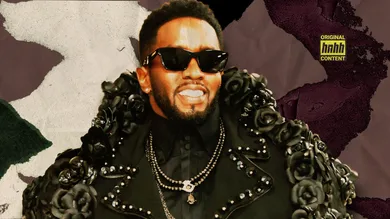


There’s no clean way to talk about Sean “Diddy” Combs anymore.
He has been represented the apex of Black cultural capital for decades. First as the Harlem-born exec with a golden ear, then as the platinum-selling artist, brand-builder, and self-appointed face of the remix era. He was the industry’s most visible success story, the mogul you couldn’t ignore. Sean Combs became the blueprint others chased.
Yet, beneath that shine sat a different story. It is one many in the industry had heard in whispers but never named aloud. Now, in 2025, the dam has broken. In the wake of multiple lawsuits, disturbing surveillance footage of domestic violence involving his ex-girlfriend, Cassie Ventura, and allegations stretching back decades, Combs’s name no longer brings up only legacy. It evokes harm.
Read More: DJ Akademiks Wants To See Daphne Joy In 50 Cent’s New Diddy Docuseries
On December 2, Netflix released Sean Combs: The Reckoning, a four-part documentary from director Alexandria Stapleton and executive producer Curtis “50 Cent” Jackson, Diddy's long time foe. It promised a wide lens on the allegations and on the man. Further, it examined the myth of the empire he constructed. Still, to understand how we got here, to this public collapse, you have to understand what Diddy built, and what it cost the people who helped him build it.
How Diddy Became An Empire
At some point in the mid-90s, Combs stopped being an executive and started becoming the moment. He’d already made his name at Uptown Records, carving out R&B that felt like it belonged to the streets and the runways at the same time. When Andre Harrell let him go, Combs built a brand with himself at the center.
Bad Boy was styled and precise. The artists have imprinted classics on our playlists. Every rollout felt aggressive, yet, not forced. Then there was Diddy, still Puff Daddy at the time, who was in every frame. His image was attached to the music and threaded into the business. He stood beside Biggie, over Total, behind 112, while pushing Danity Kane in front of the camera. Puff's name came with the rhythm.
Read More: From Diddy To Weinstein: Sexual Misconduct Allegations Shaking Up Hip Hop & Hollywood
Later, what followed was scale. There was Sean John. Ciroc. Revolt. Making the Band. Fashion weeks, press runs, Forbes lists. The performances and music videos grew flashier and ambition became more public. Diddy wasn't trying to build quietly. He branded his ambition, sold it back to us, then raised the price. In the process, he rewired how people thought about success in Hip Hop. It wasn't just money, but ownership and control.
However, that control came with consequences. Some surfaced early with artists like The LOX and Mase pushing back against their contracts. Many others stayed quiet. Nevertheless, as Combs expanded the empire, few came forward to challenge how it was built. It was easier to believe in the story of the hustle and the parties and win. Maybe that was the point. If you kept the spotlight bright enough, nobody could see the cracks.
The Cost Of Who Was Left Behind
For all the celebration of what Diddy built, there’s always been a quieter conversation about what it cost, and who paid the price.
When reading the list of people who have called out harm against Combs, the names are familiar. Mase, one of Bad Boy’s most successful early artists, spent years publicly asking for the return of his publishing rights. The LOX had to fight their way out of contracts they called exploitative, even going on Hot 97 to call him out.
Further, Danity Kane crumbled under the weight of overexposure and underprotection. Day26. Dawn Richard. Cassie. There’s a long list of artists whose careers were shaped by Diddy’s machine, and often, they were left stalled inside of it. Then there are the people who never spoke at all.
Read More: 50 Cent Rants About Diddy & Cassie's Explicit Pictures In Resurfaced Interview: Listen
Kim Porter, mother of three of his children, died in 2018 after a years-long on-and-off relationship that many said alleged was defined by control. In November 2023, Cassie filed a civil lawsuit accusing Combs of rape, abuse, and long-term coercion during their tumultuous relationship that lasted over a decade. They settled the suit within 24 hours.
Still, the stories didn’t stop because more lawsuits followed. Even more footage surfaced. Slowly, a record began to form that painted a very different picture from the myth of the charming mogul who just wanted to win.
Throughout it all, silence did its job. Those who worked with Diddy or were in his circle saw the signs. At the very least, they sensed the power dynamics, but said nothing. In Hip Hop, the proximity to Diddy meant a door to a new world. Walking away, if he was in pursuit of your partnership, allegedly could mean exile. That kind of control is managed and protected.
The Unraveling Of The Mogul Myth
The recent years may have been a life-changing era for Diddy, but for years, the myth held. Puff was an untouchable mogul with the world at his fingertips. The scandals didn’t stick. The criticism barely grazed him. He was too powerful, too charming, too embedded in the machinery of entertainment to ever truly be challenged. When his name came up in industry whispers or viral rumors, people lowered their voices. When it surfaced in lawsuits, they disappeared by morning.
However, the Cassie lawsuit in November 2023 was a turning point, not just because of the severity of the allegations, but because of how quickly others followed. The pattern became harder to ignore. Then came the footage, and next, the lawsuits multiplied. Then the silence started to break from people who had worked alongside him for years.
Read More: Diddy's Ex Bodyguard Alleges He's "Demonic" While Addressing Cassie's Trial Testimony
The reckoning wasn’t just about one man. It was about the space he occupied at the intersection of celebrity capital, and culture. It asked real questions about who gets protected, how long power can shield someone, and what we allow ourselves to ignore in the name of “greatness.” Diddy wasn’t alone in that mythmaking. He was just one of the most visible examples.
Other men built similar empires—Russell Simmons, Kanye West, even Jay-Z to a more curated extent—but few mastered the art of public redemption the way Diddy did. He turned every scandal into a rebrand. Every critique morphed into a Ciroc commercial. The image always bounced back. Until now.
Read More: Former Bad Boy Artist Mark Curry Slams Diddy & JAY-Z With Getting Rich By Getting Over On Everyone Claim
What’s happening isn’t just a fall. It’s a refusal to keep up the illusion. Moreover, once a myth starts to unravel, what’s left behind is a question: What were we really looking at all along?
The Reckoning: What Now?
It’s easy to call this a reckoning, but the truth is slower than that. Empires don’t fall in a day. Legacies don’t vanish on impact. This isn’t just about Diddy. It’s about the industry that surrounded him. The writers who didn’t report it. The executives who signed off. The collaborators who stayed quiet. The audience that looked away. You don’t build a myth alone.
Read More: The Notorious B.I.G. Was Allegedly Preparing To Leave Diddy & Bad Boy Prior To His Death
What The Reckoning offers, or what it seems to demand, is a pause. We're not just to reconsider one man’s legacy, but to ask why it took so long for this story to be heard. Further, what it says about us that it took a Netflix documentary to make it louder.
Because the truth is, the damage was always there. We just kept dancing around it.