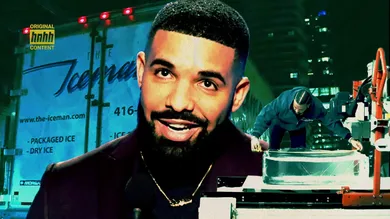


As expected, ICEMAN is dominating the charts, along with Drake's surprise drops, Habibti, and Maid of Honor. The triple-album release has been the talk of Hip Hop for the past week, and the conversations are only intensifying as time goes on.
Part of that was because of the scale itself. More than 40 songs spread across Rap, R&B, Dance, and Pop-leaning production, released in a single drop from an artist already known for overwhelming the streaming era through sheer volume. However, the music quickly became secondary to the debate surrounding it. To be frank...the reviews have been harsh.
Read More: Drake Posts HotNewHipHop Users' Old "Take Care" Critiques After New Albums
The most brutal of critics described the releases as "bloated," emotionally exhausted, repetitive, and overly engineered for streaming culture. Backlash also focused on Drake’s lyricism, with people mocking bars they felt sounded too simple and caption-ready, designed for social media circulation instead of actual depth. Others slammed the production across the projects, arguing that much of it felt minimal, bordering on laziness, especially from an artist whose catalog once helped define the sound of modern, often melodic Rap.
Still, the numbers exploded anyway. The albums immediately dominated streaming platforms and charts, with Drake once again flooding playlists, timelines, reactions, memes, arguments, and discourse cycles all at once. Fans called it another takeover. However, critics called it proof that Drake values quantity over cohesion. Either way, everybody was talking about it.
Has Drake reached a point where criticism no longer meaningfully affects his dominance at all?
The Reviews Were Brutal, But The Numbers Were Bigger
The criticism surrounding Drake’s triple release started almost immediately after the albums hit streaming platforms. Complaints sounded similar, no matter which project people were discussing. ICEMAN drew criticism for what listeners described as weak or overly direct bars aimed at Kendrick Lamar, Rick Ross, and others. Habibti and Maid of Honour were called out for sounding unfinished or emotionally flat despite leaning into the melodic and club spaces Drake has dominated for years. The larger complaint beneath it all was fatigue.
Read More: Drake "ICEMAN" Album Review
People online kept asking the same question: why would he release this much music at once if only a fraction of it feels essential? It was argued that this had to do with his getting out of his record contract. Drake was accused of flooding streaming platforms instead of editing himself creatively. Even some longtime fans admitted parts of the releases felt overly familiar sonically. None of that stopped the rollout from becoming massive.
Within hours, Drake occupied huge portions of Apple Music and iTunes charts simultaneously, and it didn't take long for him to dominate major Billboard positions again despite the backlash. For most artists, reviews this harsh would slow momentum or at least fracture public enthusiasm. With Drake, the backlash almost became fuel for the release itself. Every negative reaction created another conversation, another repost, another debate, another stream. At this point in his career, criticism no longer seems separate from Drake’s success. It moves alongside it.
Drake Understands The Streaming Era Better Than Anyone
Forty-plus songs across three albums would have sounded ridiculous in a different era of music. Now, it sounds like a streaming strategy. That’s a portion of what makes Drake such a difficult artist to measure traditionally at this point in his career. The fuss aimed at ICEMAN, Habibti, and Maid of Honour comes from people still approaching albums like tightly edited artistic statements. Drake increasingly releases music like someone trying to bogart space itself. These projects were built to touch different audiences simultaneously.
Read More: Drake Takes Aim At DJ Khaled For Not Speaking About Palestine
ICEMAN stayed closest to Rap, full of competitive energy and lingering shots at rivals and former allies. Habibti leaned melodic and atmospheric, closer to the emotionally detached R&B sound Drake has spent years refining. Maid of Honour moved further into club and house-inspired production, territory he’s returned to repeatedly since projects like Honestly, Nevermind shifted expectations around what a Drake release could sound like.
Individually, some listeners may only care about one of those albums. Together, though, the releases create nonstop engagement. From a traditional critical perspective, the projects can feel overstuffed. Yet, streaming culture rewards abundance differently from older album eras. More songs create more opportunities for virality, playlist placement, chart entries, reaction content, and repeat engagement across platforms. Drake understands that better than almost anyone, because he helped shape the environment in which modern artists now release music.
At this stage, Drake doesn’t always seem interested in making concise albums. He seems interested in remaining unavoidable.
Read More: Drake Takes Shots At Rick Ross On "ICEMAN"
Drake May Be Bigger Than Album Reviews Now
There was a time when an album review could seriously shape the direction of an artist’s rollout. A bad critical response could slow momentum or create the feeling that an era had failed publicly. That relationship between criticism and success feels increasingly disconnected in the streaming era, and Drake may be the clearest example of that shift.
That may be because, despite the backlash surrounding ICEMAN, Habibti, and Maid of Honour, nothing about Drake’s actual position in music appears unstable. The streaming numbers stayed massive. The internet stayed consumed by the release. Fans argued over standout tracks while critics dissected weak bars and repetitive production choices. Even people openly saying the albums were disappointing still spent the weekend listening closely enough to debate lyrics, rank songs, and repost clips online. That level of attention has become its own form of power.
Read More: Adin Ross Claims Kendrick Lamar Is Running Scared Because Of Drake's "ICEMAN"
Drake no longer operates only as a rapper releasing albums. He functions more like a permanent cultural event, someone whose music immediately floods streaming platforms, social media timelines, podcasts, reaction channels, sports pages, meme accounts, and group chats all at once. At that scale, criticism stops behaving the way it once did because visibility itself becomes more valuable than consensus.
Moreover, Drake understands visibility better than almost anyone in music history. A listener may hate half the songs and still contribute to the engagement machine by arguing about them online. Someone mocking a lyric still reposts the clip. Another who calls the albums inflated still streams enough records to identify which ones work and which ones don’t. In Drake’s world, criticism often extends the lifespan of the release instead of shrinking it.
Now, that doesn’t mean the critiques are meaningless. The conversations around creative stagnation, overexposure, weak lyricism, and quantity over quality are real, especially as more listeners question whether Drake still edits himself artistically the way he once did. However, those criticisms now coexist with a level of commercial dominance that feels largely untouched by them.
Read More: Drake's Three New Albums Get Gargantuan First Week Sales Projections
Further, the strangest part about this moment in Drake’s career is that the criticism almost feels built into the experience now. People dragged Honestly, Nevermind when it first arrived in 2022, especially because of its dance-heavy direction. For All The Dogs faced similar complaints about repetitive themes and lack of editing, yet still debuted at No. 1 and produced massive streaming records. Even after the Kendrick Lamar battle shifted public perception around Drizzy in a way few moments ever have, his commercial dominance barely moved. That history matters when looking at ICEMAN, Habibti, and Maid of Honour.
Very few artists in modern music operate like that. Maybe that’s the real shift happening around Drake now. The conversation is no longer centered on whether every album is a classic. It’s about whether any artist in the streaming era has figured out how to remain this culturally dominant while absorbing this much objection at the same time. Right now, Drake still appears to be the only person operating at that scale, and it's sliding him back up the charts.