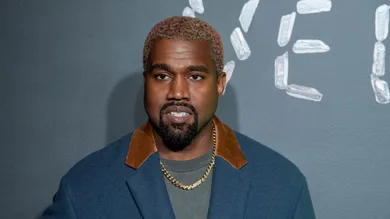


There’s no way Kanye West thought this was going to be easy. With the release of Bully, it’s safe to say that the majority isn’t particularly convinced his genius has returned—not the critics, the day-ones who’ve supported him for decades, and not mainstream media. Typically, his controversial antics would put him in a timeout. Instead, he’s been forced into social exile of sorts. He’s had a pretty easy go compared to others who’ve been socially banished. “Carnival” still went #1, as did Vultures.
His latest album, Bully, debuted at #2, functioning as a comeback after a storm of public, self-imposed backlash. In recent years, Kanye drifted into right-wing media circles—people like Milo Yiannopoulos, Candace Owens, Nick Fuentes—who amplified his rhetoric and reframed hateful remarks as someone becoming a champion of free speech or attempting to save America from the Radical Left. They became his propagandists in the same way they were for Trump, trying to convince the public that his antisemitic vitriol was being blown out of proportion. It wasn’t. Yet in today’s discourse, there are those who conflate Zionism with Judaism, treating advocacy for Palestinians or criticism of Israeli policy as equivalent to promoting terrorism. His antisemitic remarks were made in broad strokes, and his love for Hitler was inexcusable. Coming at a time when he remained deeply entrenched with Donald Trump and his band of supporters, there was no separating his politics from the Nazi symbolism that became associated with his brand.
And that’s what made the rollout for his solo follow-up to Donda, announced as Cuck, so bland in the first place. His convictions became online talking points to galvanize right-wing circles by normalizing Nazism and praising Hitler, while everyone else who didn’t buy into this clear propaganda was somehow labeled sheep. That didn’t last long, though. Over time, his presence became toxic. When no one else was willing to work with him, he enlisted Dave Blunts to help pen the album. Three songs ultimately surfaced: “Heil Hitler,” “WWIII,” and “Cousins.”
The first two centered around his love for Nazis and Hitler, clearly, while the latter became a confession about an incestuous relationship he had with his male cousin from age six to 14. It was chaotic, problematic, and more than anything, a clear sign that he was too far gone. He tried to ragebait, but his antics were simply exhausting. He learned quickly that he needed to pivot toward gaining sympathy when outrage wasn’t working.
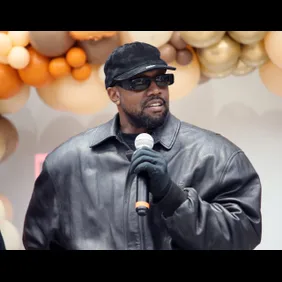
Bully became the clean slate for his redemption arc—or so he thought. In the months leading up to the project, the majority of the controversy didn’t surround the content of the album per se, but rather his desire to use AI. Once he decided against it, it seemed like a lot more people were at least curious to know what this album would sound like.
Ultimately, that’s what made the rollout for Bully much more notable—Kanye didn’t fully embrace the chaos that defined his past few years. When right-wing circles tried to play his pulled “Heil Hitler” song in a nightclub, he distanced himself from them. These were the same people who had framed him as a free speech absolutist. Kanye rejected that alignment when he realized it threatened both his career, profitability, and path toward public forgiveness. Audiences haven’t rejected Kanye West’s music outright—they’ve rejected the ideology he, and many who share his politics, tried to impose on the world, until the music and ideology became indistinguishable from each other. Supporting Trump alone was controversial; pairing it with pro-Nazi rhetoric created a combination that amplified harm and fueled a broader era of gaslighting and media mistrust.
The problem is that Ye knows how to draw excitement one way or another. It was apparent when he went full evangelist and hosted Sunday Service at Coachella, even when he wasn’t a solo headlining act. It’s even more obvious when, after claiming to be blackballed from performing at arenas across America, he performed two sold-out shows at SoFi Stadium in California. Celebrities were in attendance—Lauryn Hill even touched the stage. Even with a microphone in his hand, his only focus was to deliver a good show, not indoctrinate his fanbase.
That shift alone was enough to indicate that the public image was slowly but surely repairing itself. For some, it felt like healing to see one of the greatest and most creative artists of our generation finally find his footing without turning it into a messy spectacle. But for others, this hardly held any weight, especially when his attempts to gain forgiveness from those he offended felt opportunistic.
After issuing a public apology in The Wall Street Journal to Black and Jewish communities—blaming his bipolar diagnosis and being in a state of “psychosis”—and sitting down with Rabbi Yoshiyahu Pinto, Ye partnered with Gamma and finally found some wiggle room to re-enter society in some capacity. The SoFi Stadium concerts signaled a comeback in motion, followed by the announcement of his headlining slot at Wireless Festival in the UK, where he was set to headline three back-to-back nights. But everything that followed proved Ye wasn’t completely cleared of his past wrongdoings.
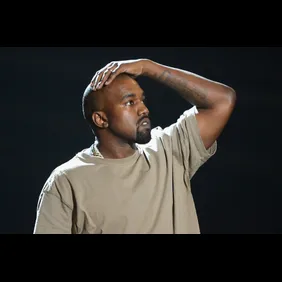
Groups like the Board of Deputies of British Jews and the Jewish Leadership Council denounced Wireless for platforming Ye while the Prime Minister and the Mayor of London did the same. What followed was a handful of sponsors, from Pepsi to Diageo, pulling out in response. While Kanye offered to meet with members of the Jewish community in what seemed like an attempt to repair the damage, they said they would only be willing to have a sit-down with him if he didn’t perform at the festival. When that didn’t force Wireless’s hand, the UK barred Ye from entering the country, forcing the festival to cancel entirely—a move the Board of Deputies of British Jews welcomed.
But this is where it gets sticky—the situation highlights the uneven application of accountability. The ban on Ye was warranted, sure, but those responsible for far greater real-world harm, including political leaders accused of war crimes and implicated in large-scale civilian deaths, face no comparable political consequences in the UK. In September 2025, a report from Amnesty International accused the UK of "enabling mass atrocities through defence contracts, public sector deals, supply chains, and failures to comply with their legal obligations."
The same organization that applauded the decision to ban Ye also condemned the International Criminal Court’s decision to issue an arrest warrant for Israeli leaders, including Benjamin Netanyahu, for crimes against humanity, including charges of having “intentionally and knowingly deprived the civilian population in Gaza” of essential resources like food, water, electricity, fuel, and medical supplies.
Kanye is undoubtedly wrong for the Hitler praise, but the overall response in the UK and elsewhere raises a broader question about how accountability is applied: why do some forms of speech and symbolism trigger immediate cultural and institutional punishment, while far more consequential actions are treated through a different, less urgent standard?
Ye’s redemption arc as of late has focused on the harm he’s caused toward the Jewish community, and rightfully so; they’ve been at the center of his hateful remarks. With the type of influence Ye has, it’s hard not to feel as though he hasn’t been, at the very least, complicit in the influx of actual antisemitism that's been normalized in recent years. But it’s also hard to ignore the fact that Kanye could disparage almost any other minority group in the world, including the one he belongs to, and never face even an ounce of the same blowback.
And this is where the conversation around accountability becomes selective in a different way. His apology to the Black community was basically limited to a sentence in The Wall Street Journal, less than a year after using KKK imagery as part of the Cuck rollout. He’s unapologetically berated sexual assault victims after being accused in a lawsuit. He’s also defended Bill Cosby and Diddy. Even his presidential campaign included limiting women’s rights to abortion access. It’s hard not to look at each of these instances as a celebrity validating and normalizing abuse and bigotry to some degree.
There’s actual harm in Kanye’s actions, and he’s evidently aware of that to some degree. The Netherlands tried to bar him after the UK’s decision, to little success. This morning, Ye announced that he would postpone his performance in France after its government threatened to ban him from entering the country.
“I know it takes time to understand the sincerity of my commitment to make amends,” he wrote on X. “I take full responsibility for what’s mine, but I don’t want to put my fans in the middle of it.”
We should remain skeptical about how long Ye can sustain his current posture or how successfully he can navigate the PR landscape to return to favor. His recent tweet marks a first in self-awareness regarding his public stance, and the fact that he decided to pull out of the performance before being banned shows that he understands how delicate the forgiveness he’s seeking really is.
In the past, he has betrayed the goodwill of his fans whenever they gave him the benefit of the doubt for his otherwise irredeemable actions. The first Donda listening party was refreshingly unproblematic. His return as hip-hop’s maestro indicated that the pull he once had was still intact, to the point where he and Jay-Z finally reunited on wax. Then came the second listening party, where he was accompanied by Marilyn Manson, an accused sexual abuser, and DaBaby, post-Rolling Loud controversy, who replaced Jay-Z on “Jail.” Just like that, his defiance against cancel culture overshadowed the music, and for listeners, it became impossible to defend him. As the Campaign Against Antisemitism stated, "His cycle of apology and relapse has become a routine, so as with any addict once again we must wait to see if this time is any different."
At the end of the day, Ye is still a compelling, contradictory, and undeniably influential force. That’s exactly why it’s impossible to cancel him into obscurity. But that’s also exactly why his actions matter, and holding him to account needs to be central to his redemption—rigidly so. We should want Kanye to be better—not submissive to a system he’s long resisted, but not reckless enough to weaponize his influence without consequence. Because the reality is, Kanye West isn’t just another artist navigating controversy. He’s a cultural force, and the same influence that makes him impossible to ignore is exactly why accountability—real, consistent accountability—has to matter.