

There’s no shortage of talent in Hip Hop, but when it comes to how that talent is recognized, or ignored, the Grammys have always struggled to keep pace. They've monitored sales and streams, but often miss the cultural weight the genre carries. Throughout its history, the Recording Academy has been accused of snubbing Hip Hop's biggest artists and game-changers, sparking debates that resurface each year as Grammy season approaches.
Recognition is supposed to mean something. The gold-plated gramophone was seen as a standard of excellence in the music industry. However, for Hip Hop and R&B, that same standard has rarely been consistent. The canon has repeatedly left out the very artists who laid the foundation of the genre.
Now, Hip Hop wasn’t always snubbed. At first, it was excluded entirely. The Grammys didn’t introduce a Rap category until 1989, more than a decade after the genre had already changed mainstream culture. That first award, Best Rap Performance, wasn’t even televised. DJ Jazzy Jeff & The Fresh Prince, who won, boycotted the show. Russell Simmons, Salt-N-Pepa, and LL Cool J joined them.
Read More: Lil Wayne & Drake Put On Blast For Not Defending Nicki Minaj Amid Grammy Snub
“They said there wasn’t enough time to televise all of the categories,” DJ Jazzy Jeff told Entertainment Tonight back in '89. “They televised 16 categories and, from record sales, from the Billboard charts, from the overall public’s view, there’s no way you can tell me that out of 16 categories, that Rap isn’t in the top 16.”
Even after that, honor was limited. Acts like Public Enemy, Eric B. & Rakim, Queen Latifah, and Boogie Down Productions helped define what Hip Hop meant, but they rarely saw nominations. Naughty By Nature won Best Rap Album in 1996, but they later told Sway's Universe that it wasn't even televised and they weren't allowed to accept their award onstage.
Albums that shaped culture, like The Chronic, Illmatic, and Straight Outta Compton, were excluded from major categories entirely. Until 1999, no Rap album had ever been nominated for Album of the Year. That changed when Lauryn Hill’s The Miseducation of Lauryn Hill won it all. It was a victory that people called a breakthrough.
The Grammy stage, which reopens February 1 in Los Angeles at the Crypto.com Arena, has always been conditional. Inclusion came late, and respect came slowly. Further, a real understanding, if it ever came, still hasn’t shown up on enough ballots.
When Recognition Fell Silent
There was no confusion about the best Rap album in 2013. good kid, m.A.A.d city was studied as Kendrick Lamar had offered a cinematic, poetic project that felt both intimate and vast. It debuted at No. 2 on the Billboard 200, sold over 1.7 million copies in the U.S., and was eventually archived by the Library of Congress. Still, at the 2014 Grammys, the trophy for Best Rap Album went to Macklemore & Ryan Lewis for The Heist. Macklemore texted Kendrick that night, saying, “You got robbed.”
Years earlier, DMX dropped two albums in one year when he delivered It’s Dark and Hell Is Hot and Flesh of My Flesh, Blood of My Blood. Both debuted at No. 1 and went multi-platinum. Neither received a Grammy nomination.
Read More: Rappers Who Have Condemned The Grammys
Doggystyle sold over 800,000 copies in its first week in 1993, becoming the fastest-selling debut album in Rap history at the time. Snoop Dogg never won a Grammy. Busta Rhymes has been nominated more than a dozen times. Not a single win. The Notorious B.I.G. died without ever winning a Grammy Award. Tupac, too. Their music defined coasts and a global era of Rap.
Even more recent records haven’t escaped the design. Star Line, Chance the Rapper’s 2025 release, was widely anticipated and praised for its concept and sound. Critics saw it as a return to form, but the Academy didn’t see it at all. Vince Staples’s Dark Times and ScHoolboy Q’s Blue Lips landed on nearly every major year-end list. Neither showed up in the Rap categories.
Read More: SZA Speaks On Grammy Snub: "It's An Old Energy To Me"
"As an artist, when I see da Grammys coming up & I’m not involved nor invited; I wonder. Is it me , my musik, or just another technicality?" Lil Wayne tweeted back in December 2020. "I look around w respect & wonder competitively am I not worthy?! Then I look around & see 5 Grammys looking bak at me & I go to the studio."
The Women They Keep Missing
Nicki Minaj’s absence from the winner’s circle is hard to rationalize. She’s one of the highest-selling women rappers of all time. There are dozens of Hot 100 entries paired with a decade-plus run of dominating the charts. Still, Minaj has 12 Grammy nominations and zero wins. Her debut, Pink Friday, sold over 375,000 copies in its first week and spawned multiple Top 10 singles. She lost in a category that was supposed to mark her arrival, but never did.
“Never forget the Grammys didn’t give me my Best New Artist award when I had 7 songs simultaneously charting on Billboard & bigger first week than any female rapper in the last decade — went on to inspire a generation,” she tweeted in 2020. “They gave it to the white man Bon Iver. #PinkFriday.”
Read More: 50 Cent Still Can't Believe He Lost "Best New Artist" At 2004 Grammy Awards
Then, there are the category maneuvers. Tyla’s album was moved from R&B to Pop by the Academy’s committees. That reclassification removed her from the very space her sound was rooted in. The decision reshaped her award trajectory before voting even began. Further, Megan Thee Stallion’s career has risen to global critical praise. Grammy wins came early, but nominations became uneven later. Records that anchored entire summers didn’t always secure ballots.
Aaliyah’s influence runs through generations of R&B. Her sound was instrumental in Timbaland and Missy Elliott's ascension, and in the melodic framework of modern Pop and Hip Hop. One in a Million went multi-platinum. "Try Again" hit No. 1 on the Billboard Hot 100. She was nominated for five Grammys and never won. Even in death, her legacy remains unmatched, yet the trophies never reflected it.
Read More: Westside Gunn Believes "Pray For Paris" Was Snubbed By Grammys
Ciara recently sat down with The Zeze Millz Show and revealed that she was disappointed back in 2013 when her mega-hit "Body Party" didn't receive a Grammy nod. "I literally had a song that was R&B that went No. 1 on the charts, right? And this song was prominent in urban pop culture. I'm talking about 'Body Party,' okay? It was a really big record," the singer said. "In that moment, say you don't get a Grammy nomination — not even a nomination — you're like, 'Wait, what?' Like, help me understand what more do I have to do?"
Read More: Jordin Sparks Suggests Chris Brown & Rihanna Beef Caused "No Air" Grammys Snub: Watch
Artists Who Spoke Up & Walked Away
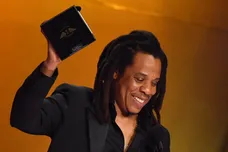
Not every artist waits to be validated. Jay-Z didn’t attend the 1999 Grammys. DMX had dropped two chart-topping albums in a single year and received zero nominations. Hov has since returned, but that early boycott set a precedent that mutual respect was required.
Although he isn't a Hip Hop artist, The Weeknd called the Grammys “corrupt” in 2020 after After Hours, a project that dominated the year of its release, was shut out entirely. There wasn't a single nomination. That same year, he headlined the Super Bowl. That contrast was stark. He boycotted the ceremony.
Read More: Why Hasn't Nicki Minaj Received A Grammy?
Kanye West has protested several times, and, at least once, by posting a video purportedly of himself urinating on a Grammy award in the toilet. Symbolic? Sure. He’s won more than 20 Grammys and is still questioning the Academy’s understanding of Black music and Black genius. And we can't forget when he stormed the stage after Taylor Swift won over Beyoncé.
Meanwhile, Ye's frenemy Drake has criticized the Grammys multiple times, including during acceptance speeches. In 2019, his mic was cut when he suggested that an award doesn’t define success. He later withdrew his music from consideration in protest of the nomination process. In another instance, he took to his Instagram Story to reiterate his frustrations.
"All you incredible artists, remember this show isn't the facts, it's just the opinion of a group of people (whose) names are kept a secret (literally you can Google it)," Drizzy penned. "Congrats to anybody winning anything for hip-hop, but this show doesn't dictate (expletive) in our world."
Read More: Nicki Minaj Fans Are Livid Over Her Lack Of 2025 Grammys Nominations For "Pink Friday 2"
Deservingly, Tyler, the Creator won Best Rap Album in 2020 for IGOR—a project that leaned sonically more into Funk, Synth-pop, and Alternative sounds while tethered to traditional Rap. He called the win a backhanded compliment. “It sucks that whenever we—and I mean guys that look like me—do anything that’s genre-bending or that’s anything they always put it in a Rap or Urban category," Tyler said backstage at the ceremony. "I don’t like that ‘urban’ word—it’s just a politically correct way to say the n-word to me."
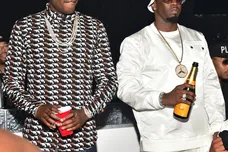
Even the presence of trophies hasn’t stopped the questions. Despite his recent incarceration, Sean "Diddy" Combs was a Grammy staple. However, that didn't stop him, too, from airing his grievances. “Black music has never been respected by the Grammys to the point that it should be," Puff once said at Clive Davis's iconic pre-Grammy party in 2020. "This thing been going on and it’s not just going on in music. It’s going on in film. It’s going on in sports, it’s going on around the world."
The Legacy Of Being Overlooked
Hip Hop doesn’t need the Grammys. That much is evident. The culture has always made its own stars and set its own standards. Yet, when an institution claims to represent "the best," and repeatedly bypasses the very artists who define an era, it becomes necessary to keep a different kind of score.
In an anonymous Grammy voters interview published by Variety, one voter admitted they no longer selected Beyoncé on their ballot. It wasn't because the work wasn’t excellent, but because she, like Adele, wins so often. That reasoning strips the moment of merit. It turns consistency into a liability and frames recognition as something that needs to be rationed.
So, what does it mean to be overlooked by an institution that has historically misread your value? Maybe nothing. For Black artists in Hip Hop and R&B, being overlooked by the Grammys has never just been about the institution. It’s about watching others be praised for the very sound they created. Hip Hop became global, as did its language. The rhythm and style spread everywhere, but the originators were often left behind while the imitators were celebrated.
Read More: Macklemore Stealing Kendrick Lamar's GRAMMY Still Sickens The Rap Community
The legacy of being overlooked is more than simply missing trophies. It’s about the Academy’s failure to understand that relevance can’t be assigned. A gold statue doesn’t make something timeless, and no award ever decides what stays in the culture. The real record and relevance are bigger than the ballot.