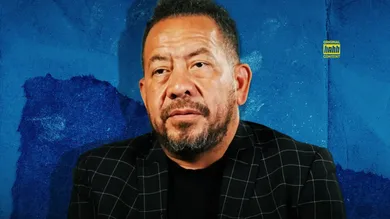


Elliott Wilson won’t let you get the best of him. His X feed is a collection of hip-hop history, news, and, most importantly, Wilson’s place within it. Every so often, you’ll see him repost someone who mentioned him but didn’t tag him, simply writing, “ELLIOTT,” whether the mention was good or bad.
These days, it sometimes feels like he has to remind people of the glory days, before he, Jeremy Hecht, and DJ Hed became cornerstones of rap media during the Kendrick-Drake beef. There was CRWN, which became a staple of hip-hop journalism around album releases, and the chemistry between Wilson and B. Dot on Rap Radar that made everyone from JAŸ-Z to Will Smith and Drake comfortable enough to open up about their lives and the lore behind their music.
That kind of access doesn't happen overnight. It comes from decades of building a reputation and earning the trust of the people you're covering. Born in 1971, Wilson has spent much of his career documenting and shaping hip-hop journalism. From Beat Down to The Source to XXL, where he eventually became editor-in-chief, Wilson helped guide the magazine through the transition into the digital era. As new generations emerged and the landscape changed, he adapted. Even after leaving XXL, he launched Rap Radar, which became an influential interview platform and a place for audiences to discover the latest hip-hop releases. Wilson has spent decades establishing himself as one of hip-hop's most recognizable media figures.
Wilson won't let you forget that history, either. His X feed remains a collage of milestones and bragging rights, a running reminder of what he's accomplished. But if hip-hop remains youth culture, then you have to meet the youth where they're at. Young audiences aren't necessarily digging through the archives. They're coming across clips that draw a reaction, whether it's an explosive revelation, a heated exchange, or a controversial opinion. Video formats and podcasts still require some degree of trust in the person speaking, which helps explain why Adam22, Akademiks, and Vlad have built influential platforms despite the backlash they often face. Just as important is the emotional response they can draw from an audience. Outrage is just as valuable as agreement when both can spark a conversation.
The difference is that many of these personalities didn't spend decades working their way through the same institutions as Wilson. Yet their influence has grown beyond what traditional hip-hop journalism can easily contain. The scope of the genre's media landscape has expanded far beyond newspapers, magazines, and online publications. Rappers have followed the blueprint of Drink Champs without always bringing the same curiosity to their interviews. Executives and A&Rs can offer insight into the inner workings of an industry that most fans rarely get to see. Then there are the streamers and influencers whose interest in hip-hop began while Wilson was interviewing their favorite rappers. The people being interviewed have increasingly become interviewers themselves, and the gatekeepers who once controlled access to the culture no longer have the same authority.
Wilson's legacy, however, has become more complicated over the past year and change. At the height of The Bigger Picture, he took on Director of Hip Hop Journalism across HipHopDX, Uproxx, and Dime. Those outlets have since leaned more heavily into Instagram as their websites have shifted toward video. That alone reflects a broader shift away from the traditional online publication model. The Bigger Picture itself attracted attention not only because of the chemistry between its hosts, but also because of the behind-the-scenes insight Wilson and DJ Hed could offer into Drake, Kendrick Lamar, and the other rappers caught up in that saga. Their access made the show compelling. At the same time, Wilson appeared to be learning that being a media personality was different from simply being a host or interviewer. Sometimes, a little provocation can go a long way.
During an appearance on The Joe Budden Podcast, B. Dot discussed his falling-out with Wilson after the two did not renew their Rap Radar partnership. He described a shift in Wilson's public persona, one that increasingly seemed to position him as an antagonist. That perception became harder to separate from Wilson's own public comments regarding the media landscape these days. He apologized to Kai Cenat after criticizing the streamer amid Nicki Minaj's interest in reaching younger audiences through platforms like his. He also questioned Cam'ron and Ma$e's move into sports commentary, despite their pursuing a lane distinct from his own. In both cases, Wilson's reactions raised a question of whether was he defending the standards of hip-hop journalism, or reacting to a media landscape in which his own approach no longer commanded the same attention.
Those moments still brought viral currency back to Wilson's name. He eventually sat down with Cam'ron on Talk With Flee, where they addressed their differences, and he later ran into Kai Cenat and apologized. His visibility didn't necessarily wane. Instead, the controversies prompted people to question whether his priorities were still centered on elevating hip-hop or increasingly on elevating himself.
That tension became more apparent when Wilson attempted to work with Vlad on a one-off episode of VladTV featuring Hit-Boy. The partnership was short-lived. Vlad later alleged that Wilson wanted a payout for the interview that was double the revenue Vlad's channel had generated from the segment. Wilson has also faced allegations surrounding a separate financial dispute with SaVon Slater of The Joe Budden Podcast, who has claimed that Wilson owes him $20,000. These are competing accounts and allegations, but they've contributed to the scrutiny surrounding Wilson's business relationships.
Business is business, at the end of the day. But the fallout from Wilson's Rap Radar partnership–despite saying that he and B.Dot could pick up right where they left off if and the disputes that have followed raise questions about how he approaches his relationships with peers and collaborators. At least, that's how some of the public has come to view him. After years of providing value to hip-hop, Wilson now finds himself under suspicion from people who once might have given him the benefit of the doubt. Part of that reaction comes from stan wars and the expectation that a journalist should remain impartial, even when covering artists whose fans have turned every disagreement into a contest. But another part stems from the perception that Wilson has become increasingly estranged from peers and partners with whom he once shared a rapport.
As a consumer, it's hard not to see how some of Wilson's more antagonistic rhetoric has complicated his legacy. It's one thing to challenge someone in an investigative report or call them out when you catch them in a lie. It's another to provoke a reaction simply because the next viral moment is worth chasing. Wilson isn't Vlad or Akademiks, two personalities who have turned online controversy into an effective part of their brands. He still seems to want the respect that comes with his journalistic legacy, even as he navigates a media landscape where younger personalities have had to build their own platforms without the institutional support that once helped journalists like him get through the door. Leaning into the hate only gets you so far when it risks undermining the principles that made people respect you in the first place.
Clout can outweigh merit in certain circumstances. Wilson's recent controversies won't erase what he's accomplished. But his legacy isn't immune to scrutiny, either. Those who criticize him often acknowledge the respect they still have for his contributions to hip-hop journalism. The problem is that every new controversy gives his critics more reason to question whether the man he has become is living up to the work he has done.
For all the times Wilson has evolved with the culture, he now faces the challenge of adapting to a generation in which many of his former interview subjects have become the interviewers themselves and the new faces of media haven't had to jump over the same hurdles he had to face. Trying to shapeshift to fit the mold of the moment risks turning him into a villain, even among people who don't necessarily want to see him that way. His legacy remains significant. Whether he can protect it without becoming consumed by the very attention economy will have to be seen in whatever he has planned next.