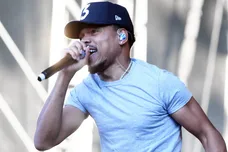
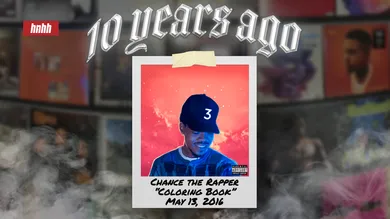


Ten years ago, Chance The Rapper's Coloring Book arrived, and it felt different almost immediately. At the time, Rap leaned darker emotionally wth moodier production. Then, Chance delivered a project built around gospel choirs, gratitude, faith, Chicago pride, and open joy without sounding naïve about the world around him. Coloring Book felt vibrant at a time when much of mainstream Rap intentionally didn’t.
Further, the rollout itself already made the project stand out. Chance released Coloring Book independently, initially through an Apple Music exclusive deal, when streaming still carried skepticism in parts of the music industry. Questions about whether a streaming-only project, or even a “mixtape,” could compete at the highest level still existed then. The project answered quickly, debuting at No. 8 on the Billboard 200 largely off streaming numbers, something that still felt new in 2016.
Read More: 5 Producers You May Not Know On Chance The Rapper's "Coloring Book"
The momentum only grew from there. Songs like “No Problem,” “Blessings,” “Angels,” and “Same Drugs” helped turn the project into one of the defining Rap releases of that year, while features from artists like Kanye West, Justin Bieber, Lil Wayne, 2 Chainz, Lil Yachty, and Kirk Franklin expanded the album’s communal feel even further.
Further, the project defined when Chance represented a different vision for Rap stardom entirely. He was independent, optimistic, spiritually grounded, and uninterested in fitting neatly inside traditional industry expectations. Looking back a decade later, Coloring Book still feels tied to that specific version of Chance The Rapper, the one many listeners believed could change the shape of Rap moving forward.
The Album That Helped Change Streaming-Era Rap
Part of what made Coloring Book feel so important in 2016 had nothing to do with the music itself at first. It was the way the project existed. Albums were still heavily judged through traditional sales, and physical releases still carried prestige. Moreover, there was ongoing doubt around whether streaming-only projects should even qualify for major awards consideration at all. Coloring Book forced those conversations ahead.
Soon came the Grammy Awards. In 2017, Chance won Best Rap Album for Coloring Book, making it the first streaming-only project to take home the top prize. He also won Best New Artist and Best Rap Performance for “No Problem,” featuring Lil Wayne and 2 Chainz. That moment felt bigger than one artist.
Read More: Chance The Rapper Officially Announces Coloring Book 10 Year Anniversary Tour: How To Cop Tickets
Streaming was already changing listening habits in 2016, but Coloring Book helped legitimize the idea that an artist could build a blockbuster release around those platforms without completely following the industry’s older rules. It’s easy to forget how unusual that still felt then.
Gospel, Joy, & A Different Kind Of Rap Album
The emotional atmosphere Chance created throughout the tape also helped separate Coloring Book from its competitors. The album was joyful without sounding shallow. It was spiritual without feeling preachy. Even at its most celebratory, there was still an awareness of family and survival underneath it all. Chance wasn’t pretending life was perfect. He just wasn’t interested in presenting numbness as the only serious emotional register in Rap.
That tone carried through the music itself. “Blessings” became central to that feeling. “Angels” carried deep hometown pride while sounding light on its feet. “Same Drugs” moved differently from almost anything dominating Rap radio at the time, emotionally vulnerable without trying to harden itself afterward.
Read More: Hottest 20 Mixtapes Of 2016
Chance had already built momentum through Acid Rap, but Coloring Book pushed him into a different space entirely with bigger stages and wider audiences. There was the award-show recognition and the feeling that he was becoming one of the defining artists of his generation, without following the industry blueprint that people expected. That independence became central to his image.
Moreover, the rapper wasn’t presented as someone chasing Rap superstardom in the traditional sense. He felt approachable, rooted in the Windy City, openly expressive, deeply tied to faith, and genuinely excited about music in a way that stood out during an era where detachment often carried more cultural currency. Even the way he spoke publicly felt less guarded from a lot of Rap stars at the time. Audiences responded to that heavily.
Read More: Chance The Rapper "Star Line" Review
Much has changed around Chance the Rapper since 2016. The public conversation surrounding him shifted in later years as expectations grew heavier. The industry, as well as listeners' reactions, changed. Yet, Coloring Book has largely remained protected from the reevaluation that tends to occur for artists over time. Even people who fell away from Chance afterward often speak about the project with a different kind of affection. Ten years later, that feeling still comes through when the music starts playing again.