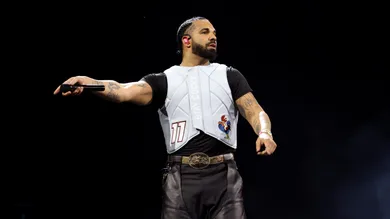


Iceman is in, huh? The anticipation around Drake’s next project largely surrounds whether the rap beef has effectively dwindled his status as the numbers guy. Because in any type of warfare he’s engaged in, the other side couldn't beat him on the charts. Meek Mill exposed Drake for using ghostwriters—he came back with a Grammy-nominated diss track that dominated the summer. Pusha T pulled the curtain on Drake’s parental status? Scorpion became a commercial behemoth, spawning several #1 records. But with Kendrick Lamar, Drake had to accept the loss. “Not Like Us” flipped the playbook so well that even his own city chanted for an encore during Kendrick Lamar and SZA’s two-night sold-out stint at the Rogers Centre in Toronto.
Two years after rap’s civil war, hip-hop’s mainstream compatibility has felt compromised. We’ve heard Jay-Z suggest that battling might not fit into the current landscape because of how social media has taken extremes on both sides. The Game reposted a message from Isaac Hayes III claiming the rap beef “killed commercial hip-hop,” adding that Drake’s absence has the genre down “50%.” Even Talib Kweli said it feels like the battle never happened because Drake still rings off in clubs. The issue isn’t that Drake lost a battle—someone had to lose. The problem is that the machine that once made him untouchable isn’t working anymore.
In the midst of these narratives were a slew of commercial feats reinforcing Drake’s dominance—his last rap song hitting the top 10 with “What Did I Miss?”, breaking his own Spotify record, and all 10 of his albums charting simultaneously. At a certain point, it starts feeling like propaganda. Since losing the rap beef, he and his cohorts have tried to convince everyone that nothing changed while also dragging things into court with UMG. Both can’t be true.
Somehow, this has turned into hip-hop’s health on the charts being tied to Drake’s return. That’s a losing setup for an artist whose own critical appeal has been watered down by his pursuit of numbers—numbers that have also faced accusations of being inflated in lawsuits against Spotify. The genre’s absence from the top keeps getting framed as a crisis, but that says more about the metrics than the music. There hasn’t been a moment as ubiquitous as the feud—not “Nokia,” not “What Did I Miss,” not even Kendrick and SZA’s “luther” run at #1.
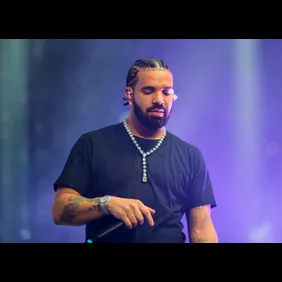
But that’s what underscores the bigger issue. Drake’s facing the most pressure in his career to make a comeback that restores that presence, while also facing more doubt than ever about what he can actually do on the charts. In the past, the machine worked in his favor. His budget was treated as limitless, his process untouched—he could drop when he wanted, how he wanted, because the return was guaranteed. That’s the level of leverage artists like him, Taylor Swift, and The Weeknd operate with.
But those guarantees don’t feel the same anymore—and that’s not because of the beef. Hip-hop hasn’t felt like a priority since the turn of the decade. Ironically, the Drake-Kendrick feud was one of the few moments in years where the genre actually felt central again. Its rise and resolution just made everything that followed feel smaller.
The machine itself isn’t working—and it’s apparent. Artists don’t control radio, budgets, or distribution, so no rapper can be blamed for the dry spell. Labels and platforms dictate visibility, and one of the biggest grievances right now is the lack of artist development. A lot of that ties back to hip-hop no longer being prioritized. When Vince Staples spoke on the feud, he pointed to the bigger issue—Black-led imprints being folded into major systems, and the people who cared about the music being laid off or reduced to “glorified A&Rs.”
And beyond that, everything is being filtered through an algorithm that’s easy to manipulate and even easier to see through. Trend-hopping doesn’t land the same when everyone recognizes it in real time. Songs blow up, stick around briefly, then disappear. There’s no attachment. Ultimately, it’s the art being pushed that lacks evolution, not the artists themselves. Attention spans are already short, and the algorithm only reinforces that cycle. Something pops, lives for a moment, then gets replaced. The H3adband song “Boo” was inescapable, yet there’s nothing about it that feels lasting beyond sounding like a knock-off NBA YoungBoy record.
The interesting part is that wave-hopping is that’s what sustained Drake’s longevity as a hitmaker. Reinvention kept him ahead of the curve, helping break new artists and sounds—Migos being a prime example, and part of why that third verse on “Not Like Us” struck a chord. At a certain point, that stopped being a strategy and became an identity. Drake became the algorithm. The value he brought to the label—and what earned him that Lebron-sized deal—was his ability to identify trends and commercialize them at scale. His chameleon-like approach made emerging sounds palatable to a wider audience, even if only for a moment.
By maintaining that omnipresence, he became the biggest rapper in the world—a title backed by numbers as much as perception. He optimized streaming culture through volume, playlist dominance, and meme-ability, even when the joke was on him. But that came at a cost. The music got bloated, the moments felt manufactured, and the excitement plateaued.
The hits felt engineered. We showed up for the drops, but they didn’t stick the same way something like “God’s Plan,” or If You’re Reading This It’s Too Late did. The albums got longer, filled with songs that felt more like padding for streams than actual statements. For All The Dogs was the clearest example, lacking focus and charisma. “IDGAF” chased Yeat’s sound, “Rich Baby Daddy” felt forced despite its reach, and even “First Person Shooter” with J. Cole didn’t land as it should have.
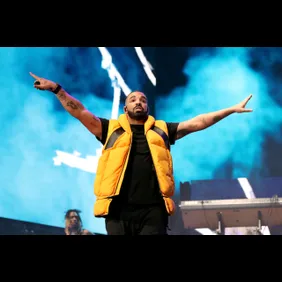
That was the culmination of his relentless output. The TikTok-era pivot with “Toosie Slide” worked, but it didn’t last beyond the pandemic. Since then, his strategy became obvious, and the results felt less meaningful over time as the numbers became central to his identity.
Then Kendrick happened. The feud exposed the layer of invincibility around Drake. The releases that followed felt off. The bars didn’t hit the same, the melodies felt less convincing, and everything started sounding reactive. Now he’s stuck where either direction works against him—bars feel forced, melodies feel safe.
And when people stop believing in the algorithm, it stops working. That’s what makes Iceman such a loaded moment. There’s pressure for it to do more than just be a good album—it’s being positioned as something that could restore hip-hop’s presence on the charts. But that expectation doesn’t really hold up. Charts don’t equal impact, and viral moments don’t last. Even if Iceman delivers hits, it won’t fix the underlying issue. Drake can still succeed within this system, but he can’t carry it.
At the end of the day, hip-hop has always belonged to the streets, the underground, the people. The more it’s been shaped by what labels decide to push, the less compelling it’s felt. Even Yeat has called parts of the current wave “slop.” The more traditional approaches still resonate because they feel rooted in something real. Drake’s comeback hinges on acknowledging that he’s no longer the center of everything. He’ll remain successful, but the system itself has been failing artists for a while now. Once hip-hop decentralizes, it might finally correct itself.