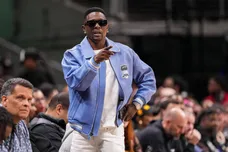


A $600,000 effort to secure presidential clemency has left Boosie Badazz without a pardon and fighting to recover half of what he paid. He reportedly hired JM Burkman & Associates in 2025 to lobby Donald Trump’s administration after pleading guilty to a federal firearm charge, according to contracts and communications reviewed by NOTUS. The arrangement has since moved into arbitration, where Boosie is seeking a $300,000 refund the firm disputes owing him.
The payment did not buy a pardon. It was allegedly supposed to fund the work required to pursue one. Federal lobbying disclosures show Jack Burkman and Jacob Wohl registered to contact Congress, the Justice Department, and the White House on Boosie’s behalf. The agreement reportedly allowed him to request half of the fee back if clemency had not been secured by January 31, 2026, though the firm now contends that no refund provision was finalized.
Read More: Boosie Badazz Says He’s Suing Jack Burkman & Jacob Wohl For $10M Over Pardon Scandal
Boosie says the lobbyists initially spoke as though they had direct access to Trump. His attorney later received messages suggesting the application was moving through the administration and that the president had signed off. No pardon appeared. A White House aide reportedly told Boosie’s attorney that the administration had not seen his application.
That disconnect spilled onto social media, where Boosie publicly called on several conservative influencers and Republican lawmakers to confirm whether they had been contacted about his case. Laura Loomer denied knowing about the pardon effort or Boosie’s legal situation. She also suggested Burkman may have been invoking prominent names without permission. Rep. Nancy Mace offered a narrower account, saying her office received an email and participated in one call but made no promises.
Burkman’s firm maintains that it carried out an extensive advocacy campaign and still believes Boosie deserves clemency. Trump has not publicly addressed the rapper’s request or the dispute over the lobbying fee. The fight has reopened a subject that has followed Hip Hop through both Trump administrations. Presidential clemency has changed the legal futures of several rappers and music industry figures, sometimes through formal Justice Department channels and sometimes after sustained advocacy from attorneys, celebrities, or political allies. Boosie’s failed attempt offers a messier view of that process, one shaped by expensive promises, disputed access, and the extraordinary value placed on a president’s signature.
Understanding Presidential Clemency
Not every act of presidential clemency carries the same legal weight, a distinction that becomes important when looking at the names on this list. A presidential pardon forgives a federal offense and restores certain civil rights, though it does not erase a conviction or declare someone innocent. A commutation, by contrast, reduces or ends a federal sentence without overturning the conviction itself. Presidents can only grant clemency for federal crimes, leaving state convictions outside their authority.
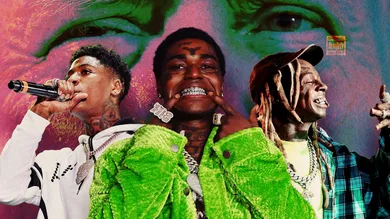
Trump used both forms of executive power during his time in office, extending relief to figures whose stories have become part of Hip Hop history. While every case followed a different path to the White House, each demonstrates the extraordinary reach of presidential clemency.
Lil Wayne
A federal prison sentence appeared all but certain until Trump used one of his final acts in office to grant Lil Wayne a full presidential pardon. The rapper had pleaded guilty weeks earlier to possessing a firearm as a convicted felon after federal agents recovered a loaded, gold-plated handgun during a search of his private jet after it landed at Miami-Opa Locka Executive Airport in December 2019. He faced up to 10 years in prison before the pardon halted the case before sentencing could take place.
Wayne's clemency quickly became one of the most talked-about decisions of Trump's first term. It arrived less than three months after the two met to discuss the administration's proposed Platinum Plan, fueling widespread speculation, though no evidence has ever shown the meeting played a role in Trump's decision to grant clemency.
Read More: Lil Wayne & His Trump Lyrics: A Love Letter To Power
Kodak Black
More than three years remained on Kodak Black's federal prison sentence when Trump cut it short during his final day in office. The rapper had been sentenced in 2019 after pleading guilty to making false statements on federal forms while attempting to purchase firearms. Trump commuted his sentence in January 2021, allowing Kodak to leave federal custody months ahead of schedule. In announcing the decision, the White House cited his charitable work.
Meanwhile, Kodak publicly thanked Trump following his release, describing the commutation as a second chance. His case became one of the most prominent examples of Trump's clemency decisions involving Hip Hop, while also prompting criticism from those who questioned how clemency recipients were selected. Unlike Wayne's pardon, Kodak's commutation ended his prison sentence but left his federal conviction intact.
NBA YoungBoy
The remaining federal penalties tied to NBA YoungBoy’s firearm conviction ended when Trump granted him a presidential pardon in May 2025. YoungBoy had been sentenced to 23 months in federal prison and five years of supervised release after pleading guilty to possessing firearms as a convicted felon. He had completed his period of home confinement by the time the pardon was issued, but still faced years of federal supervision. This included probation requirements and travel restrictions. Trump’s pardon relieved him of those remaining federal penalties.
YoungBoy had also resolved a separate Utah prosecution involving a prescription drug fraud scheme. That state case was handled through a plea agreement and was not covered by the presidential pardon, since a president’s clemency authority applies only to federal offenses.
Read More: NBA YoungBoy Professes His Allegiance To Donald Trump
Michael "Harry-O" Harris
When Donald Trump announced a wave of clemency grants during his final hours in office, one name stood apart from the rest. Michael "Harry-O" Harris had already spent more than three decades in federal prison, making him one of the longest-incarcerated figures connected to Hip Hop's early business history.
Harris wasn't an artist, but his money helped launch Death Row Records during its formative years through Alcash Holdings. It placed him at the center of one of Rap's most influential labels despite spending much of its rise behind bars. His sentence stemmed from federal drug trafficking and attempted murder convictions, keeping him incarcerated for roughly 32 years before Trump commuted his sentence in January 2021.
Desiree Perez
A decades-old federal drug conviction no longer stood in Desiree Perez's way after Donald Trump granted the Roc Nation CEO a full presidential pardon during his final day in office. Perez pleaded guilty in the 1990s for her alleged role in a trafficking conspiracy before rebuilding her career into one of the music industry's most significant executives.
The Roc Nation CEO received a full presidential pardon in January 2021, bringing formal federal forgiveness. The White House cited her years of philanthropy, criminal justice reform efforts and leadership in the music business when announcing the pardon. Her case stood apart from Trump's clemency decisions, recognizing someone whose influence has largely come behind the scenes, reflecting the broad reach across different corners of the music industry.
Read More: Roc Nation CEO Desiree Perez Receives Pardon From Trump: Report
Taken together, these pardons and commutations illustrate how presidential clemency has become an unexpected part of Hip Hop's modern history, shaping careers, changing lives, and leaving a lasting mark on the culture.