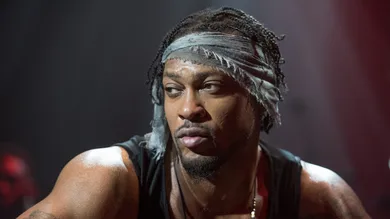


D’Angelo is gone. His death was confirmed quietly, with the kind of privacy that once defined him. The shocking news has stunned admirers and supporters as they learned that he reportedly lost his battle with pancreatic cancer. For many, the loss lands harder because it comes on the heels of another, seven months after the passing of singer and songwriter Angie Stone, whom he dated in the 1990s. Their relationship was complicated, but their connection was real, inspiring classic albums and just as much controversy. Together, they had a son. Separately, D'Angelo was the father to two other children. With Stone, he helped build the foundation for what became known as Neo-Soul.
Further, D'Angelo didn’t flood the charts, but he moved the sound. At a time when R&B leaned toward shiny production and rigid formulas, even fusing with Hip Hop, D’Angelo returned to something older and more human. His music sat in the moment. Across just three albums, he helped shift the direction of Black music by pulling from Gospel, Jazz, Funk, and Soul without flattening them into nostalgia. His voice carried texture and he featured arrangements allowed for silence, sitting in a groove. His timing reminded listeners that urgency didn’t always have to be loud.
Read More: D’Angelo Reportedly Dead At 51
For years, fans waited for him. Not because he promised them anything, but because the work he’d already done felt unfinished. His absences became part of the tale, but never the whole story, because when the music did arrive, it held more than just melody. There was memory, faith, grief, anger, sex, protest, and God. Now, in his absence, it holds even more.
The Legacy Of A Neo-Soul Icon
D’Angelo disrupted the rhythm of R&B. His debut wasn’t designed to meet industry standards or match radio-friendly Pop trends. It was recorded live, filled with analog warmth, and unapologetically slow. His single, "Brown Sugar," pulled from his debut album of the same name, sounded like it was made for people who already knew the language. Black culture understood the references and space between the notes. There was no marketing gimmick, but a voice, a Rhodes keyboard, and a refusal to explain anything to anyone who didn’t already get it.
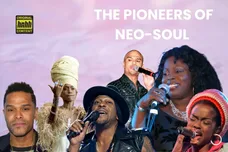
Moreover, D'Angelo didn't follow a template, as he was embarking on a scene that was in its infancy. His peers, fellow artists like Maxwell, Erykah Badu, Angie Stone, and Lauryn Hill, were all pulling from the same ancestral palette, but D’Angelo’s sound felt heavier. It wasn't in volume, but in weight. He made the music drip and let instruments speak. He asked listeners to meet him where he was, and if they couldn’t, the record would still hold without them.
When Voodoo arrived five years later, it didn’t pivot but deepened. The grooves ran looser and drums slipped off time. The whole album felt like a live set happening in the back of a dark room. Critics struggled to describe it. However, musicians didn’t. For artists and fans, it became scripture. Then, when Black Messiah surfaced after more than a decade, it sounded like someone who had been watching the world fall apart and recording through it.
D'Angelo: The Man Behind The Music
Fame never quite fit him. D’Angelo was born Michael Eugene Archer in Richmond, Virginia, raised in the Black church, and, like many other singers, Gospel music shaped his approach to his artistry before he ever cut a demo. His father was a Pentecostal preacher and D'Angelo's first instrument was the piano. By the time he was a teenager, he was already composing, producing, and leading local bands. That early discipline never left. Neither did the tension between spirit and performance.
He first broke through with a demo that caught the attention of EMI. Yet, it wasn’t just the label that saw it. Questlove, Raphael Saadiq, and Angie Stone recognized the weight in his sound and aligned with it. They didn’t polish him, but protected what made it different. Together, they helped develop what would become Brown Sugar, an album that sounded like it had been played in basements for years before it hit shelves. The industry tried to market him as the new Marvin Gaye. He already knew he was something else.
Read More: From D’Angelo To Erykah Badu: The Pioneers Who Made Neo-Soul Timeless
Still, the spotlight came, and it clashed with everything he valued. After "Untitled (How Does It Feel)" turned him into a sex symbol, the attention got louder and more obsessive. There were updates about how he stopped showing up, sometimes missing tour dates. He reportedly got into accidents. The pressure to stay visible, paired with his internal struggles of addiction, depression, and grief, pushed him further out of view. For years, gossip filled the silence, as D'Angelo refused to answer every doubt or rumor. Still, those who paid attention understood that his absences weren’t about ego or excess, but about preservation.
Angie Stone remained a constant thread, even after their relationship ended. She helped craft his earliest recordings and gave birth to their son, Michael. “I am grateful for your thoughts and prayers during these very difficult times, as it has been a very rough and sad year for me,” Michael told PEOPLE in a statement. “I ask that you please continue to keep me in your thoughts as it will not be easy, but one thing that both my parents taught me was to be strong, and I intend to do just that."
Essential D’Angelo Tracks
“Brown Sugar” (1995)
This wasn’t a debut single built for radio rotation. It was coded language that sounded like it was sung through memory. On the surface, "Brown Sugar" reads as a love song, but the metaphor, an ode to marijuana, wasn’t really hidden. It just didn’t need to be decoded to be felt. D’Angelo’s delivery was warm and grounded in a cadence that pulled from Jazz phrasing more than R&B structure. This song introduced him, but more importantly, it introduced a sound that hadn't exploded on the charts yet.
The track landed on Billboard, peaking at No. 5 on two charts. It told artists they could build something with live instruments and analog depth and still make people move. It was the first proof that he wasn’t simply chasing a moment.
Read More: D'Angelo's Family Reveals The Legendary Singer's Cause Of Death In Heartfelt Statement
“Untitled (How Does It Feel)” (2000)
This is the one that stopped time. "Untitled" pushed D’Angelo into the mainstream and nearly swallowed him whole. The song itself is a masterclass in musical restraint, utilizing a slow burn with vocal layering so intricate it sounds like one long breath. Prince comparisons were inevitable, but D’Angelo wasn’t imitating what had already been done. He was conjuring a new era.
The video also became a flashpoint. It was intimate, stripped down (quite literally), and hypersexualized without choreography or context. Vulnerability became a sideshow. He became body first, artist second, and it seemed as if the backlash changed him. What became the peak of his fame was also the start of his retreat. It’s a benchmark in Modern Soul.
Read More: Tyler The Creator Mourns D'Angelo In Heartfelt Tribute
“Lady” (1996)
Of all his singles, "Lady" came closest to Pop. It climbed to No. 10 on the Billboard Hot 100 and remains his most commercially successful track. Still, it didn’t bend to crossover pressures. It carried the same raw instrumentation and sensual pacing as the rest of Brown Sugar. The difference was the polish that felt a little cleaner and more radio-ready while not losing its edge.
This was the song that proved D’Angelo could play within the format without flattening himself for it. It gave him a further reach without compromise. For many listeners, this was their entry point, but longtime fans saw "Lady" as confirmation that music could reach the charts and still hold its weight.
Read More: Jill Scott, DJ Premier, The Alchemist, & More Pay Tribute To D'Angelo
The Echo That Remains
Arguably, D’Angelo never made a bad album. He only made three LPs, and each one sounds like it took as long as it needed. Brown Sugar introduced the language. Voodoo expanded on it, earning the singer his first Grammy for Best R&B Album. Then, Grammy-winning Black Messiah returned with teeth, arriving in the shadow of Ferguson and carrying the weight of protest and spiritual reckoning. He never said much in interviews, but D'Angelo let the music hold the charge.
There are other songs that carried their own weight. "Really Love" gave Black Messiah its most tender moment, sampling Curtis Mayfield's "We the People Who Are Darker Than Blue" in a flamenco-tinged production that sounded like a love letter found years after it was written. D'Angelo had a knack for creating kinds of songs you keep coming back to because they don’t rush to be understood.
Read More: 50 Cent Admits D’Angelo’s “Untitled (How Does It Feel)” Inspired Him To Get In Shape
Now, the silence is final, but the work remains. It isn't just in playlists or streaming algorithms, but in the entire generation of artists—and those to come—who built from his blueprint. The ones who slowed their pace, deepened their understanding of their own artistry, and trusted that the right listeners would stay. D’Angelo didn’t give us everything but what he could. What he left behind is enough, and we will continue to celebrate his genius.