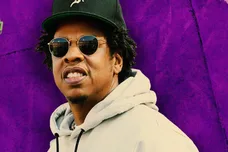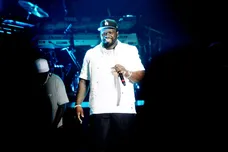
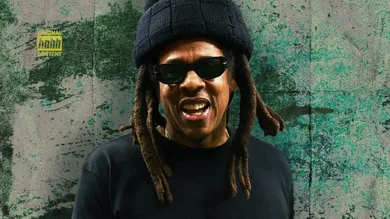


At the Roots Picnic, Jay-Z didn't look like a rapper running out of time. He looked exactly like what he has been for decades, one of the most gifted and accomplished artists Hip Hop has ever produced. As thousands of fans recited lyrics spanning multiple eras of his career, the performance served as a reminder of something the culture still struggles to reconcile.
Hip Hop has spent much of its existence celebrating youth while treating aging like a problem to be solved. Every few years, the conversation returns in a slightly different form. Older rappers should step aside and leave room for the next generation. They should stop trying to compete with younger artists. The latest version arrived recently when rapper Trim suggested that Rap's elders should focus on business before becoming "washed up," a sentiment that sparked debate across social media.
Read More: JAŸ-Z Already Warned Us: 2026 Is All Offense
The problem with that argument is that reality keeps refusing to cooperate. Jay-Z's appearance at the Roots Picnic wasn't a victory lap built on nostalgia. It was the performance of an artist who still commands a stage, still captivates an audience, and still occupies a place at the center of Hip Hop's cultural conversation. More than 50 years after the genre's birth, perhaps the question is no longer whether older rappers belong, but whether Hip Hop is finally mature enough to stop confusing age with irrelevance.
Hip Hop Has Always Had A Complicated Relationship With Aging
Hip Hop's discomfort with aging is one of the culture's strangest contradictions. Few genres celebrate legacy more aggressively. Fans debate classic albums and build entire media platforms around the artists who helped create and mold Rap history. Yet, many of those same conversations become noticeably less generous once the artists themselves get older. Somewhere along the way, Hip Hop adopted the idea that relevance has an expiration date, one that often arrives much earlier than it does in other forms of music.
The expectation never made much sense. Rock legends like Elton John, Bruce Springsteen, Paul McCartney, and Mick Jagger continue performing before sold-out crowds well into their 70s and 80s. Country icons such as Dolly Parton and Willie Nelson are treated as living institutions. Jazz musicians are often celebrated for the perspective and mastery that come with age. Their longevity is viewed as evidence of greatness, not proof that they've stayed too long. Rap, meanwhile, spent years acting as though turning 40 should trigger an exit strategy.
Read More: Joe Budden Explains Why He Didn't Like Jay-Z's Roots Picnic Freestyle
Part of that tension comes from Hip Hop's origins. The genre emerged from youth culture, driven by young people creating something entirely their own. In its early years, there simply were no elders because the culture itself was still young. However, Hip Hop is no longer fighting for legitimacy. It is more than 50 years old, and the pioneers who built it have aged alongside it.
Moreover, the audience has, too. Many of the fans who bought Reasonable Doubt, Illmatic, The Chronic, or All Eyez on Me when those albums first arrived are now middle-aged themselves. They aren't looking at Jay-Z, Nas, Black Thought, Busta Rhymes, Common, or LL Cool J as relics from another era. They're watching artists who continue to evolve while carrying decades of experience. The idea that rappers should quietly disappear after a certain age feels increasingly disconnected from the reality of what Hip Hop has become and who it now serves.
Jay-Z Didn't Look Washed Up, He Looked Comfortable In Greatness.
One of the reasons the "older rappers should retire" argument continues resurfacing is because people often confuse relevance with visibility. In the social media era, relevance is frequently measured through viral moments, chart placements, controversy, and online engagement. By those standards, almost every artist eventually loses ground to a younger generation. Still, Hip Hop has always had another measure of greatness, one that can't be captured by algorithms or streaming statistics alone.
Jay-Z's Roots Picnic performance was a reminder of that distinction. There was no manufactured controversy attached to the appearance or public feud, a desperate attempt to chase trends. There wasn't a rollout designed to convince audiences that he still mattered. He walked onstage carrying something far more valuable with one of the deepest catalogs in the history of Rap and the confidence that comes from knowing it.
Read More: Dame Dash Says He Is "Embarrassed" For Jay-Z, Criticizes His Hair
That matters because Hip Hop often treats aging artists as if they're fighting to preserve their careers, but Jay-Z no longer has anything to prove in that regard. At 56, he occupies a space few artists in any genre ever reach, one where greatness becomes so established that every appearance feels less like a comeback and more like a reminder.
Jay-Z Represents Something Hip Hop Never Planned For
When Jay-Z released Reasonable Doubt in 1996, Hip Hop had no blueprint for what a 56-year-old Rap superstar was supposed to look like. Today, Jay-Z occupies a space that barely existed when his career began. He is no longer simply a recording artist but a businessman, investor, sports executive, philanthropist, and cultural figure whose influence spreads far beyond music. Through ventures such as Rocawear, Roc Nation, Armand de Brignac champagne, D'Ussé cognac, and a series of high-profile investments and partnerships, he helped create a wealth-building model that countless artists have attempted to replicate. Entire generations of rappers now speak openly about ownership and generational wealth using language Jay-Z spent years popularizing through both his music and his business dealings.
What's remarkable is that none of those accomplishments required him to abandon Rap. For years, Hip Hop treated business success as the exit strategy. Artists were expected to build their wealth, retire from music, and move on. Hov rejected that framework. He became a mogul without surrendering his identity as an artist. That's why a performance like Roots Picnic carries so much weight. The audience isn't simply looking at a veteran rapper holding onto relevance. He's someone who helped redefine what longevity could look like in Hip Hop.
Read More: Mal Reveals Drake's Initial Reaction To Jay-Z's Roots Picnic Freestyle
The Best Evidence Against The "Retire" Argument Already Exists
If Jay-Z were the only example, the conversation might be different. Every genre has its outliers. Look across Hip Hop, and you'll find veterans who continue to produce some of the strongest work of their careers. Nas spent the past several years building one of the most impressive late-career runs the genre has ever seen, releasing multiple acclaimed projects with Hit-Boy and earning a Grammy for King's Disease. Black Thought remains one of the most respected lyricists in music, delivering performances that routinely remind audiences why he's considered an elite artist. Killer Mike earned the biggest commercial and critical accolades of his solo career in his late 40s, while artists like Common, LL Cool J, Busta Rhymes, and others continue finding new ways to engage audiences without chasing trends.
Read More: Jay-Z Takes Shots At Kanye West During Roots Picnic Freestyle
Many of these artists stopped competing on the industry's terms years ago. They are not trying to become the next viral sensation or reinventing themselves every six months to satisfy an algorithm. They are drawing from decades of experience, refining their craft, and creating work that reflects where they are in life. In many ways, that is what maturity in an art form is supposed to look like.
Perhaps the real issue is that Hip Hop spent so many years imagining success as a young person's game that it never developed the language to talk about artistic longevity. Yet, that longevity is becoming one of the genre's greatest strengths. The culture is finally old enough to have elders, and many of them are still operating at a remarkably high level. Far from holding the genre back, they are helping expand the possibilities of what a Rap career can become.
The Genre Is Finally Growing Up
The conversation surrounding older rappers also says as much about Hip Hop as it does about the artists being discussed. For decades, the culture has defined itself through innovation, disruption, and the constant arrival of a new generation eager to challenge the one before it. That tension has always been part of Hip Hop's DNA. Every era believes it is reinventing the genre and eventually finds itself defending its place within it.
Further, Hip Hop is no longer a young culture trying to prove it belongs. It is one of the most influential artistic movements of the last half-century, from fashion and language to politics, sports, and business. The artists who helped build that foundation are now entering their 40s, 50s, and 60s. More importantly, so are the fans who grew up with them. The audience and culture have matured. The conversation around age should mature with it.
Read More: Jay-Z & The Roots Host Private Philadelphia Show Before Picnic Set
What's often missing from debates about older rappers is an understanding of how hard it is to achieve longevity in music. Plenty of artists have a hot year, and some even have a hot decade. Very few remain relevant across multiple generations while continuing to evolve. That requires adaptability, discipline, reinvention, and a level of artistic endurance that cannot be manufactured. Jay-Z didn't prove that older rappers still belong at the Roots Picnic, but that the conversation itself may be overdue for retirement.