

Nike has been in the business of signing athletes for decades, and nobody does it better. From the moment they took a chance on a rookie from North Carolina in 1984, Nike rewrote the rules on what a brand-athlete partnership could look like.
Some of these deals changed sports marketing forever. Others built billion-dollar product lines from zero. Here are the greatest Nike signature athlete deals ever, ranked from least to most impactful:
18. Wayne Wells
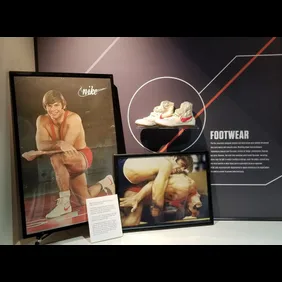
Most people have never heard of Wayne Wells, and that is exactly what makes his place on this list so remarkable. Wells is Nike's very first signature athlete, a distinction that predates Michael Jordan, LeBron James, and every other name on this list by over a decade.
A welterweight wrestler from Oklahoma, Wells won a gold medal at the 1972 Olympics in Munich and was approached by a Nike sales rep shortly after his victory. He was eventually introduced to Nike co-founder Phil Knight and signed a deal to collaborate on a high-top wrestling boot called the Nike Greco.
Wells went on to become a practicing attorney after his wrestling career, and his original shoes and Nike poster now sit in the National Wrestling Hall of Fame. It is the smallest deal on this list by any commercial measure, but without it, the entire signature athlete program that produced everything else here simply does not exist.
17. David Robinson
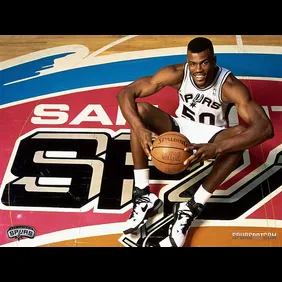
David Robinson was the 1st Nike signature basketball athlete after Michael Jordan, and that context alone earns him a spot on this list. Nike waited 6 years after signing Jordan before committing to another NBA player.
They chose well with the Admiral. Robinson was one of the most dominant big men of his era, a two-time champion and league MVP who carried himself with a professionalism that made him genuinely marketable.
The Nike Air Command Force wasn't the flashiest shoe Nike ever produced, but it was built for a true center and reflected his no-nonsense approach to the game. The deal proved that Nike could build signature lines around players other than Jordan, which was a more important step than most people give it credit for.
16. Sheryl Swoopes
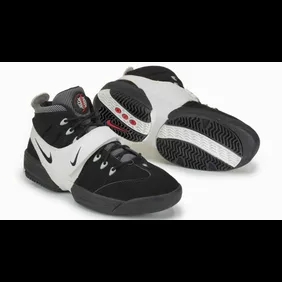
Sheryl Swoopes holds a title that most sneaker fans overlook entirely. When Nike released her signature shoe in 1996, she became the first woman ever to have a signature basketball sneaker with any brand.
It was a milestone that the industry had been sleeping on for years. Swoopes went on to win four WNBA championships and three league MVP awards, fully justifying every dollar Nike put behind her.
The deal was groundbreaking not just because of the shoe itself but because of what it represented for women's basketball. The WNBA was still in its infancy at the time, and Nike made a bold bet on women's hoops before it was fashionable to do so.
15. Bo Jackson
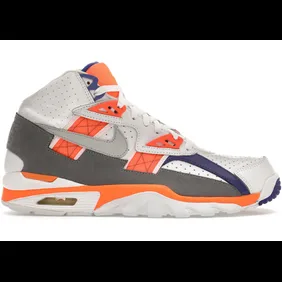
Bo Jackson's Nike deal sits in a category of its own because it was never really about basketball at all. Nike signed the two-sport phenomenon in the late 1980s and built one of the most iconic ad campaigns in sports marketing history around him.
The "Bo Knows" campaign is still talked about today. Jackson was simultaneously playing professional baseball for the Kansas City Royals and professional football for the Los Angeles Raiders. That gave Nike a canvas that no other athlete in history could offer.
The cross-training shoe category Nike built around him was genuinely innovative. The ads became part of American pop culture in a way that most sneaker campaigns never achieve. Bo's deal proved that Nike could build an entire product category around a single athlete's personality.
14. Scottie Pippen
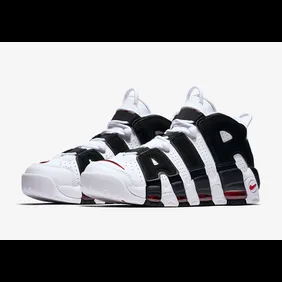
Scottie Pippen's Nike deal rarely gets the recognition it deserves, largely because it existed in the shadow of his famous teammate's arrangement. Pippen was one of the greatest players of his generation and a six-time champion.
Nike built a legitimate signature line around him throughout the Bulls dynasty years. The Pippen line had a distinct design language that set it apart from the Air Jordan models and sold well enough to sustain multiple iterations through the late 1990s.
What makes Pip's deal particularly interesting in hindsight is how well it demonstrates Nike's ability to build a supporting cast of signature athletes around Jordan Brand without cannibalizing the main line. That was a genuinely difficult balance to strike, and they pulled it off.
13. Diana Taurasi
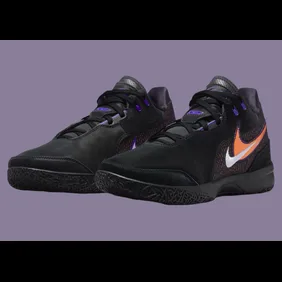
Diana Taurasi is the greatest women's basketball player of all time by most measures, and her Nike partnership reflects that legacy. Following in the footsteps of Sheryl Swoopes, Taurasi signed with Nike early in her WNBA career and became one of the most decorated athletes on the brand's entire roster.
She won three WNBA championships, multiple Olympic gold medals, and league MVP honors while representing the Swoosh. Nike released two signature models bearing her name.
The deal is significant not just for what it meant to Taurasi personally but for how it helped Nike cement its dominance in women's basketball. At a time when the brand was investing seriously in that space, Taurasi was the perfect face for it.
12. Paul George
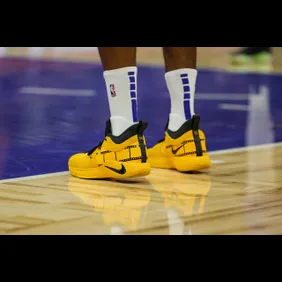
Paul George's Nike deal is one of the more underrated partnerships on this list when you look at the consistency and quality of what the two sides produced together. George signed his first signature shoe deal with Nike in 2017 after years as a general Nike athlete.
The PG line quickly developed a reputation for being one of the best-performing basketball shoes on the market at any price point. The shoes were genuinely affordable compared to other signature models, which helped them reach a broader audience and build a loyal following among actual players rather than just collectors.
George's deal proved that you don't need to be the biggest star in the league to run a successful signature line. A great product goes a long way.
11. Russell Westbrook
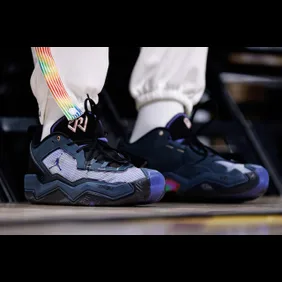
Russell Westbrook's Jordan Brand deal, signed in 2013 and extended for ten years in 2017 at a reported $150 million, was one of the most significant partnerships the Jumpman had made in years. Westbrook brought a level of energy and fashion-forward personality to Jordan Brand that felt genuinely fresh.
His Why Not signature line reflected that in both design and marketing. Beyond the shoes themselves, Westbrook helped modernize Jordan Brand's image at a point when the label needed to connect with a younger audience.
His influence on streetwear and his willingness to push boundaries in personal style made him an ideal ambassador for a brand trying to stay culturally relevant. He wasn't just wearing the shoes; he was actively shaping what the brand stood for.
10. Penny Hardaway
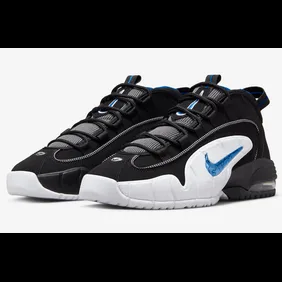
Penny Hardaway's Nike deal in the 1990s produced one of the most beloved signature shoe lines in NBA history. The Lil' Penny puppet campaign remains one of the greatest marketing efforts Nike has ever run.
Hardaway was electrifying on the court, a 6'7" point guard who could do things nobody his size had ever done before. Nike built a product line around him that matched his playing style perfectly. The Air Penny 1 through Air Penny 5 are all legitimate classics that still command serious attention on the resale market today.
The tragedy of Hardaway's deal is that injuries cut his peak years short, but the shoes and the cultural footprint they left behind have more than outlasted his playing career. Few signature lines from that era have aged as well.
9. Zion Williamson
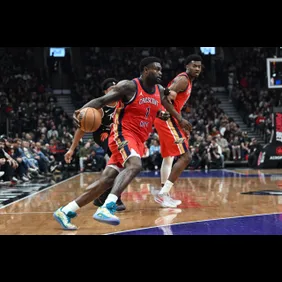
Zion Williamson's Jordan Brand deal, signed in 2019 for a reported $75 million, was the most significant rookie sneaker contract since LeBron James entered the league in 2003. Nike and Jordan Brand recognized in Williamson something they hadn't seen in a generation.
He had the physical gifts and marketability to carry a signature line for the next two decades. The Zion 1 debuted in 2021 and was one of the largest signature shoe launches in Nike's history at the time.
Injuries have complicated the narrative since then, but the deal itself represents a landmark moment in the sneaker industry. It was a reminder of just how aggressively Nike is willing to invest when they believe they are looking at a generational talent.
8. Giannis Antetokounmpo
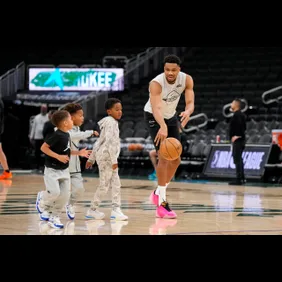
Giannis Antetokounmpo's Nike story is one of the more remarkable in the brand's history when you consider where it started. Before he became a two-time MVP and NBA champion, Giannis was earning a reported $20,000 a year from Nike.
He renegotiated to a significantly larger deal in 2017. The Zoom Freak 1 debuted in 2019 and was reportedly the largest signature shoe launch in Nike's history at that point. That is a staggering leap for a player who had been earning almost nothing from the brand just two years earlier.
Giannis's global appeal, his personality, and his dominance on the court have made the Freak line one of Nike's most successful active basketball partnerships. There is still a lot of runway ahead for this one.
7. Kyrie Irving
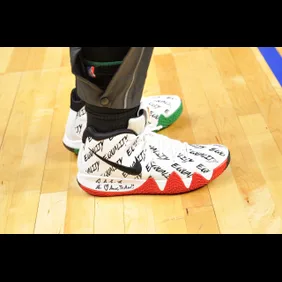
Kyrie Irving's 8-year run with Nike produced one of the most commercially successful signature shoe lines of the modern era, and the numbers back that up clearly. Irving's shoes were the second most worn in the NBA during the 2019-20 season, behind only Kobe's posthumous releases.
The brand reportedly generated over $300 million in sales by 2020. The Kyrie line was beloved for its on-court performance and accessible price point, which helped it reach players at every level of the game.
The partnership ended in 2022 following off-court controversies, making it one of the more complicated stories on this list. But the commercial and cultural impact of those eight years is impossible to ignore regardless of how it ended.
6. Tiger Woods
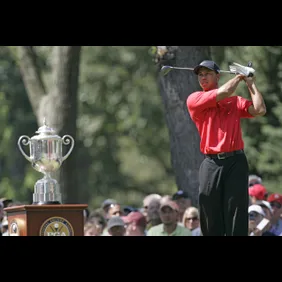
Tiger Woods represents Nike's most significant foray outside of basketball, and the deal they struck when he turned professional in 1996 was historic by any measure. Nike reportedly paid Woods $40 million over five years for his first deal, which was an almost incomprehensible number for a golfer at the time.
What followed was one of the most dominant athlete-brand partnerships in sports history. Woods transformed Nike Golf into a legitimate global business and helped the brand reach audiences it had never touched before.
The "Hello World" ad Nike ran when Woods turned pro remains one of the greatest commercials in sports marketing history. His career had its share of well-documented personal difficulties along the way, but none of it diminished what he and Nike built together on the course.
Woods represented the Swoosh for over two decades, through his peak years, a remarkable comeback, and everything in between. The cultural and commercial impact of that partnership stands on its own regardless of anything else.
5. Cristiano Ronaldo

Cristiano Ronaldo's Nike deal, which began when he was a teenager at Sporting Lisbon and grew into a lifetime contract, is the most important soccer partnership in the brand's history. It is also one of the most valuable athlete endorsements on the planet.
Ronaldo is one of only 3 athletes in the world to hold a lifetime Nike deal, alongside Michael Jordan and LeBron James. That alone tells you everything you need to know about how seriously Nike views this partnership.
His global reach is unmatched in the sport, and the CR7 brand that Nike helped build around him has transcended football entirely. The commercial returns on Ronaldo's deal have been extraordinary and continue to grow alongside his social media footprint, which is the largest of any athlete in the world.
4. Kevin Durant
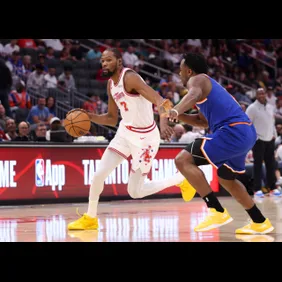
Kevin Durant's Nike deal, which began in 2007 when he was drafted second overall, has extended across nearly two decades and stands as one of the most consistent partnerships in the brand's basketball history.
Durant was reportedly offered a $60 million deal by Adidas out of college and chose Nike instead. That decision turned out to be one of the best in sneaker business history for both parties. The KD line has produced 17 signature models and counting.
Durant's shoes have maintained relevance across his entire career despite him never quite reaching the same cultural omnipresence as Jordan, LeBron, or Kobe. His deal is proof that sustained excellence on the court, combined with a genuinely great product, is enough to build a signature line that lasts for a very long time.
3. Kobe Bryant
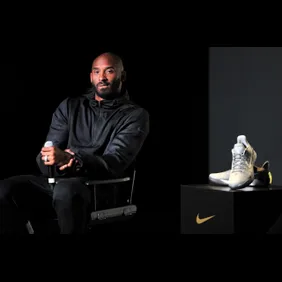
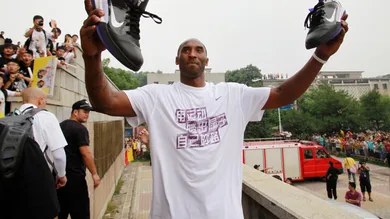
Kobe Bryant's Nike partnership is one of the most complex and moving stories in sneaker history. Nike actually lost Kobe to Adidas when he first entered the league in 1996, and it wasn't until 2001 that they got him back.
What followed was nearly two decades of some of the most innovative performance basketball shoes ever made. The low-top revolution that the Kobe line pioneered in the late 2000s changed how the entire industry approached basketball footwear.
Kobe's shoes were enormously popular in Asia and among serious players who prioritized performance over hype. When Bryant passed away in 2020, Nike still had a year remaining on his contract.
His shoes have continued to be released in limited quantities through an agreement with his family, giving the partnership a legacy that extends far beyond his playing days.
2. LeBron James
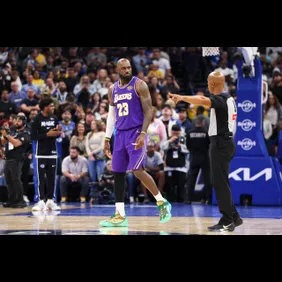
LeBron James signed his first Nike deal in 2003, straight out of high school, worth seven years and $87 million. He turned down more money from Reebok because of Nike's signing bonus. That decision set in motion one of the most successful athlete-brand relationships in sports history.
Over 20 signature models and more than two decades later, James signed a lifetime deal with Nike in 2015. It is estimated to be worth over a billion dollars, making it the largest single-athlete guarantee in the company's history.
The LeBron line has been commercially successful and creatively adventurous throughout. It spans everything from performance-focused early models to the lifestyle-heavy releases of his later career.
LeBron is one of only three athletes to hold a lifetime Nike deal, and the brand's investment in him has paid off many times over.
1. Michael Jordan
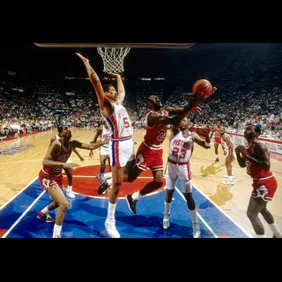
The original 1984 deal between Nike and Michael Jordan is the most important moment in the history of athlete endorsements, and everything that came after only reinforced that. Nike paid Jordan $2.5 million over five years and gave him his own signature shoe line.
The Air Jordan 1 generated $55 million in revenue in its first year alone, nearly 55 times what Nike had projected. The NBA banned the shoe for not conforming to uniform rules, Nike paid the fines, and turned the controversy into one of the greatest marketing campaigns ever conceived.
Then, in 1997, Nike made Jordan the first athlete in history to have his own fully independent brand within a major athletic company, a move that changed what an athlete-brand relationship could look like forever.
Every athlete endorsement deal that exists today traces its DNA back to what Nike and Jordan built together starting in 1984, and nothing in sports business history has come close to matching it since.