

Freedom of speech has been in murky waters for a while. Cancel culture has turned free speech absolutists into selective soapbox warriors, who will call for the deportation of someone criticizing their government while simultaneously groaning over a comedian losing endorsement deals for punching down. In practice, that support comes with conditions: they’ll tell you to criticize the government, but only when it’s convenient for them. The real question is: where are they when hip-hop is on trial for the exact same reason?
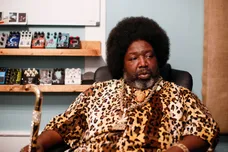
By now, you’ve likely witnessed the many viral moments of the Adams County Sheriff’s Department’s defamation case against Afroman. If you’ve been living under a rock, here’s a brief breakdown: seven Adams County, Ohio, sheriff's deputies sued Afroman following a 2022 police raid on his home. The raid was based on tips about drug trafficking and kidnapping, yet the deputies came up empty-handed. Ultimately, Afroman capitalized on the situation, turning “bad times into a good time.” He used his home security camera footage of the deputies—showing them breaking in, searching, and one eyeing his mother's lemon pound cake—to create satirical music videos, including the viral "Lemon Pound Cake," along with social media posts and merchandise.
Footage of the trial has since gone viral, with one of the deputies claiming on the stand that he wasn’t sure if Afroman had sex with his wife. The musician brought another deputy’s ex-wife as a key defense witness. Needless to say, the crocodile tears shed on the stand didn’t amount to anything for them except further ridicule.
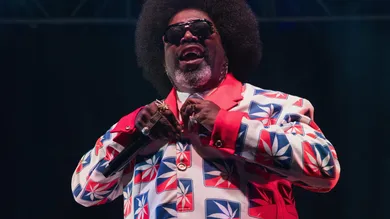
But perhaps what’s more noteworthy than this is that Afroman arrived in court donning an American flag-patterned suit, something that would feel novel anywhere else, but felt particularly fitting in this moment. After the trial, he shared a video of himself celebrating with his supporters outside the courthouse, expressing his love for America and for free speech—something the deputies who sued him are supposed to protect in the first place.
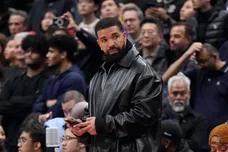
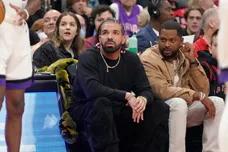
But when you dig a bit deeper into some of the allegations made, they sound similar to another defamation lawsuit. When Drake tried to sue UMG over Kendrick Lamar’s “Not Like Us,” he aimed to hold someone accountable for the public humiliation he faced, even though he actively participated in the spectacle. The two rappers threw allegations at each other without concrete evidence to back them up, but only one of them ended up with a handful of Grammys because of it. Even within hip-hop, artists have begun mirroring these tactics: weaponizing defamation claims when the court of public opinion doesn’t go their way. Though a judge dismissed the case, which he has since tried to appeal, it's something that would set a scary precedent for hip-hop moving forward if successful.
With that said, it’s pretty ironic when Drake has previously signed petitions aimed to protect Black art and restrict the use of rap lyrics in court. Hip-hop has long been under surveillance, but that scrutiny extends beyond rap to Black music as a whole. Throughout history, whether jazz, funk, or blues, the art that oppressed groups create has often been marked as a threat by the system. And yet, that’s how these genres have gained global influence. The FBI reportedly monitored Nina Simone because of her activism. Wu-Tang Clan was under federal investigation because the FBI viewed the group as a criminal organization. Surveillance of Black artists has never been about public safety. It’s been about controlling narratives
Unfortunately, this pattern has only increased over the years. There’s been an uptick in artists who’ve had their lyrics presented as evidence in court. Young Thug’s RICO case in Georgia, for as ridiculous as it was, had prosecutors dissecting his music and translating it in ways they argued confirmed his role as the ringleader of a street gang. Lil Durk’s also facing trial for an alleged murder-for-hire plot, where his music could be put under the microscope as potential incriminating evidence. Their high-profile status has garnered industry-wide support and awareness. That momentum has led to increased pressure on legislators against criminalizing artistic expression. Because in some cases, free expression turns into a death sentence.
Earlier this month, Travis Scott, Young Thug, and Killer Mike signed a petition to halt the capital punishment for James Broadnax, a Texas man who is currently facing the death penalty for a murder conviction. During Broadnax’s trial, prosecutors presented lyrics as evidence, which a recent appeal argues was misrepresented to secure the conviction. Scott echoed a similar sentiment in the amicus he filed in defense of Broadnax. As the execution date looms, the urgency to stay the death penalty is palpable. And if not for high-profile support, then maybe Broadnax’s case would fall on deaf ears while the courts penalize hip-hop as criminality.
That’s what makes the Afroman case so compelling. Over the years, we’ve seen how the court system has been weaponized to suppress free expression by many musical artists. In some cases, it happens within the genre itself. In others, it’s an attempt to create legal shortcuts instead of building concrete evidence. The deputies who sued Afroman believed they were above the law. The raid on his home ultimately turned into a nationally televised loss that deepened their humiliation. For many, it felt cathartic, especially for those who’ve watched art be villainized time and time again. Who free speech is actually afforded to remains an open question, but for now, hip-hop sits at the forefront of the fight to preserve it.