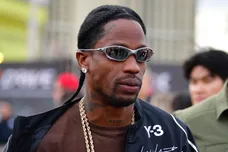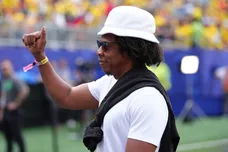


Hip-hop’s long battle with the American legal system has resurfaced in a high-stakes death penalty case. Travis Scott, T.I., Young Thug, Killer Mike, and other artists, scholars, and activists filed legal briefs urging the U.S. Supreme Court to review the death sentence of Texas inmate James Garfield Broadnax. Their argument centers on a controversial question that has haunted hip-hop for decades: should rap lyrics ever be used as evidence in criminal court?
It’s a conversation that’s weighed heavily in hip-hop over the past few years, specifically. Hip-hop has had a target on its back since its inception, and the use of rap lyrics in court has been topical as of late. When Young Thug was on trial in Georgia, the prosecutors tried to present some of his songs as evidence that he’s the leader of YSL. Lately, there have been conversations about how lyrics might be used in Lil Durk’s forthcoming trial.
Broadnax, who has been on Texas death row since 2009, was convicted of a double murder committed when he was just 19 years old. But his case has become a national flashpoint not only because of the severity of the punishment, but because prosecutors used his rap lyrics during the sentencing phase of the trial to argue he posed a continuing threat to society. With his execution scheduled for April 30, 2026, the recent advocacy of some of hip-hop’s biggest artists shines a brighter light on his case and the controversy of both capital punishment and infringing on the First Amendment.
Who Is James Garfield Broadnax?
James Garfield Broadnax is a Texas death row inmate convicted of capital murder in Dallas County. Born in Texarkana, Texas, Broadnax was 19 years old when he was arrested in 2008 for the killings of two Christian music producers outside a recording studio in Garland, Texas. Today, he is 37 and facing a scheduled execution by lethal injection at the Texas State Penitentiary at Huntsville, the state’s primary execution facility.
Before his arrest, Broadnax wrote rap lyrics and kept notebooks filled with handwritten verses. Investigators later recovered dozens of pages referencing themes common in gangsta rap, including violence, robbery, and street life.
Those lyrics became a key element during the sentencing phase of his 2009 trial. In Texas capital cases, juries must determine whether a defendant poses a continuing threat to society—a legal requirement known as “future dangerousness”—before imposing the death penalty. Prosecutors introduced more than 40 pages of Broadnax’s lyrics to argue he would remain violent in the future.
The 2008 Garland Recording Studio Murders
The crime occurred in the early morning hours of June 19, 2008, outside a studio in Garland, Texas. Two men, Stephen Swan, 26, and Matthew Butler, 28, were shot and killed during what authorities said was a robbery. Swan was found inside his vehicle, while Butler was discovered nearby outside the studio.
According to court records and reporting from local outlets, Broadnax and his cousin, Demarius Cummings, targeted the victims while attempting to rob them. The robbery produced little reward: investigators said the suspects left with just two dollars in cash and Swan’s 1995 Ford vehicle.
Broadnax was arrested shortly afterward. At the time, he admitted involvement in the killings during interviews with reporters, saying, “I murdered them both,” though later legal arguments questioned the circumstances surrounding his statements and whether drugs may have influenced his behavior that night.
In 2009, a Dallas County jury convicted Broadnax of capital murder.
A Controversial Trial and Jury Selection
The legal controversy surrounding James Broadnax’s case began with the jury itself. During jury selection, prosecutors struck multiple Black jurors from the pool. Ultimately, Broadnax—who is Black—was tried before a jury that was almost entirely white. His legal team later argued that the prosecution violated the constitutional standard established by the Supreme Court in Batson v. Kentucky, which prohibits striking jurors solely because of their race. The claim has been part of several appeals over the years.
The Role Of Rap Lyrics In The Sentencing Phase
However, the most controversial aspect of the case came when lyrics were introduced. During the punishment phase of the trial, when jurors decide whether a defendant should receive life imprisonment or the death penalty, prosecutors introduced more than 40 pages of handwritten rap lyrics that Broadnax had written.
“Fade ‘em, Fade’em/ Tape ‘em up/ I hit ‘em later/ I am so high up and cloud proof, like a skyscraper/ Hogtie ‘em and body bag ‘em/ Send them to the mayor/ Then I bombed the whole country/ Send the press, the paper,” read one of the verses in court.
Another one that he allegedly wrote in jail was presented during closing arguments, which read, “Hold up/ Stop and rewind/ A little story while I’m in this bitch/ Yeah, I hit the lick/ I got two murder charges on me/ I might just go to the Judge and tell him I’m going to merk him, because I’m J.B.”
In Texas death penalty cases, jurors must determine whether the defendant would likely commit future acts of violence if allowed to live. That determination, known as “future dangerousness,” is a key requirement for imposing capital punishment. The prosecutors said, “If that’s not the sign of a psychopathic killer, I don’t know what is, folks.”
According to court documents, the jury requested to review the lyrics twice during deliberations, including shortly before deciding to sentence Broadnax to death rather than life without parole.
Why Hip-Hop Artists Are Getting Involved
Nearly two decades later, the case has drawn national attention after several high-profile musicians submitted briefs to the U.S. Supreme Court supporting James Broadnax’s appeal. Among them are Travis Scott, Young Thug, Killer Mike, T.I., and Fat Joe, along with scholars and music industry figures.
Their legal filings argue that using rap lyrics as evidence violates the First Amendment and unfairly targets a form of artistic expression closely associated with Black culture.
In a brief submitted to the court, attorneys representing Scott argued that prosecutors essentially treated rap music itself as evidence of criminal behavior. The filing states that presenting rap lyrics to jurors as proof of dangerousness amounts to an unconstitutional penalty against a specific genre of music. He states that it is “taking rap music out of context subjects the entire genre to prosecution.”
Another brief backed by Killer Mike and other artists similarly argued that Broadnax’s lyrics were irrelevant to the determination of guilt and were introduced only during sentencing to influence the jury’s perception of him as violent. “The State used Broadnax’s artistic expression to portray him as young Black super-predator without redeeming qualities who must be executed to protect the community,” the brief reads, per Dallas News. “The State’s use of Broadnax’s artistic expression to trigger racial and anti-rap fears and biases was a dangerous circumvention of constitutional guarantees that must not be allowed to stand.”