

Netflix recently released its four-part docuseries, Sean Combs: The Reckoning, a deep dive into Diddy's life from his early days in Mount Vernon to behind-the-scenes footage of his team scrambling before his arrest. With 50 Cent serving as its executive producer, it became one of the most anticipated documentaries on this particular topic, especially given their history and the amount of antagonizing that Fif did ahead of its release.
However, what gives the docuseries power isn’t just the behind-the-scenes forces but those who stepped in front of the camera with the courage to share their stories. A lot of them worked with Diddy in some capacity, having uncovered some of his more sinister ways intimately and covering up the trails. It’s quite the exposé that threads the patterns from his upbringing to Uptown Records, establishing Bad Boy, and eventually, his RICO trial that concluded earlier this year. And it wouldn’t be the case had it not included childhood friends and colleagues to employees, and collaborators.
Below is a breakdown of everyone who’s appeared in the documentary, from forgotten Bad Boy co-founder to the jurors who decided on Diddy’s fate.
Erick Sermon (EPMD)
Erick Sermon’s role in the narration of this docuseries highlights Diddy’s early days in the music industry, but more specifically, one of the earliest tragedies associated to his name. Sermon discussed his relationship with Misa Hylton, but more importantly, the celebrity basketball game at City College of New York in 1991, where a stampede killed nine people, took place. That specific incident sparked massive news coverage and, as Sermon explained, “how [Combs] got super-famous. That’s the beginning of Puff Daddy.” But it’s a moment in the docuseries that marks the starting point of controversy and tragedy in Diddy’s career.
Kirk Burrowes (Bad Boy Co-Founder)
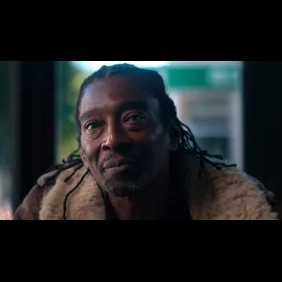
Kirk Burrowes was Puff Daddy’s longtime business partner and co-founder of Bad Boy Entertainment. In the documentary, Burrowes details his dealings with Diddy and the alleged shady business practices that took place behind the scenes at Bad Boy. His role underscored his own complicity in how Diddy’s business and personal affairs would collide with each other, and his allegations were far more intimate than most others included in the documentary, especially as it pertained to much of the mythology around Diddy. He made revelations that made Diddy complicit in the murders of Tupac and Biggie, along with how he handled finances. Perhaps one of Burrowes' wilder claims here is that Diddy not only prevented Biggie from leaving Los Angeles before an international press run which would’ve saved his life, but also made Biggie’s funeral a recoupable cost in his contract–a claim that has since been denied. Burrowes explains that he ran Bad Boy’s budgets and even managed much of Combs’s personal finances, keeping exhaustive journals of every transaction, excerpts of which are shown in the docuseries.
“From Day Zero, I wrote everything down, every day, so I could keep track of everything I needed to do,” said Burrowes. “I ran all the money, all the budgets for the company, as well as a lot for his personal life, and all that came with it.”
He alleges that as Combs grew more powerful, he became increasingly jealous and manipulative. In one clip, Burrowes describes how Combs was “insanely jealous of Biggie and ’Pac’s friendship”, and he repeatedly warns that “with Sean, sometimes you’re humiliated… Sometimes violent things happen to you.” Overall, Burrowes’s interview paints a picture of Bad Boy’s formative years as increasingly controlled by Combs’s personal agenda.
Greg Kading (Retired LAPD Detective)
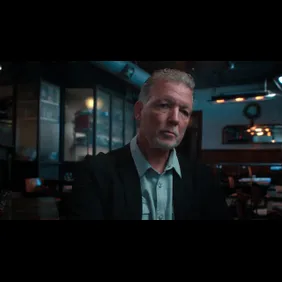
Greg Kading is a former Los Angeles detective who was part of a task force to solve gang crimes, including the murder of Tupac Shakur. His investigations explored Diddy’s alleged connection to the Crips and their relation to the death of Tupac. However, it also looked deeper at the connections that Diddy had with Duane “Keffe D” Davis, the uncle of the alleged shooter Orlando Anderson, who claimed that Combs announced that he would give “anything” for Tupac and Knight’s death with a bounty of upwards of $1M. Diddy has always denied any accusations surrounding any involvement in Tupac’s death. However, Kading’s testimony in this, including suggesting that “Keffe D and Puffy Combs are the last men standing” in the case, taps into a theory that many have pondered over the years.
D1 (Former Mansfield Crips Member)
“D1” is a former gang member affiliated with the Mansfield Crips. His background helps tie together his insights into Combs' connection to Los Angeles’ gangs and the street networks that stood behind him, whether it's the relationship he had with the Crips or even his alleged “uncle” who is said to be a Harlem drug lord.
William Lesane (Cousin of Tupac Shakur)
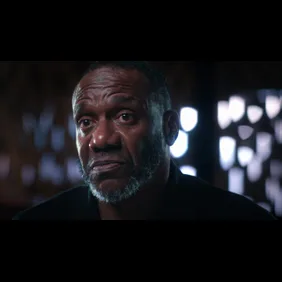
Lesane, Tupac’s cousin, appears in Episode 2 as someone with deep insight into Tupac’s relationship with Biggie and Diddy. He recalls arriving at New York’s Quad Studios on the night Tupac was shot (in 1994) and seeing Combs on the scene. Lesane urges viewers to “look at the facts,” noting ominously that “Puff is there. Pac has been shot in New York under [his] watch.” Ultimately, he ties together some of the behind-the-scenes details that he suggests might implicate him in that scenario. Again, Diddy has always denied involvement in Tupac’s shooting, but Lesane’s appearance adds a more personal layer to Kading’s claims.
Derrick Parker (NYPD)
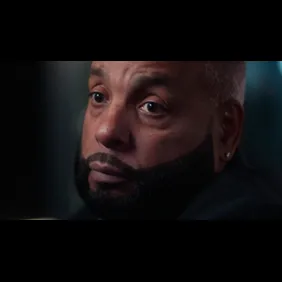
In Episode 2, the film also includes commentary from Derrick Parker, the NYPD’s original “hip hop cop,” who worked on New York cases in the 1990s. Parker discusses various New York controversies involving Combs and how he often was assigned to said issues surrounding Puff. This includes the incident involving Steve Stoute and much of the more violent and contentious cases surrounded Diddy’s name in the late 90s.
Mark Curry (Former Bad Boy artist)
One of Diddy’s most vocal critics over the years has been Mark Curry, one of Bad Boy’s earliest artists. What Curry provides throughout the entirety of the doc sheds light on what it was allegedly like being signed to Diddy, and especially witnessing his rise as a solo artist following Biggie’s death. His testimony provides insight into some of Diddy’s business dealings with artists, but also how his production credits and creative output relied on others.
Al. B Sure (Uptown Records artist)
Al B. Sure has made several allegations against Diddy, and that’s especially true after the death of Kim Porter, who is the mother of Al. B’s son Quincy. His testimony here proves integral to diving into Diddy’s early days as an intern at Uptown Records, and his pattern of trying to take other men’s women, which he similarly did with Erick Sermon, and later attempted with Suge Knight in Atlanta. Al B. Sure’s appearance has been one that many anticipated ever since his hospitalization a few years back, though his contributions do not delve into recent rumors and allegations.
Roxanne Johnson (Ex-Wife Of Craig Mack)
Roxanne Johnson, who was married to Bad Boy rapper Craig Mack, appears in the documentary as well. She provided interesting insight into not only Mack’s dealings with Diddy and Bad Boy but also the conversations he had with Suge Knight about joining Death Row East. Though brief, the interview involving Johnson was one of the rare moments where we heard from the spouses of the Bad Boy signees and how Diddy’s supposed decisions and handling of his artists had bigger impacts on their households.
Aubrey O’Day (Danity Kane)
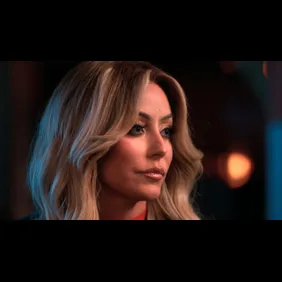
Former Danity Kane frontwoman Aubrey O’Day (who got her start on Making the Band 3 under Combs) in the documentary. Her on-screen segment is one of the buzzed-about parts of the series. O’Day says she was sexually harassed and possibly assaulted during her time in Bad Boy. She recounts receiving an affidavit from another alleged victim who claimed to have witnessed Combs and a man assaulting O’Day at Bad Boy’s studio while she was “out of it”
In the documentary, a dazed O’Day looks at the camera in tears and asks, “Does this mean I was raped?… I don’t even know if I was raped.” The filmmakers also show sexually explicit emails Combs allegedly sent to her. For example, O’Day reads aloud a lewd email (confronting the camera with shock): “I don’t wanna just fuck you. I wanna turn you out… I can see you being with some motherfucker that you tell what to do. I make my woman do what I tell her to do, and she loves it”. O’Day also says that she was ultimately dismissed from Danity Kane for refusing to participate sexually, hinting that her exit from the group was tied to rejecting Combs’s advances.
Kalenna Harper (Diddy – Dirty Money member)
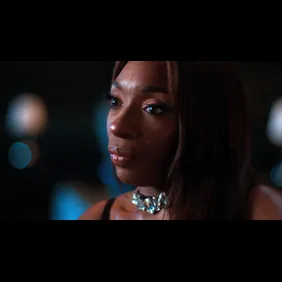
Episode 3 also features Kalenna Harper, a singer-songwriter who performed with Diddy as one-third of the R&B trio Diddy – Dirty Money (2009–2012). Harper offers a vivid portrait of Combs’s work habits and drug use during the 2010s. She describes what she calls Diddy’s “14-day cycle”: he would stay awake for two weeks straight, fueled by lavish amounts of cocaine, to enter a “motherfuckin’ zone” of creativity. Harper recalls that during those stints, Combs would spearhead nonstop studio sessions and photo shoots under the influence – to the point that she quips “he didn’t want to go to sleep.” Her interview uses behind-the-scenes footage of Dirty Money working in the studio as she speaks.
Clayton Howard (Former Sex Worker)
Clayton Howard, a Houston-based escort, appears in the docuseries. He has already become one of the most sensational sources from the series. Howard says he was hired (via a now-famous Las Vegas event known as a “freak off”) to participate in elaborate, four-day, drug-fueled sexual marathons that he alleged Combs organized on the anniversary of Biggie’s death. He explains that Combs held one of these orgies every year on March 9 (the date Biggie was killed). As Howard chillingly puts it, Diddy would spend the anniversary “calling me up” to come to the big party. Howard also alleges Diddy would get jealous and violent at times with Cassie.
“Brooklyn Babs” (Babs Chula, Member Of Da Band)
Da Band’s Brooklyn “Babs” Chula, a contestant on Making the Band and member of the early-2000s boy band Da Band, also appears in the documentary. Her appearance provides more context for Diddy’s rise as an MTV personality and the 2000s iteration of Bad Boy, where he created groups on the MTV series to sign.
Members of Day26 (Brian Andrews, Willie Taylor, Robert Curry, Qwanell “Que” Mosley)
Several former contestants from Making the Band 4 (the group Day26) also appear in Episode 3. Que Mosley, Brian Andrews, Willie Taylor, and Robert Curry were all signed by Combs in 2009 as the R&B group Day26.
Joi Dickerson-Neal (Sexual Assault Accuser)
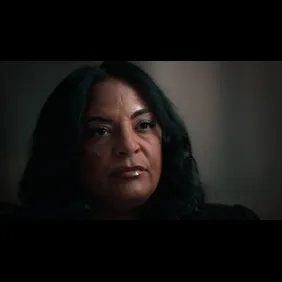
Joi Dickerson-Neal plays a central role in the documentary as one of his accusers who’ve stepped forward publicly. In 2023, Dickerson-Neal filed a lawsuit claiming that she was drugged and sexually assaulted by Combs (alleging he also filmed the assault). Dickerson-Neal says she felt inspired to come forward once fellow singer Cassie Ventura accused Combs. “I felt very sad for her, but it was also validation to know I’m not the only one,” she explains on camera.
She recounts how she eventually confronted Combs after learning rumors of a secretly filmed tape, and that he vehemently denied doing “this thing” to her. In emotional clips (Episode 4) she tearfully vows she’s “no longer going to be embarrassed” and will “stand up” to tell her story.
Capricorn Clark (Former Assistant Bad Boy)
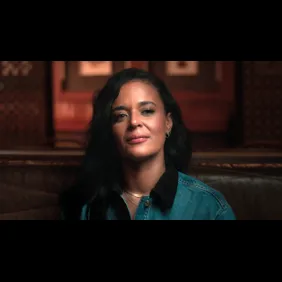
Capricorn Clark was Combs’s assistant and later a creative director at Bad Boy Entertainment (Episode 4). She has also testified at Combs’s trial, telling jurors that at one point Combs had kidnapped her and threatened her life as part of the Kid Cudi/Cassie episode. In The Reckoning, Clark reflects on her traumatic experiences and how badly the trial felt skewed. She notes that watching the jury deliberate was surreal: “I’m watching them… I think they all kinda had a like for Puff,” she says. “They were starstruck.” Clark adds that she felt none of her testimony “really got believed” by jurors.
Roger Bonds
Another critical part of Diddy's inner circle is Roger Bonds, who has been on a string of interviews since the allegations first emerged. Bonds' role in this docuseries allowed him to provide critical insight into Diddy's day-to-day activity, along with his relationship with women, such as Kim Porter and Cassie.
Jurors 75 & 160 (Combs Trial Jury Members)
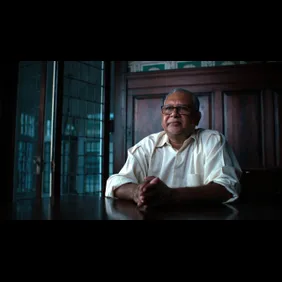
One part of the documentary that really sets it apart from other docs on the subject is that it includes two members of the jury opening up about what happened during the trial. One of the jurors said she became convinced that Diddy “can be” violent, as evidenced in the hotel video involving Cassie, though Diddy wasn’t charged with domestic violence, so they could not find him guilty of that. Another juror explained that he had “zero knowledge” of Cassie and Diddy’s relationship. He said that they were “two people in love” with a complicated dynamic between them.
Rodney “Lil Rod” Jones (Producer)
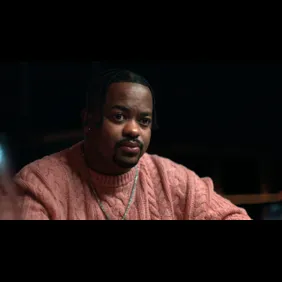
Another one of the most anticipated interviews in this documentary is from Rodney “Lil Rod” Jones, who produced songs on Love: The Album. His appearance marked one of the first times he opened up this candidly about the lawsuit he filed against Diddy in 2023. Here, he discusses working with Diddy creatively, but also reiterates some of Diddy’s alleged devious behavior behind the scenes. He provided more insight into Diddy’s drug habits and the supposed “freak-offs.” In one part of the doc, he also dives into an incident where gunshots were fired in a bathroom.