

YG recently admitted that portions of his catalog suffered because he wanted out of his record deal so badly that he stopped caring about the work itself. Not that he intentionally wanted to make bad music, but he viewed certain releases as obligations rather than opportunities. According to YG, it took a conversation with Kendrick Lamar to reframe his thinking.
"I was talking to Dot, I'm playing him the album and shit... I'm telling him about what I was doing, like putting out albums just to get out the deal 'cause my deal was fucked up," YG recalled in a recent interview with DJ Hed. "He was like, 'Bro, you ain't never supposed to do that. You gotta give it your all every time.'"
What separates someone like Kendrick isn't simply the quality of the music. It's the understanding that every album, every performance, and every public appearance contributes to a larger mythology. Each project becomes another chapter outside of the contractual obligation. That's why some artists feel larger than life while others, despite impressive résumés, gradually diminish in star power as time goes on.
Storytelling remains the cornerstone of hip-hop, but storytelling no longer exists solely through lyrics. In many ways, imagery has become its own language, and the music is only one part of the experience. Fans want to immerse themselves in an artist's world, and the most compelling artists understand that records, visuals, fashion, interviews, controversies, and performances all contribute to the same narrative. Rappers sell lifestyles just as much as they sell songs. Audiences want to see those lifestyles materialize in real time.
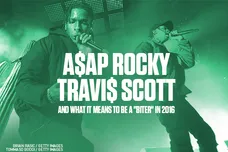
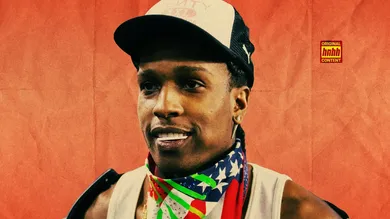
Frankly, there are few artists who understand that assignment as well as ASAP Rocky. The rawkus energy that emerged from A$AP Mob during the early 2010s helped define an era. Rocky's appeal wasn't simply that he rapped well. It was the way he synthesized seemingly incompatible influences into something cohesive. Harlem fashion sensibilities collided with Houston psychedelia. Memphis flows and boom-bap sat beside chopped-and-screwed flips. Luxury fashion existed alongside 40s of Old English. Live.Love.A$AP felt like the soundtrack to a generation that existed somewhere between hood-rich and art-school adjacent. The music mattered, but the presentation mattered just as much.
Whether it was the hazy atmosphere of Clams Casino's production, the shimmering edge of A$AP Ty Beats, or Rocky's obsession with visual direction, everything fed into a larger story. As his career evolved from club appearances to festival stages to arenas, the mythology expanded. Even when the music became less commercially dominant, the world surrounding it never stopped growing.
That's why the current Don't Be Dumb Tour feels like such an interesting moment in hip-hop right now. At a time when both touring and attending concerts increasingly feel like luxuries, ASAP Rocky has somehow created one of the few rap tours this year that feels genuinely difficult to ignore.
That's becoming increasingly rare. The world moves rapidly, and distractions are abundant. Streaming has fragmented audiences, social media accelerates trends beyond recognition, and together they've created an environment where albums arrive and disappear within weeks, if we're being generous. Add the fact that ticket prices continue to climb to outrageous levels, and fans are being forced to become increasingly selective about which experiences are actually worth leaving the house for.
As a result, live performances have become one of the last places where artists can transform their music into something tangible. Touring now serves as the ultimate test of whether an artist exists beyond their phone screen. There's no shortage of artists who can dominate timelines– that's become the easy part. The real challenge is whether an artist can make people feel compelled to participate in the same thing at the same time.
Rocky's accomplished that, and the irony is that it has less to do with Don't Be Dumb than everything that happened before it. The years between Testing and Don't Be Dumb transformed Rocky's life into a seemingly endless stream of headlines. His relationship with Rihanna has evolved from celebrity fascination into something closer to cultural royalty. He navigated legal troubles internationally and domestically. Then there's the ongoing feud with Drake, his fashion endeavors, and acting ventures, all of which have contributed to the internet repeatedly questioning whether he had fallen off entirely.
Those conversations were amplified further when release dates came and went without concrete updates. Yet even when Don't Be Dumb finally arrived, the music almost felt secondary to the story itself.
That's precisely why the tour feels like a stronger extension of this chapter than any promise of a deluxe version. Every night feels like a gathering point for years of accumulated lore, where fashion and rage coexist. More than simply hearing songs performed live, fans feel like they're participating in a narrative they've spent years following online.
Rihanna's presence has become one of the most fascinating examples of this. At certain stops, her attendance has generated nearly as much excitement as ASAP Rocky's performance itself. Fans have documented sightings whether she's posted up near the barricades, standing by the sound booth, or catching commercial flights to the next city on the itinerary. These appearances have been treated like headline news across social media, while the family dynamic feels just as present whenever their children are spotted backstage. In most circumstances, it would—and probably should—be dismissed as celebrity gossip. Instead, it's become part of the show.
Strangely, it functions as a response to years of online narratives. The same internet that filled his comment sections with "baby mama ain't even post the single" jokes and ice cube emojis is now watching Rihanna travel beside him from city to city. The same internet that questioned his relevance is watching each tour stop become a must-attend cultural event.
The performance itself reinforces those ideas. The visual motifs call back to the aesthetic language that defined Rocky's rise. Fans interpreted the owl imagery as a response to the ongoing feud with Drake. It's these details, whether intentional or not, that encourage participation during the show and fuel the discourse once the lights come up.
That's the key difference between spectacle and immersion. Many artists mistake production value for world-building. Bigger screens, louder explosions, and more elaborate stage designs require intent because those elements alone don't automatically create meaningful experiences. Pyrotechnics rarely leave audiences stunned simply because they're expensive. If that's all they're contributing to rising ticket prices, most fans would gladly do without them.
People want experiences that live in their minds rent-free—the kind they'll still be talking about years later. Rocky's greatest strength has always been his ability to build worlds, whether through his music or the visuals that accompany it. The Don't Be Dumb Tour simply happens to be the largest realization of that skill. And while there have been some incredibly strong tours in recent years, it's no surprise that hip-hop tours aren't moving the way they once did. The problem isn't that rap fans no longer care about live music. It's that many artists no longer provide a compelling reason for audiences to gather.
When Kanye West floated above audiences during the Saint Pablo Tour, the spectacle became inseparable from the experience. A decade later, artists are still searching for ways to create that same sense of occasion. ASAP Rocky isn't reinventing the live show. He's reminding people what one is supposed to accomplish. And that's creating something that increasingly feels rare in hip-hop: a genuine collective experience. The kind that makes people feel like they missed out if they weren't there. Regardless of how people feel about the album itself, ASAP Rocky has managed to create an event that people genuinely feel compelled to attend.