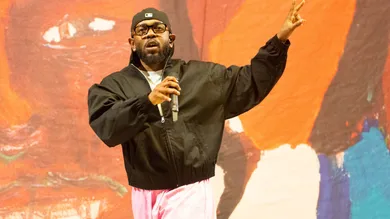


DJ Akademiks still has love for his hip-hop media peers like Elliott Wilson, but he still had some critical words for him during a recent livestream. While discussing Wilson's fallout with Drake over Drizzy allegedly turning down an interview, he claimed Kendrick Lamar dissed Elliott to his face when he allegedly went to the "Not Like Us" video shoot.
"All respect to my n***a Elliott Wilson," Akademiks claimed on stream, as caught by DJ Akademiks TV on Instagram. "Him and Drake fell out 'cause he felt entitled to Drake giving him an interview. He went to the 'Not Like Us' video... Kendrick called him a rat straight to his face... How you diss the man who gave you multiple interviews, run to the other side, and the man not even happy that you switched sides? [...] Kendrick looked him square in the face, 'You a rat.'"
Elliott Wilson already told this Kendrick Lamar story, but his version of events has a much more positive connotation. "Kendrick dapped me up and whispered 'you’re a rat.' I [heart emoji] hip hop. Ha! #Compton," Wilson had tweeted. However, Ak's assessment of the situation claims Lamar was actually more critical than playful here, but he was nowhere near the music video shoot.
Read More: Drake "ICEMAN" Album Review
Kendrick Lamar & Drake Beef
These conflicting ideas about this interaction show how things continue to change and evolve in the Drake and Kendrick Lamar discourse. It's been two years of conflict, strife, and chaos, and it will never end as long as they have public-facing careers.
All of this has its roots in the 2024 rap battle between these titans, a feud that continues to get lyrical updates to this day. On his new album ICEMAN, Drake took various shots at Kendrick Lamar, his colleagues, and the people and institutions that celebrated his gargantuan post-beef run.
Like most other hip-hop media figures, Elliott Wilson's rap beef takes were incredibly divisive online, and he is firmly in Kendrick's corner in that aspect. But we'll see if this new trilogy from the 6ix God changes his perspective a little. Either way, it seems like these reevaluations of history and alleged contextual clarity will persist in these discussions for the foreseeable future.