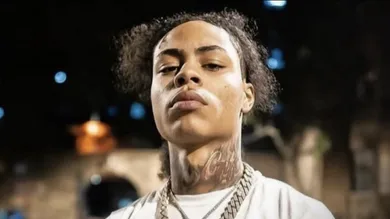


Kay Flock is staring a life-altering prison sentence in the face, and unsurprisingly, the 22-year-old is appealing it. It's 30 years, to be exact, and is a result of several guilty convictions. Additionally, Flock received five years of supervised release.
Michael T. Ashley, his lawyer, had "little doubt" that this motion would be made. He's arguing, in documents obtained by Complex, that his client face the statutory minimum of 10 years or take part in a multi-year, 11-point "punishment plan."
If the latter is the result, Kay Flock would have to move to Los Angeles, get his GED, stay clean, use social media to condemn acts of violence, and more. Overall, it's unlikely that this will happen.
That's partially because the prosecutors in the "Is Ya Ready" artist's case were pushing for an even harsher result. They sought 50 years for Flock with Assistant U.S. Attorney Michael R. Herman leading the charge. "The defendant faces an aggregate recommended sentence under the United States Sentencing Guidelines of 50 years' imprisonment. [It] would be sufficient, but not greater than necessary, to satisfy the purposes of sentencing. Such a sentence is needed to account for the egregious nature of the defendant's conduct, the extent of the harm he inflicted on those around him, his history and characteristics, and the need to promote respect for the law, to protect the public, to afford adequate deterrence, and to provide for just punishment."
What Was Kay Flock Convicted Of?
As for the young MC's convictions, they include charges of racketeering conspiracy and use of a firearm resulting in death. In addition, he was hit with attempted murder and assault with a dangerous weapon in aid of racketeering and use of a firearm for attempted murder and assault with a dangerous weapon.
These guilty charges stem from four shootings from 2020-2021. They were a means to grow the Sev Side/DOA gang, which Flock is the head man of. Judge Lewis Liman does acknowledge that Flock wasn't the shooter. However, he feels he needs to face consequences for his actions. "I recognize you were not the gunman. In some ways, it was a measure of the fact that you were a leader that you distanced yourself from the shooting."