

The streets of Queensbridge deserve all the praise. There’s a lineage of rappers who’ve emerged from the neighborhood that helped create the foundation of hip-hop, and a few others who’ve continued to build that foundation up well into the 2020s.
Members of the Juice Crew, like MC Shan, Roxanne Shanté, Tragedy Khadafi, and Marley Marl, broke down the doors, set new standards, and introduced a new generation from that same hood that would change the trajectory of hip-hop forever–and continue to do so decades after their grand entrances. For example, Tragedy Khadafi coined the term “illmatic” on Marley Marl's In Control, Volume 1. Six years later, that term was immortalized thanks to Nas’ seminal body of work that, to this day, remains the gold standard that hip-hop should aspire toward.
That level of world-building, along with Mobb Deep’s sophomore album, The Infamous, gave outsiders an understanding of surviving the concrete jungle and a concrete understanding of the New York State of Mind and the survival tactics needed to see another day.
It’s those same survival tactics that turned the 90s into a battleground of skill and reach, the 2000s into a measure of sales and radio, and the 2010s into a fashion show. The 2020s, however, have seen hip-hop in one of its weirdest places. After bubbling into the biggest genre in the world by the late 2010s and then facing an implosion, thanks to the travesty that is TikTok, 2025 has felt like a turning point. In fact, some have even gone as far as describing it as one of the greatest years in hip-hop… ever.
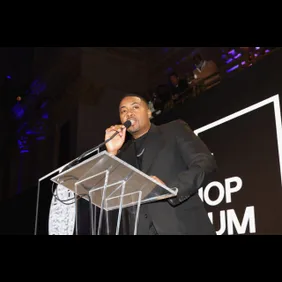
Perhaps there’s some merit to that, but frankly, it’s hard not to give Nas his credit in that capacity as well. Since 2020, Nas has been on a mission to prove that hip-hop is the furthest thing from a young man’s sport. He matched the prolificity of the young guns with the King’s Disease and Magic series produced by Hit-Boy, both of which proved that he never lost his lyrical flair post-Nasir. Moreover, they earned him his first Grammy of his career.
In the span of three years, he delivered six albums–an output that outpaced any other decade of his solo career. In many ways, it felt like Nas’ challenging and exceeding any expectations he placed on himself, especially as he entered his 50s, established himself as a mogul, and watched the tides change in rap. And yet, he’s been single-handedly helping preserve hip-hop culture through and through. More than anything, these past five years of his career have been a potent and dedicated display of hip-hop; a love letter that’s intended to honor and celebrate the legends who deserve to smell their flowers while they are here.
Under Nas’s tutelage, Mass Appeal’s revival has been the cornerstone of preserving hip-hop and ensuring it progresses. It was evident during the massive campaign of 2023 when the Hip Hop 50 celebrations lined up new music, documentaries, festivals, and more to mark five decades since Kool Herc’s game-changing block party. What’s even more interesting is that Nas was practically one of the few rappers of his stature who showed a willingness to participate in celebrating the milestone that year.
Whether or not it was a profitable venture has yet to be made public, but his efforts have been a labor of love; not something that was intended to line his pockets. In fact, you could probably argue that Nas’s efforts with Mass Appeal have been far more dedicated toward ensuring that his influences, his peers, and the pillars who’ve been a part of hip-hop for decades can get paid.
At this point, Nas has little to prove on his own, but the Legend Has It series has only reinforced his philosophy and vision for hip-hop. More importantly, it’s emphasized that their legacy isn’t limited to a single album or era. There’s still a demand and a market for artists who’ve been defined and boxed in by their age.
And at a time when hip-hop’s saturation has been exhausted through viral clips, genre-bending melodies, and flash-in-the-pan successes–an embodiment of his grievances during the Hip-Hop Is Dead era–Nas is now empowering an era of hip-hop whose influence can be directly traced into the heavyweights of today: the Drakes, Kendricks, and J. Coles for sure but also, the Westside Gunn’s, Rome Streetz’s, Conway’s and Benny The Butcher’s, too.
This year has already proven that hip-hop, in its purest form, can thrive without drama or flagrant marketing tactics, and those who reap the reward aren’t just in it for the instant gratification of saying their fave topped the charts or delivered a “classic” after 2 spins. And the Legend Has It series has been the receipt that, even without chart-topping efforts, artists like Ghostface Killah and Raekwon still matter. Slick Rick still matters. Mobb f*cking Deep still matters.
More often than not, we see the legends of our era fizzle out or make a return with hopes of integrating into the current form of rap. But this string of releases, including the upcoming posthumous album from Big L and Nas and DJ Premier’s highly anticipated joint project, shows that the older generation doesn’t need to rely on nostalgia to fight for relevance or integrate themselves into the latest trends that, frankly, are nearly impossible to keep up with, especially when you’re aiming to make music that withstands the test of time.
In a matter of a few months, we received album of the year contenders from Raekwon, Ghostface Killah, and Mobb Deep, whose Infinite album truly felt like an embodiment of closure since Prodigy’s passing. Kicking off the campaign was Slick Rick’s Victory, his first album in 26 years. Though not the most anticipated album on Mass Appeal’s docket, it became a firm reminder of where this rap sh*t began and how the rest of the artists who followed suit likely wouldn’t be where they are without him.
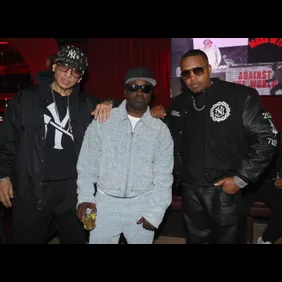
Next week, Big L’s Harlem's Finest: Return of the King will also close a loop as the Harlem MC’s final album. And then, we have Cabin In The Sky, the first album from De La Soul since the death of Trugoy the Dove, which is set to arrive later this year. And to cap it all off, Nas and DJ Premier will also release a new album together.
In the music economy, where the deaths of legends are immediately exploited and their legacies are tarnished for capital, these posthumous efforts have created a template on how the partnership between labels and these artists' estates can work together to produce something that people actually want.
And for Nas, the Legend Has It series only proves that his advocacy for hip-hop has been rooted in altruistic intentions to give back to hip-hop, the artists that he came up with and those who came before them, so that the very foundation of hip-hop isn’t altered or watered down for the next generation. The kids of today might not relate to what any 45+ year old rapper has to say, nor should they, but understanding the past will help forge a path for the future. That path might be built on uncertainty; we’ll never know how hip-hop will evolve from here. Nonetheless, it’s integral for its survival to remain connected to its roots.
Nas might be a long way from the Queensbridge projects that inspired Illmatic, yet even when he’s in the boardrooms, he’s living proof that hip-hop’s soul can evolve without losing touch with where it all began.