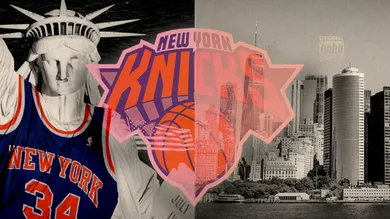


The New York Knicks won the championship. It's a crazy sentence that most basketball fans wouldn't have imagined would ever be true, and one that generations of New Yorkers only dreamt would be possible. The even crazier part is that the last time the Knicks won a title was 1973, the same year DJ Kool Herc hosted Bronx block parties that helped lay the foundations of hip-hop. It took the entirety of hip-hop’s lifespan for the Knicks to prevail again.
For more than 50 years, rappers mythologized the Knicks and Madison Square Garden despite the team rarely rewarding that loyalty on the court. Hip-hop was born from many of the same conditions that shaped the Knicks as a working-class symbol. At its core, it has always been about aspiration. That “never say die” attitude made Knicks fans one of the most passionate—and possibly obnoxious—fanbases in sports. But they ride for their own, and that’s always been part of the appeal.
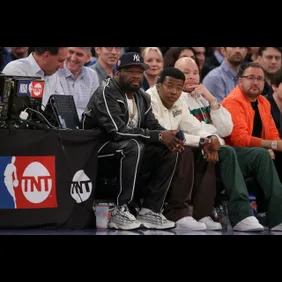
The Knicks spent most of hip-hop’s existence losing. The 1990s brought playoff runs and heartbreak. The years that followed were defined by false starts, rebuilding projects, lottery picks, and disappointment. Yet somehow, they remained culturally relevant in a way few struggling franchises ever have. While the Yankees won championships, the Giants won Super Bowls, and the Rangers lifted the Stanley Cup, the Knicks continued to function as a symbol of hope.
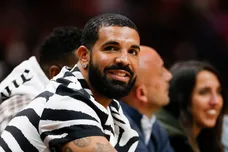
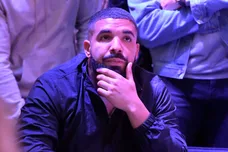
That’s what made them different. Hip-hop continued referencing the Knicks even when many of the rappers weren’t from New York themselves. Spike Lee may not be a rapper, but he’s an extension of the culture, and his fandom became part of the franchise’s identity. The same can be said for Chris Rock. Fat Joe became a courtside fixture. More importantly, multi-generational references kept the Knicks alive in music during eras when the team stopped giving people reasons to believe.
Biggie detailed getting caught with a woman by her Knicks-player boyfriend. Sugarhill Gang and JAY-Z used the Knicks as status symbols—whether it was watching games on a color TV or sitting courtside next to Spike Lee “in all my splendor.” Even Big L and N.O.R.E. publicly rejected the team in bars delivered with enough confidence to risk the ire of a devoted fanbase.
In many ways, that loyalty elevated Madison Square Garden too. MSG has always been legendary in its own right, but the Knicks helped make it basketball’s cathedral. The energy they brought into the building became part of its mythology, even outside of New York. Take “Knicks” by Freddie Gibbs, for example. Despite its bleak tone, it uses Madison Square Garden as a reference point for extraordinary performances he witnessed—Michael Jordan in the 90s, then LeBron in the 2000s. These moments helped shape the legacy of the building, and they’re part of why Dipset versus The LOX felt so distinctly New York when it took place at the Hulu Theatre inside MSG. For New Yorkers, the Knicks were built on hope and memories. For everyone else, they represented what Madison Square Garden meant.
That’s also why the Knicks remain hip-hop’s team. The Lakers belonged to Hollywood—the stars and the elite who sat courtside. The Bulls belonged to Michael Jordan and his two three-peats. But at its core, the Knicks belonged to New York in ways only New Yorkers fully understood. Their significance was tied to culture, which made bandwagon fans like Taylor Swift more noticeable during the Finals.
That connection was impossible to ignore throughout the championship—and especially through the parade. James Dolan’s decision to tap Fat Joe to lead a hip-hop-themed float featuring Wu-Tang Clan, Remy Ma, Jadakiss, and other New York staples felt fitting. Hate on Dolan all you want—and there are plenty of reasons to do so—but ensuring hip-hop had its own dedicated float honored the part of the lore the culture has always occupied, win or lose.
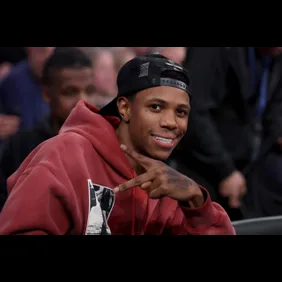
The same thing played out throughout the postseason. Cardi B and Wu-Tang Clan delivered major moments at Madison Square Garden during halftime shows. Some fans jokingly credited Wu-Tang with fueling the team’s comeback after trailing by 29 points. A$AP Rocky declared himself the Knicks’ good-luck charm after Game 4. Even JAY-Z’s appearance felt significant given his relationship with the franchise, his upcoming string of performances in New York City, and his role in bringing the Nets to Brooklyn.
The connection extends beyond celebrity appearances. Following the championship, New York anthems surged across streaming platforms. Zohran Mamdani even pointed to Ja Rule’s “New York”—the same song he walked out to after his election victory—as one of the records soundtracking the moment. Meanwhile, artists like Skyzoo and Cam’ron also saw renewed attention for their anthemic New York records.
That’s why this championship doesn’t feel exclusive to New York. The parts of New York that influenced the world are deeply intertwined with the Knicks’ story. It took the entire lifespan of hip-hop for the franchise to win another championship. Through every rebuilding project, every lottery pick, every punchline, and every false dawn, rappers continued treating the Knicks as though they mattered. They kept believing in a franchise that spent decades giving them little reason to. This year, after 53 years, the Knicks finally rewarded that faith.