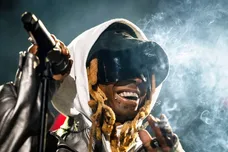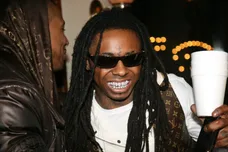
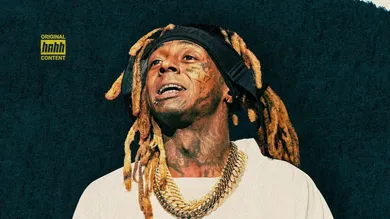


The 2009 documentary The Carter provides a rare and incredibly compelling look into Lil Wayne’s creative world. It’s as intimate as we’ve ever seen Wayne and probably ever will. Through the lens of Adam Bhala Lough, the documentary captured one of the most important runs in hip-hop history: Wayne breaking the barrier between underground rap and mainstream dominance in the midst of a tech takeover while hoisting the YMCMB flag high enough to become the self-proclaimed greatest rapper alive. And quite frankly, he earned that title.
By the time Tha Carter III arrived, Wayne had already reshaped rap music in real time. Leaks became unofficial mixtapes, freestyles became catalog staples. He flooded the internet with music at a pace that felt impossible while somehow making his commercial appeal even stronger. With that in mind, No Ceilings felt less like a mixtape than a victory lap.
But not everything needs to continue for posterity’s sake. The Carter documented a defining moment in Wayne’s evolution as an artist. Tha Carter and Tha Carter II carried the hunger of someone trying to ascend into rap royalty. Tha Carter III confirmed he made it. Even Tha Carter IV worked as a welcome-back victory after prison. But everything afterward feels increasingly defined by lore rather than legacy. Tha Carter V became weighed down by years of anticipation while Tha Carter VI already feels like a forgotten installment in one of rap’s most important album series.
Unfortunately, it might be that time that Lil Wayne retires Tha Carter. During a recent interview with Barstool Sports, Wayne teased new music, including Tha Carter VII, but the most revealing part wasn’t the announcement itself. It was the fact that Wayne openly admitted he’s barely involved in shaping these albums at all.
“Tha Carter VII is coming soon. I’m not sure if we going to just name my next album Tha Carter VII,” he said. “What they do is, they grab a bunch of songs and they put a title on ‘em, like, ‘This is Carter VII.’”
And that’s the problem in a nutshell. What once felt like milestones in Wayne’s artistic progression now feels like branding applied to loose collections of songs. Tha Carter used to document evolution. Now it exists to preserve a legacy that already cemented itself over a decade ago.
And the disconnect becomes even more glaring when you revisit the original documentary. The Wayne captured there was obsessed with greatness. Every verse sounded like it carried stakes. He wanted to surpass his idols like Jay-Z, and by the time Hov appeared on “Mr. Carter,” Wayne had already accomplished it. That record felt like validation after years of proving he was the best rapper alive every single time he touched a beat.
That conviction no longer exists consistently in the music. If Wayne isn’t rapping with the same hunger he had on “Sky's The Limit” or other classics–album or mixtape cuts–from that era, then what’s the point of continuing the series under the same umbrella? The technical skill is still there, but the purpose isn’t. And without purpose, Tha Carter stops feeling essential.
Still, the stagnancy surrounding Wayne’s music isn’t entirely his fault. The machine behind him changed. He’s no longer operating under Cash Money, the same system that helped turn his artistic chaos into cultural dominance and then brought his career to a halt. More importantly, he appears to have a whole new team behind him in his post-Cash Money era, one that doesn’t seem nearly as invested in the sequencing and creative structure as those who propped him up. The difference between the first five Carter albums and the latest installment makes that painfully obvious.
That lack of direction has bled into the rest of his recent output, too. Nobody really asked for a collaborative album with Rich The Kid, and the final product confirmed why. Even Welcome 2 Collegrove felt less like inspired chemistry and more like Wayne playing mentor to 2 Chainz’s younger artist arc. These projects sound assembled rather than envisioned, consisting of random songs and verses packaged together without cohesion. Tha Carter VI suffered from the same issue, except this time there wasn’t enough anticipation left to disguise it.
What once added to Wayne’s mythology has now become part of the problem. The endless recording, the mountains of unused verses, and the nonstop output no longer feel superhuman. Unfortunately, it feels more mechanical than anything else.
His 2024 feature run sparked inevitable comparisons to the run he had throughout the 2000s, but that era can’t be recreated because the quantity lacked the hunger. Even moments that should’ve felt monumental, like his appearance on “God Did,” landed more as acknowledgements of his influence than reminders of his greatness as a rapper right now.
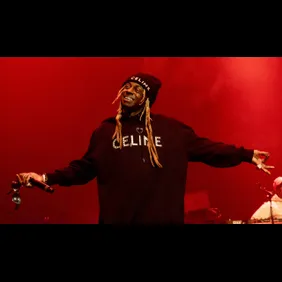
And yet flashes still appear. His collaborations with Tyler, The Creator feel like some of the few moments where Wayne sounds genuinely challenged again. “Hot Wind Blows” tapped directly into the spirit of Tha Carter II-era Wayne without sounding like cosplay. Tyler gave Wayne direction, structure, and a world to exist inside of. The same thing happens whenever Mannie Fresh fully locks back in with him. “Mahogany” felt alive in a way much of Wayne’s recent material doesn’t.
That’s why another Carter album only makes sense if it actually demands something new from him. Can Wayne make an album that reflects who he is now rather than endlessly recreating who he used to be? Not necessarily a 4:44-style confessional record, but something with actual intimacy and maturity behind it. Because at this stage, technical ability alone won’t save the music. Eventually, the content has to evolve, too.
But it also explains why Wayne’s constant frustrations with institutions like the Grammys, Coachella or the Super Bowl feel increasingly hollow. It’s hard to demand validation for music that often sounds creatively disengaged. There’s a reason every major televised Wayne performance still leans on “A Milli.” That record represents a vivid moment where his larger-than-life persona and artistic hunger fully aligned.
The reality is that Wayne’s next truly compelling album probably won’t fit inside the Carter universe at all. And if it somehow does, it won’t be because the old formula still works. Wayne doesn’t need TikTok gimmicks or viral challenges to stay relevant. He needs a body of work worthy of hip-hop’s favorite martian. More than anything, he needs to stop letting an institution that already immortalized his legacy slowly dilute itself in real time.