


We all have a friend who takes things too far, withdraws until things cool out, then makes their way back incrementally, testing the temperature before taking accountability, if that ever happens. They don’t acknowledge what went wrong, don’t assert their narratives as the right ones, nor do they offer an apology. The tension never gets resolved, and the cycle continues.
There’s a parallel between this type of friend and the person that Ye, formerly known as Kanye West, has turned into in recent years. Although he’s always been an outspoken figure, one who often stood up for marginalized voices, his billionaire status and alignment with uber-conservative and far-right groups reduced him to an internet troll. In the past five years since his last solo album, he’s leaned into this persona until he seemingly couldn’t anymore. He’s gone through more than enough controversy to see his star power diminish tenfold. So when it came time to actually release Bully in its entirety—not just the snippets and teasers that surfaced here and there—it became evident that he was committing to some sort of redemption arc.
After f*cking up and withdrawing from the public eye, Bully ultimately serves as part reminder of his genius and part attempt to inch back into our lives without necessarily taking full accountability. The reality is that when he met with the rabbi and later released that statement apologizing, he essentially did the bare minimum for his public image. Bully feels like Kanye West testing whether the room is ready to let him back in.
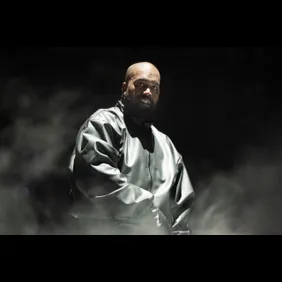
By the time the electrifying production of “King” kicks off, he treads the familiar narrative of “becoming the villain” from the hero while defying cancel culture. And yet the confidence feels more fragile when he’s talking about “distributing the dopeness like Alpo," a noticeable example of the missing creative ecosystem that once sharpened Kanye’s writing. Unfortunately, “This A Must” falls into the same issue: a rather generic Ye banger whose only convincing attempt at capturing youthful energy comes through Nine Vicious’s ad-libs. For years, Ye has claimed to be the King of everything, yet he has grown far more distant from youth culture than ever before. And for every moment where he tries to throw a rager, it feels directionless. You already apologized—who are you raging against, and what are you celebrating?
Still, the Travis Scott-assisted “Father” delivers that bass-heavy, industrial feel that makes the braggadocio actually land. “Used to be on WorldStar, now I’m on Newsweek” is the type of effective, quotable lyric that captures his larger-than-life persona, yet it’s something sorely lacking across the album. Even Scott, who delivers a rather decent verse, veers at times into bars that feel more like brand endorsements, referencing Nike sales and Oakley deals.
If we’re giving Ye the benefit of the doubt, we have to applaud his production instincts. Even if he doesn’t fit into the latest trends in hip-hop as an MC, his fluency in sampling remains unmatched. There’s a satiny Roc-A-Fella smoothness to “Whatever Works” and “Punch Drunk,” thanks to the timelessness of the chipmunk soul flips. The haunting interpolation of “Huit Octobre 1971” on “Circles” featuring Don Toliver feels entrancing, even if its familiarity lies in stronger executions of the same sample by artists like MF DOOM and later, Tyler, The Creator. Kanye still flips samples with the instincts of a producer who helped rewrite hip-hop’s sonic vocabulary.
Unfortunately, the production itself doesn’t save the project entirely. Even when he’s bringing solid beats to the table, he’s lacking the lyrical umph to match them. At its core, this feels like what’s fundamentally missing from the album. Ye’s catalog has historically resolved whatever controversy preceded it, but this time, much of the album feels like he’s sidestepping controversy instead of confronting it. There’s a lack of vigor in his convictions that makes the record feel safe, especially when he leans into pop melodies and stadium-sized production on songs like “All The Love” and “Highs And Lows.” The saving grace is his admission that “no one bigger than the program until they’re bigger than the program”—one of the rare acknowledgments of how his controversies have been entangled in his ego as much as his mental health struggles.
The previously released Bully EP, which surfaced on streaming services before the album dropped, suggested there would be more to latch onto. The production on “Preacher Man” and “Beauty & The Beast” made the album feel promising. Earlier renditions hinted at a solid reentry into the music world without the red pill theatrics. However, downsizing his usual collaborative ecosystem left Ye with stellar beats but weaker writing and fewer contributors, which ultimately hurt the album. Andre Troutman remains a highlight on “White Lines” and “All The Love,” bringing a voice that feels appropriately placed in 2026.
Ultimately, Bully misses the mark because it fails to fully embrace the messiness that has historically been part of Ye’s charm. Each of his albums has processed the controversies he endured—whether it was the inflated confidence of Yeezus or the frustrations at fame on The Life of Pablo. Here, he barely addresses backlash, public implosions, or the damage he caused. Instead, he tries to make up for it with nostalgia, vague flexes that hardly land, and surface-level defiance. What’s missing is the self-mythologizing that once turned Kanye’s controversies into compelling narratives. Even the melancholy that permeates the album feels like a quiet acknowledgment that the dedicated portion of his audience is shrinking.
Bully doesn’t feel like a comeback. It feels like Kanye West is reminding the world he still knows the tricks while avoiding the vulnerability and ambition that once made his music impossible to ignore. Maybe if we eventually get a pure album of beats from Ye, he might be able to salvage the damage done. But let’s be real: Bully largely exists as another touring opportunity. Musically and otherwise, Ye does the bare minimum, and with Gamma behind him, it seems he’s currying corporate favor so long as he keeps his mouth shut. Maybe if he does exactly that on his next album, we’ll be able to fully absorb the genius of Kanye West once again.
User Reviews
HotNewHipHop users rated Ye's Bully 3.69 out of 5 stars, based on 13 reviews. One user wrote, "You can do better than that. SMH."