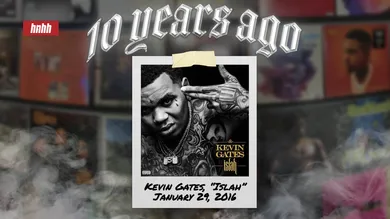


Kevin Gates outsold Adele one time. It’s a random tidbit from the 2010s, but an important one to be reminded of in 2026. Billboard often feels arbitrary in hindsight, and Kevin Gates, somehow, has gained a newfound audience with streamers. But in 2015, Adele emerged with a body of work that sold three million-plus copies in its first week with 25. In the months that followed, it continued pushing better numbers than most artists pull within a week these days. Mind you, this was still the early stage of Spotify and Apple Music’s upheaval of music consumption, when people were buying albums either physically or digitally.
Then, on January 29th, 2016, Kevin Gates arrived with his highly anticipated debut album, Islah. Gates nabbed the No. 2 spot on the Billboard 200 with 112,000 units moved. He lost the top spot to Rihanna’s ANTI, understandably, but still managed to edge out 25. Perhaps it doesn’t seem like the biggest feat considering Adele was more than two months removed from her album’s release, but 25 still had a grip on the world in the same way we now contextualize the commercial feats of Taylor Swift’s latest albums. Gates, meanwhile, had been operating independently up to that point, cultivating a loyal fanbase that stretched from the trenches of Louisiana to the editorial offices of Pitchfork and beyond through mixtape merit, street hustle, and a complex persona that romanticized the shadows he existed in while praying for the light.
That dichotomy, struggle, and resilience in the same breath, is the commonality Gates shares with someone like Adele. They might be worlds apart geographically and culturally, yet emotionally, they tugged on similar heartstrings. Adele beautified the ugliest moments of heartbreak and made them universal. The highs and lows of healing emotional scars bled onto a gorgeous terrain of melody.
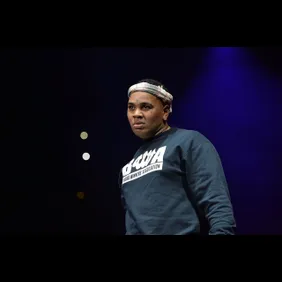
The emotional journey Kevin Gates explores on Islah isn’t linear by any means. The lust of “One Thing” evolves into the exploitation of “Ain’t Too Hard,” and by the time “Not The Only One” hits, the album’s emotional thesis sharpens: loyalty is fatalistic. The streets that cultivated his sound, legacy, and support base both ground him and motivate his desire to escape them. That emotional authority, the ability to articulate pain in a way that feels survivable, is what Gates shares with Adele, and it shows in public consumption. Albums that condense such a broad range of emotions into a concise tracklist succeed not simply because of gorgeous melodies, infectious hooks, or viral-ready one-liners, but because the raw honesty underneath resonates deepest.
That vulnerability, though, isn’t exclusive to Kevin Gates’ pen. More than anything, it’s embedded in the quirks within each bar and admission that follow a long-standing Southern tradition, specifically, in Louisiana. Gates’ influences are broad. His emotive delivery can feel as touching as Adele’s, while his technical precision and vivid storytelling carry remnants of early Eminem. However, he remains tightly aligned with a Southern lineage inherited from Boosie’s emotional confessions. “Told Me” spiritualizes hardship with grueling admissions of addiction and suicidal ideation, resulting in one of the album’s most heart-wrenching moments. It’s a blueprint that has carried through the younger generation that followed him.
It’s hard not to see Gates’ DNA in artists like NBA YoungBoy or Rod Wave, both of whom have cultivated equally devoted fanbases who see themselves in the unpolished pain they present. They each possess moral contradictions within their emotional vulnerability that aren’t intended to garner public validation. NBA YoungBoy internalizes it. Rod Wave romanticizes it. Like Kevin Gates, both offer a window into a Southern masculinity that refuses to apologize for feeling.
Whether it’s the tears that follow loss or the fury that fuels defense when the odds aren’t favorable, that unapologetic emotional posture is precisely how Kevin Gates has sustained a career through controversy and turmoil. At times, it broke social stigmas. Gates deserves more credit than he’s given for how openly he discussed sex in ways that made many uncomfortable and, eventually, normalized it. Other times, though, it felt like he crossed indefensible lines.
After releasing “Kno One” as the project’s first single, Gates doubled back later with “The Truth,” addressing the viral incident in which he kicked a woman in the chest during a concert in Florida. The jarring video circulated across WorldStarHipHop and nearly every major hip-hop blog immediately afterward. Gates claimed self-defense under Florida’s Stand Your Ground law, and “The Truth” presented a perspective that didn’t win him many favors. The incident ultimately led to his incarceration and became a centerpiece in a string of legal issues he faced during that period. Yet “The Truth” still felt quintessentially Gates. He refused to avoid the controversy or gloss over the nuance that cellphone footage couldn’t capture. He explained that he had warned the woman, who he claimed continued to sexually assault him. Even then, Gates zoomed out through a spiritual lens, rapping, “Father forgive me I fucked up a blessin’ / Whenever I fall you the only one to catch me.”
The public fuck-ups are deeply human, just as much as leaning on faith to maneuver through them. That expectation of honesty over purity is precisely why Gates has translated so seamlessly into the streaming era. Platforms reward immediacy and emotional transparency, not polish, and Gates’ catalog already functioned that way long before TikTok or Twitch decided what mattered. Streamers within the Kai Cenat orbit, Duke Dennis, Reggie, and even the barely-out-of-her-teens Yonna Jay, have leveraged Gates’ catalog for viral moments. It’s not uncommon to hear Duke Dennis singing along to a Gates record, Reggie walking into a room crooning “Satellite, never really made love,” or Yonna reenacting the Bobbi Althoff meme while confessing she’s one of his biggest fans. That visibility hasn’t just extended the shelf life of Gates’ back catalog. It’s allowed newer projects, less commercially dominant than Islah, to still find wide audiences.
Frankly, as a rapper who maximized his career through a blueprint of independence that his home state perfected with labels like No Limit and Cash Money, Gates’ authenticity is what’s allowed him to endure. Even while facing a battery charge after the Florida incident, songs like “2 Phones” have been cemented into the pop-cultural lexicon, while “Really Really” remains anthemic a decade later. More than anything, it speaks to how Islah, after years of independent groundwork, penetrated the mainstream without sacrificing musical identity. That understanding has turned Kevin Gates into an institution of sorts. His fanbase sheds and regrows like snakeskin, evolving, but never disappearing.
That’s the thing: Gates’ audience never required him to be morally clean, only emotionally honest, and Islah remains the clearest articulation of that philosophy. It codified a Southern masculinity that allowed contradiction to coexist with vulnerability, faith to sit beside violence, and accountability to remain imperfect. That framework didn’t just sustain Kevin Gates. It quietly became a template. You can hear it in NBA YoungBoy’s isolationism, Rod Wave’s romanticized despair, and in how younger audiences gravitate toward artists who feel emotionally legible even when ethically complicated, like XXXTENTACION or Kodak Black. Islah worked because Gates allowed emotional rawness, spiritual conflict, and unapologetic flaws to coexist and then transmit across generations. In that sense, dethroning Adele’s 25 alongside Rihanna wasn’t an industry anomaly, but the result of vulnerability translated without flinching, filtered through a Southern, masculine, and uncompromising lens.