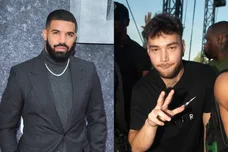
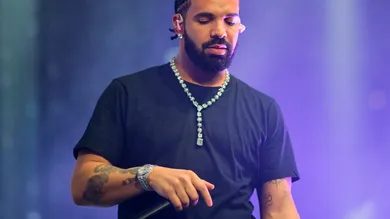


Things were shaky for Stake across 2025, and the negative reputation they developed, along with multiple class action lawsuits, also targeted high-profile figures like Drake and Adin Ross. As the year closed, a new US civil lawsuit filed in Virginia pulled the rapper, the livestreamer, and Stake into an explosive legal dispute at the intersection of entertainment, gambling, and online financial loopholes. Per reports, the suit alleges illegal gambling, deceptive marketing, and—most strikingly—civil RICO violations, a law typically reserved for organized crime cases. Notably, this development comes after Drake himself pursued RICO-related claims against UMG the previous year.
While social media headlines quickly framed the case as “Drake being hit with a RICO,” the reality is far more nuanced. This is a civil lawsuit, not a criminal case. However, the claims are serious, alleging violations of the Racketeer Influenced and Corrupt Organizations Act alongside consumer protection statutes. Understanding the specific allegations is crucial to separating online speculation from the substantive legal claims.
What The Lawsuit Is Actually Claiming
At its core, the lawsuit asserts that Stake.us, the U.S. arm of the global e-casino Stake.com, operates as an illegal online casino while presenting itself as a “social casino” to bypass American gambling laws. According to the plaintiffs, this misrepresentation allowed Stake.us to operate nationwide, including in states where online gambling is prohibited.
The complaint alleges that users were misled into wagering real money under the impression that they were participating in risk-free entertainment. In practice, the plaintiffs claim, Stake.us encouraged users to gamble with stakes that could be converted to real-world value, effectively mimicking the mechanics of a legitimate casino while remaining outside traditional regulatory oversight.
How Stake.us Is Allegedly Operating Illegally
Central to the lawsuit is the structure of Stake.us’s in-platform currency system. While the platform advertises that no real-money gambling occurs, the plaintiffs argue that this is misleading because every purchase of virtual “Gold Coins” is bundled with “Stake Cash,” a token that can be redeemed one-to-one for cryptocurrency or digital gift cards.
The lawsuit claims that users then wager Stake Cash on games of chance, including slots, roulette, and live dealer tables, all of which mirror traditional casino mechanics. By bundling Stake Cash with Gold Coins, the plaintiffs argue, Stake.us was able to disguise the real-money gambling aspect of its platform while continuing to profit from users’ losses.
Drake’s Relationship With Stake, According To The Complaint

Drake is not accused of founding Stake.us or operating its platform. Instead, the lawsuit portrays him as a highly compensated promoter whose public persona helped legitimize the platform for millions of fans. Court documents indicate that Drake has earned an estimated $100 million annually from Stake promotions.
The complaint alleges that Drake’s role went beyond simple promotion. Through Stake’s internal systems, he allegedly received gambling funds and facilitated large transfers that plaintiffs claim were ultimately used to underwrite artificial streaming campaigns. This, the plaintiffs argue, gave Drake both financial and strategic incentives to use the platform as a vehicle for manipulating his music metrics while publicly endorsing Stake as a legitimate gaming platform.
Adin Ross & The Role Of Streaming Culture

Adin Ross is accused of acting in coordination with Drake. Plaintiffs allege that Ross hosted high-profile Stake.us gambling streams, which doubled as promotional content and lent credibility to the platform. During these streams, Ross and Drake reportedly exchanged large sums using Stake’s internal tipping system, including six-figure transfers that were publicly visible yet opaque in terms of their true purpose.
The lawsuit frames Ross as an amplifier who helped normalize Stake.us gambling among younger audiences while participating in the financial mechanisms alleged to fund Drake’s artificial streaming campaigns. According to the complaint, these public displays served multiple purposes: entertaining viewers, promoting Stake, and simultaneously masking the flow of funds used to manipulate Drake’s streaming metrics.
The Controversial “Tipping” System
One of the lawsuit’s most critical allegations revolves around Stake.us’s user-to-user tipping feature. Plaintiffs claim this system allowed large transfers of value without the transparency and oversight typical of traditional banking institutions. According to the complaint, this enabled Stake.us to operate both as a gambling platform and as a discreet conduit for influencer payments and other financial exchanges.
The plaintiffs argue that the tipping system facilitated the transfer of gambling proceeds from Drake and Ross to George Nguyen, an Australian allegedly behind meme accounts @grandwizardchatn***a and @Grandavious, according to court documents, who allegedly coordinated with bot operators, streaming farms, and “clipping” services to artificially inflate play counts on Drake’s music across platforms like Spotify.
The Allegation: Funding Artificial Streaming and Botting
The most consequential allegation in the lawsuit is that Drake and Ross allegedly used the proceeds and transfers within Stake.us to finance artificial streaming campaigns. According to the plaintiffs, funds routed through the tipping system were converted into payments for automated bots, streaming farms, and paid amplification networks. These campaigns reportedly inflated play counts, distorted playlist placements, and fabricated popularity metrics, giving Drake an allegedly unfair advantage in streaming charts.
The complaint suggests that these operations were intentionally concealed from public view. By moving the funds through Stake’s internal systems and then to intermediaries like Nguyen, plaintiffs argue, the scheme avoided traditional financial tracking while sustaining the appearance of organic streaming success.
Why RICO Is Being Used In A Civil Case
RICO is included in the lawsuit because the plaintiffs assert a continuous, coordinated enterprise involving illegal gambling, deceptive marketing, and the covert manipulation of financial and digital ecosystems. Stake.us, Drake, Ross, and associated intermediaries are alleged to have operated as a unified system, each fulfilling defined roles that allowed the enterprise to enrich itself while manipulating gambling and music-streaming metrics.
The lawsuit claims this enterprise operated continuously since at least 2022, using Stake.us not just as a gambling platform, but also as a financial infrastructure that allowed money to be routed and concealed through internal transfers. Whether those claims hold up in court remains to be seen, but their inclusion dramatically raises the stakes of the case.
In civil RICO cases, plaintiffs may seek triple damages if they can demonstrate a sustained pattern of racketeering activity. The inclusion of RICO claims underscores the seriousness of the allegations and the potential financial and reputational stakes for the defendants.
Consumer Harm & Lawsuit Goals
The plaintiffs’ complaints are grounded in alleged consumer harm. Tiffany Hines and LaShawnna Ridley, the lead plaintiffs, claim they were misled into gambling on Stake.us due to Drake’s promotions, suffering financial losses and exposure to addictive gaming behaviors. The class action seeks to hold the platform and its promoters accountable for allegedly misleading users about the legality and risks of the platform.
The lawsuit is requesting class certification, at least $5 million in damages, potential treble damages under RICO, restitution, and injunctive relief that would prevent Stake.us from operating as it currently does in the U.S. Plaintiffs are also seeking disgorgement of profits obtained through allegedly deceptive and unlawful practices, aiming to ensure accountability and transparency moving forward.
In response to the news, Stake co-founder Bijan Tehrani suggested that he wasn't sweating the lawsuit. As headlines broke, DDG tweeted, "STAKE, ADIN, & DRAKE IN 5 [100 emoji]," Tehrani reportedly reacted with confidence, writing, "We'll do it in 4."