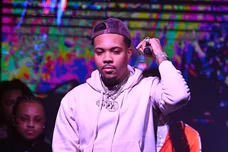
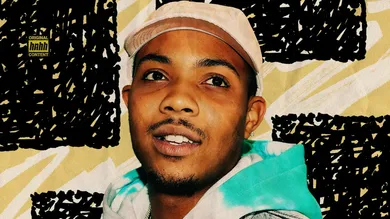


Stagnation isn’t the same as falling off, though the two are often conflated—unfairly so. Falling off often yields tremendous comeback stories, if the bounce back is handled gracefully. However, with stagnation, it’s easy to become a backdrop when everything else is moving forward. For G Herbo, there’s been a clear mission statement from the jump—a traditionalist of the 2000s who carried the hunger that felt akin to Meek Mill’s. It’s not that it was a rarity, but that drive for greatness was equally fueled by a real urgency to survive his circumstances and cement his name as one of the greatest to ever touch a pen. Even when that mission statement wasn’t necessarily shared by the same rappers he shares studios with, it’s something that made his consistency an anomaly for his time.
That mission statement was never lost over the past decade. Among all of his peers, including those who’ve sustained careers beyond the tragedies that became all too common within the drill scene, Herbo never bent or folded to the pressures of the major label system. His debut album Humble Beast solidified him outside of just being an archetype of the drill scene. His storytelling abilities, authenticity, and ability to narrate chaos with precision have been his north star ever since.
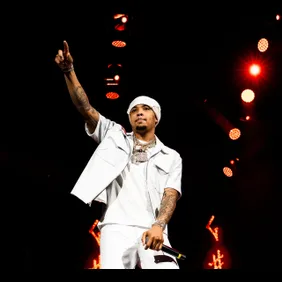
But what becomes of an artist whose greatest strength is his hunger—when he finally reaches an age where hunger must coexist with responsibility, consequence, and reflection? That’s the core tension running through Lil Herb, his newest album and one of the most intentional pivots in his career. In a year that saw him boldly declaring himself the Greatest Rapper Alive and ending it with a reckoning of his past on Lil Herb, G Herbo closes a chapter with the kind of discernment that only emerges once the chaos is in the rearview.
Herbo’s evolution has never been clean or linear, but the missteps have made his trajectory remarkable. He didn’t ascend in a straight line, even when he turned his underground buzz at the tail-end of the blog era into a coming-of-age debut with Humble Beast. He grew in a way that mirrored Chicago’s own contradictions: rough edges, heavy losses, moments of brilliance, and an unshakable will to survive. His mixtape run—Fazoland, Ballin Like I’m Kobe, etc.—was defined by a teenager narrating the kind of war stories rappers twice his age could barely articulate. But the downside of early brilliance is that the world tries to freeze you at the age you first impressed them. And yet, even with the expectations of holding onto the raw ache of Lil Herb forever through projects like Swervo, he dodged the static and tapped into his own traumas as a renewable resource on albums like PTSD—a project that confronted his demons and encouraged others to do the same. It also magnified his role as a community leader, one whose own experiences in the streets have inspired him to deter the next generation from following the same path.
But the pressure that came throughout the past few years of his career collided with real-life upheaval—legal troubles, public scrutiny, therapy, and fatherhood, all of which Herbo navigated in the public eye, often under harsh spotlights.
The death of Juice WRLD, specifically, felt like it reframed the weight of survival. On Lil Herb, songs like “1 Chance” and “Fallen Soldiers” see Herbo paying homage to the friends he’s lost since he was a teenager. But with Juice WRLD, the tragedy hit differently—especially since the budding Chicago star’s talent felt limitless. Herbo has always lost people, but Juice’s passing wasn’t gun violence, it wasn’t the streets—it was the fragility of fame, the crushing pressure of success. It reminded Herbo that longevity in hip-hop now requires surviving more than just your environment; you have to survive the industry, too.

Across his catalog, he’s wrestled with this expanded definition of survival. PTSD was the moment he admitted he wasn’t numb; 25 was the moment he admitted he wasn’t invincible; Survivor’s Remorse was the moment he admitted he wasn’t okay. Lil Herb, however, is the full-circle moment born from those chapters. He’s not trying to recreate his teen years but rather understand the kid he was and the man he became. The album’s grounding force isn’t the drill sound itself, but what drill represented when he first stepped into the game: truth-telling, urgency, devout hunger. The difference now is that he’s not speaking from inside the chaos. Herbo’s found his way to the edge of it and speaks from a perspective that looks back at the crater without romanticizing it.
The production choices reflect that duality. Tracks like “Every Night” and “Radar” stretch the tension that defined his early sound but frame it within a more measured, emotionally articulate lens. “Emergency,” with its Wyclef sample, flips the panic of the original into something reflective—trauma not as spectacle, but as inheritance. And “Thank Me,” with Anderson .Paak, is the clearest declaration that Herbo sees himself as an artist who outgrew his archetype.
What makes Lil Herb resonate isn’t that it rehashes the years when Welcome to Fazoland signaled Chicago’s new talent. G Herbo is looking back at the past with a clear understanding of the present. That’s the part of drill maturation that doesn’t get documented enough. We’ve seen rappers transition from the streets to the industry, but rarely do we see them pause, at 30, and meaningfully assess the cost of both journeys.