

Hip Hop has never cared much about keeping its borders neat. Rock guitars, Soul samples, Country drawls, Punk attitude, and Pop hooks have all found their way into the culture without requiring anyone to surrender what they were before they arrived. That openness has also made Rap an unusually useful place for artists searching for a new audience, a new image or, sometimes, a career that had not quite clicked anywhere else.
The relationship gets more complicated when Hip Hop turns out to be temporary. There are the artists who spent years rapping before realizing another genre suited them better. Some entered Hip Hop after they were already famous, borrowed heavily from its sound and aesthetics, then moved on once the experiment had run its course. A few built their first substantial audience within Rap while insisting they never really belonged there in the first place.
None of those paths are automatically an indictment. Artists change. Tastes change. Someone who made mixtapes at 20 is allowed to discover Country music at 30 without filing paperwork with the culture first. Everlast, Mod Sun, Shaboozey, and plenty of other genre wanderers make the boundaries even harder to police because Rap never disappeared completely from what they became.
The more interesting question is what happens when Hip Hop appears to function as a temporary home until something else becomes available.
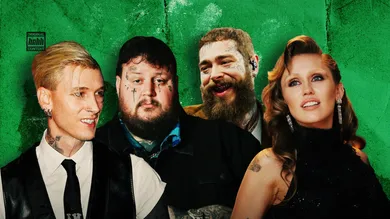
Miley Cyrus used it to dismantle her Disney image before later criticizing parts of the music she had so enthusiastically embraced. Post Malone became famous through records the industry and audience largely understood as Hip Hop while repeatedly resisting the rapper label. Jelly Roll spent years grinding through Southern Rap before country gave him the career he had been chasing. Machine Gun Kelly made his name battling and rapping before Pop Punk became his biggest commercial reinvention. Kid Rock and Uncle Kracker offer earlier versions of the same migration, while Chanel West Coast is making her own turn toward country in real time.
Their stories are not interchangeable. That is exactly what makes them worth putting side by side. This isn't simply about who “left Rap.” It is what Hip Hop represented to each of them while they were there, and what their departure revealed once they decided they would rather be somewhere else.
Miley Cyrus: Hip Hop As Reinvention
Although Miley Cyrus did not need Hip Hop to become famous, she used it to become someone else. During the Bangerz era, she worked closely with Mike WiLL Made-It, leaned into Trap production, collaborated with Future and Big Sean, and built an adult image around twerking, grills, and Black dancers. The shift helped tear down what remained of Hannah Montana, but it also sparked criticism that Cyrus was using pieces of Black culture as props for a reinvention she could eventually leave behind.
That criticism followed her into 2017, when Cyrus told Billboard that lyrics about sex and luxury lifestyles had “pushed me out of the Hip Hop scene a little.” The complaint landed awkwardly from an artist whose Bangerz era had thrived on sexual provocation and excess. Two years later, Cyrus acknowledged that contradiction after watching YouTuber Kenya Wilson criticize the racial implications of her comments. As USA Today reported, Cyrus apologized in the comments and admitted that “it is a privilege to have the ability to dip in and out of ‘the scene.’”
That admission gets closer to why her Hip Hop period remains so contentious. Cyrus didn't just try Rap-influenced music and decide she preferred something else. She entered the culture when its sound and imagery helped her manufacture distance from her Disney past, then criticized parts of that culture once she was ready to move on. To her credit, she later recognized the privilege embedded in being able to make that choice at all.
Post Malone: Rap Opened The Door, But He Never Loved The Label
“White Iverson” made Post Malone famous inside a Hip Hop ecosystem he soon seemed reluctant to claim. The 2015 breakout was followed by Stoney, where melodic Rap and Trap production helped establish him as one of the genre’s biggest new artists. Still, he repeatedly resisted being called a rapper. A 2017 GQ profile even headlined the tension: “Don’t Call Post Malone a Rapper.”
His comments about Hip Hop only complicated that relationship. During a 2017 interview with NewOnce, The Fader reported that Post told listeners, “If you’re looking for lyrics, if you’re looking to cry, if you’re looking to think about life, don’t listen to Hip Hop.” He later clarified that he loved Hip Hop and felt his remarks had been taken out of context, but his music was already widening outside the genre.
Hollywood’s Bleeding made that expansion obvious. “Take What You Want” paired him with Ozzy Osbourne and Travis Scott over a track that veered toward Heavy Metal, while “Circles” became one of his biggest Pop-Rock records. Austin pushed even further into Rock and Pop before F-1 Trillion completed his move into Country. Rap opened the door, but Post spent much of his career making it clear he never intended to stay confined there.
Read More: What Post Malone's Hip-Hop Commentary Says About The Artist Himself
Jelly Roll: Rap Was The Grind, Country Was The Breakthrough
Selling mixtapes out of a car came long before CMA stages and country radio. Jelly Roll spent years working as a Southern rapper, building an audience well outside the mainstream before singing became a serious part of his music. He told GRAMMY.com that he had always loved country, but simply did not know he could sing. That changed after a karaoke performance convinced a producer to push him toward vocals.
“Save Me” became the bridge. Released in 2020, the stripped-down record opened a path that Rap alone had not, and 2021’s Ballads of the Broken pushed him further into country without completely erasing where he came from. Whitsitt Chapel made the transition official in 2023 as his first full-length country album. GRAMMY.com later noted that the success of “Son of a Sinner” helped accelerate that pivot, even as Jelly continued performing older Rap material and openly crediting Hip Hop for teaching him how to tell his story.
His place in this feature is less cynical than Miley Cyrus or Post Malone. Jelly Roll never seemed embarrassed by being a rapper, and he has continued to acknowledge what Hip Hop gave him. Country simply became the format that fit his voice and widened his audience. In his own words, “I learned every trick I had from hip-hop.” That makes his move away from Rap feel less like rejection than a career finally landing in the genre he had wanted to explore all along.
Read More: Joyner Lucas & Jelly Roll Pen A Poignant Message About Addiction On "Best For Me"
Kid Rock: Hip Hop Came First
A high-top fade, turntables, and a Beastie Boys-influenced flow came years before the cowboy hats. As a teenager in Michigan, Kid Rock immersed himself in Hip Hop, DJing parties and rapping with Detroit-area artists before opening for Boogie Down Productions. That exposure helped land him a deal with Jive Records, which released his 1990 debut Grits Sandwiches for Breakfast. The project was squarely Rap, not the Rock-Country hybrid that would later define him.
The transition happened gradually. Devil Without a Cause blew up in 1998 by welding Rap to Hard Rock, giving him hits like “Bawitdaba” and “Cowboy” without abandoning rhymes altogether. Cocky pushed farther outside Hip Hop, especially after “Picture,” his duet with Sheryl Crow, found success at country radio. His 2003 self-titled album completed much of that transformation, with Kid Rock increasingly modeling himself after Country and Southern Rock figures rather than the Rap influences that shaped his early records.
The version of Kid Rock most familiar today can make his beginnings seem like trivia, but Hip Hop wasn't a quick detour. He spent close to a decade trying to make it as a rapper before Rap-Rock finally broke him nationally. Country and Heartland Rock eventually became his stronger identity, leaving his Rap career as the foundation of a public persona that moved farther and farther from where it started.
Read More: Kid Rock Labels Jay-Z A "DEI Hire" For The NFL
Machine Gun Kelly: The Pop-Punk Pivot Became Bigger Than The Rap Career
Four Rap albums came before the pink guitars. The popular internet version says Eminem embarrassed Machine Gun Kelly so badly in 2018 that he fled Hip Hop, but the timeline is messier. MGK followed their feud with 2019’s Hotel Diablo, still largely a Rap album, while “I Think I’m Okay” with Yungblud and Travis Barker hinted at where he was headed. A year later, Barker produced Tickets to My Downfall, and the full Pop-Punk turn gave MGK his first No. 1 album on the Billboard 200. Rolling Stone described the record as a wholesale move into the late-’90s and early-2000s Pop-Punk sound he was a fan of before the fame.
Meanwhile, MGK rejected the idea that he had abandoned Rap at all. “I didn’t ‘switch genres’; I’m versatile,” he told Kerrang!, according to NME, arguing that four Rap albums should not prevent him from making a fifth in another genre. He doubled down with Mainstream Sellout in 2022, another guitar-heavy No. 1. The success made his Rock persona so dominant that casual listeners could be forgiven for forgetting how aggressively he once fought to establish himself as a rapper.
Unlike some artists here, though, MGK never completely shut the door behind him. His case is less about disowning Hip Hop than discovering that another sound could make him substantially bigger. Rap built the first version of Machine Gun Kelly. Pop-Punk turned the reinvention into the version most of the mainstream came to recognize.
Chanel West Coast: Country Feels More Like Home
Years of trying to prove herself as a rapper never gave Chanel West Coast the musical breakthrough she wanted. She released her first mixtape in 2010, signed with Lil Wayne’s Young Money in 2012, and continued pursuing Rap while her television career on Love & Hip Hop Hollywood and Ridiculousness made her far more recognizable than her records. Now, she is preparing a Country album after hearing herself in the genre and having a surprisingly blunt realization. “Okay, this is what I should have been doing all along,” she told People.
The change is also tied to how she sees herself. Chanel West Coast was created as a tougher alter ego for Chelsea Chanel Dudley, while she describes “Chelsea” as more relaxed and personal. Country, she says, gives her room to write about motherhood and tell stories she did not explore during her Rap years. Her first country single, “Down to the Filter,” still carries some of the attitude associated with her previous music, and she has said she intends to keep “a little bit of the Hip Hop flavor” rather than erase it completely.
Read More: Chanel West Coast Met Lil Wayne After Lying Her Way Into His Green Room
Hip Hop Was Never The Same Thing To All Of Them
Changing genres is not inherently suspicious. Musicians are supposed to experiment, and spending years making Rap does not create a lifetime obligation to keep doing it. Hip Hop has always made room for outsiders and artists still figuring out what they want to sound like. Leaving Hip Hop does not mean the relationship was insincere. The distinction is in whether the culture remained part of the artist’s identity once its sound was no longer useful to their career. The difference usually becomes clearest in how they talk about the culture once they no longer need it.