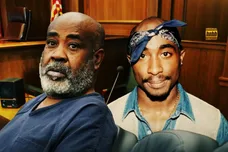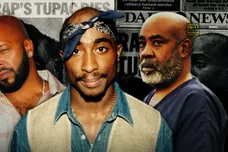


A Las Vegas jury took less than three hours to hold someone criminally responsible for Tupac Shakur’s killing for the first time. Duane “Keefe D” Davis, 63, was found guilty Monday of first-degree murder with use of a deadly weapon. Jurors accepted the prosecution’s argument that he orchestrated the 1996 drive-by shooting even though the state never accused him of firing the fatal shots himself. The verdict followed nine days of testimony from 24 prosecution witnesses and three defense witnesses.
The state’s case rested heavily on Davis’ own accounts of the killing. Across interviews, conversations with investigators and his 2019 memoir, Compton Street Legend, Davis repeatedly placed himself inside the white Cadillac from which Shakur was shot and described handing a gun toward the back seat. Prosecutors argued that his story changed around the edges over time, but the central details remained intact. Under Nevada law, jurors did not need to find that Davis personally pulled the trigger if they concluded that he aided or directed the murder. “Who fired is not the question,” Chief Deputy District Attorney Binu Palal told the jury during closing arguments, per CBS News.
Read More: Keefe D Was Allegedly Almost Arrested In 2009 For Tupac Murder
Keefe D Denied Involvement, Despite Previous Admissions
That theory addressed the central challenge raised by defense attorney Michael Sanft, who repeatedly pointed to what prosecutors lacked. There was no surveillance footage showing Davis at the shooting, no phone records placing him there, and little surviving physical evidence from a case that sat unresolved for nearly three decades. Sanft argued that Davis exaggerated or invented portions of his story for money and notoriety, while a former Las Vegas homicide detective acknowledged during the trial that he had been unable to independently verify Davis’ incriminating account.
Jurors ultimately sided with prosecutors, who presented Davis’ public storytelling as evidence rather than bravado. His statements described a retaliation plot after Shakur and others attacked Davis’ nephew, Orlando Anderson, at the MGM Grand earlier that night. Prosecutors said Davis obtained a weapon and joined a search for Shakur and Death Row Records co-founder Suge Knight before the Cadillac pulled alongside their BMW. Shakur was shot on Sept. 7, 1996, and died six days later at 25.
Read More: Keefe D Calls Witness A "F*ckin Rat" Under His Breath In Court
The verdict also closes a peculiar path to prosecution. Police had suspected Davis for years, but his willingness to speak publicly about the killing became central to the case that eventually put him before a jury. His memoir, documentary appearances, interviews, and recorded conversations with investigators made up much of the prosecution’s evidence, turning stories Davis had repeatedly told about one of Hip Hop’s most infamous murders into evidence used against him at trial.
Prosecutors said after the verdict that they would dismiss the gang enhancement attached to the charge because of witness logistics. The murder conviction remains intact. Davis is being held without bond while awaiting sentencing and faces a potential life sentence. He told the judge after the verdict that he intends to appeal.