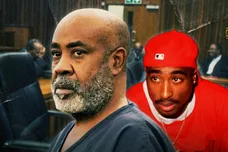
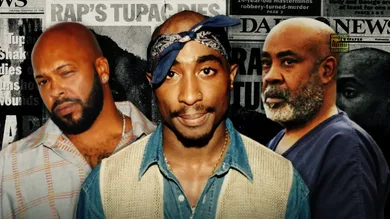


Jury selection has begun in the long-awaited trial of Duane “Keefe D” Davis, nearly 30 years after Tupac Shakur was gunned down in Las Vegas. Davis is the first person ever charged in connection with the rapper’s murder, bringing a case that spent decades unresolved into a courtroom at last.
Tupac was shot on September 7, 1996, after attending the Mike Tyson-Bruce Seldon fight at the MGM Grand with Death Row Records co-founder Marion “Suge” Knight. Earlier that night, surveillance cameras captured Tupac and several members of the Death Row entourage attacking Orlando “Baby Lane” Anderson inside the casino. Hours later, Tupac was riding in the passenger seat of Knight’s BMW when a white Cadillac pulled alongside them near the Las Vegas Strip. Gunfire erupted from the Cadillac, striking Tupac multiple times. Knight was wounded but survived. Tupac died six days later at 25.
Read More: Keefe D Claims He Knows Who Killed Tupac Ahead Of Murder Trial
Investigators spent years examining the people in both vehicles and those surrounding the events of that night. The case also accumulated witnesses, detectives, alleged confessions, and competing accounts of who actually fired the gun. Some of the names are immediately recognizable, while others have remained largely outside the public conversation despite their importance to the prosecution now unfolding.
Understanding who is who matters because not everyone connected to Tupac’s murder played the same role. Several entered the story years later through police interviews or testimony. As Keefe D’s trial begins, these are the key players behind one of Hip Hop’s most scrutinized murder cases.
Duane “Keefe D” Davis: The Man On Trial
At the center of the prosecution is a man who spent years publicly placing himself inside the Cadillac. Keefe D is charged with murder with a deadly weapon with the intent to promote gang activity. Prosecutors say the former South Side Compton Crips leader helped organize the attack as retaliation for the beating of his nephew, Orlando Anderson, at the MGM Grand.
Davis has never claimed that he fired at Tupac. However, in previous accounts, he said he was riding in the front passenger seat and obtained the gun used in the shooting. He also described passing the weapon toward the back seat. Nevada law allows prosecutors to pursue a murder charge against someone accused of helping arrange a killing, even if another person pulled the trigger.
Read More: Four High-Profile Hip Hop Cases Head To Trial In August
Much of the case against him comes from statements he made years after Tupac’s death. Davis discussed the shooting during a 2008 law-enforcement interview and later wrote about it in his 2019 memoir, Compton Street Legend. He now disputes those accounts, arguing that portions were embellished or untrue. His defense unsuccessfully tried to keep both the interview and memoir away from jurors. Judge Carli Kierny ruled that prosecutors may use them at trial.
Davis has pleaded not guilty. He is also the only alleged occupant of the Cadillac who is still alive, making his own words unusually important to a case where the other men accused of participating can no longer testify about what happened inside the car.
Orlando “Baby Lane” Anderson: The Longtime Suspect
For decades, Orlando Anderson was the name most often attached to the question of who shot Tupac. He was Keefe D’s nephew and a member of the South Side Compton Crips, placing him at the center of the confrontation prosecutors say set the murder in motion. As previously stated, hours before the shooting, Tupac and members of the Death Row entourage attacked Anderson inside the MGM Grand. Las Vegas police have since described that beating as the catalyst for the retaliation that followed. Prosecutors say Anderson later joined Keefe D, Terrence Brown, and Deandrae Smith inside the white Cadillac that pulled alongside Tupac and Suge Knight.
Suspicion eventually settled heavily on Anderson because Keefe D identified him as the gunman during a 2008 police interview. Anderson denied any involvement while he was alive and was never charged in Tupac’s murder. He died in an unrelated Compton shooting in 1998. Still, his name remains central to the case, but the identity of the shooter is no longer quite so simple. Grand jury testimony from Denvonta Lee pointed instead to Deandrae Smith, who was allegedly sitting beside Anderson in the back seat. That competing account is one reason the trial against Keefe D does not depend on proving Anderson fired the fatal shots.
Deandrae “Freaky” Smith: The Other Suspected Shooter
The question of who actually pulled the trigger becomes less certain once Deandrae “Freaky” Smith enters the story. Smith was allegedly seated in the back of the Cadillac with Orlando Anderson, placing both men in position to fire when the car pulled alongside Tupac and Suge Knight.
For years, Anderson was widely treated as the likely gunman. Grand jury testimony later introduced another version. Denvonta Lee testified that Smith told him Anderson could not get a clear shot, so Smith took the weapon and fired instead. That account directly challenges Keefe D’s earlier statements implicating his nephew.
Meanwhile, Smith was never charged in Tupac’s murder and died in 2004. His alleged confession therefore reaches the case through another witness rather than Smith himself.
Terrence “T-Brown” Brown: The Cadillac’s Alleged Driver
Terrence Brown is the least familiar member of the four-man group prosecutors say rode in the white Cadillac, but his role helps complete the picture of how the shooting unfolded. Brown was allegedly behind the wheel, with Keefe D in the front passenger seat and Anderson and Smith in the back.
In his memoir, Keefe D said the group was driving toward Las Vegas Boulevard when they spotted Tupac leaning out of Suge Knight’s BMW. According to that account, Davis told Brown to turn the Cadillac around before they pulled alongside Tupac’s convoy. Prosecutors now use those statements as part of their argument that the encounter was not random.
Brown was never charged in Tupac’s murder. He died in 2015 after being shot at a medical marijuana dispensary in Compton, leaving Keefe D as the only alleged occupant of the Cadillac still alive.
Suge Knight: The Eyewitness Sitting Beside Tupac
Only one person was sitting beside Tupac when the Cadillac opened fire. Suge Knight was driving the black BMW on Las Vegas Boulevard when the gunman pulled alongside them. Tupac was struck four times, while Knight suffered a wound to the head and managed to drive several blocks before police and emergency crews reached them.
That makes the former Death Row Records boss one of the case’s most important surviving eyewitnesses. Knight was also present for the MGM Grand fight that prosecutors say triggered the retaliation. His proximity to both events gives him firsthand knowledge of the hours surrounding the shooting, even if he could not necessarily identify who fired from the Cadillac.
Whether jurors will hear directly from him remains uncertain. Knight is serving a 28-year sentence in California for an unrelated voluntary manslaughter conviction, and he has publicly resisted becoming a witness against Keefe D. Current reporting indicates prosecutors have considered his testimony, but Knight has made clear that he does not want to participate.
E.D.I. Mean: A View From The Car Behind Tupac
One of the clearest eyewitness accounts came from Malcolm “E.D.I. Mean” Greenidge of the Outlawz, who was riding in the vehicle directly behind Tupac and Suge Knight. Greenidge said he saw four men inside the white Cadillac moments before the shooting. However, he could not identify which passenger fired, but he told the Los Angeles Times that the gun came from the back seat and extended through the driver’s-side window. Greenidge also said he caught a brief look at all four occupants as the Cadillac passed.
That account matters because it supports the basic configuration prosecutors have described for years, that four men were in the Cadillac, with the shooter positioned in the rear. It does not settle whether Orlando Anderson or Deandrae Smith pulled the trigger, but it places the gun in the part of the car where both men were allegedly sitting.
Yaki Kadafi: The Witness Police Never Got Back
Yafeu Fula may have been able to identify someone inside the white Cadillac. The Outlawz rapper was also riding in the car behind Tupac when the shooting happened and later told police he believed he could recognize at least one of the occupants. Investigators said he seemed especially confident about the driver.
Kadafi stayed in Las Vegas while Tupac was hospitalized, but detectives never completed a formal identification with him. Police later said they tried to arrange a follow-up through an attorney after obtaining photographs of possible suspects. His family pushed back on suggestions that he had been difficult to reach and criticized investigators for not questioning him more thoroughly while he was still in the city.
Kadafi was shot and killed in New Jersey in November 1996, less than two months after Tupac’s death. He was 19. Whatever he might have been able to confirm about the Cadillac was never recorded.
Frank Alexander: Tupac’s Bodyguard
Driving the vehicle directly behind Tupac and Suge Knight put Frank Alexander close enough to catch a brief glimpse of the shooter as the Cadillac opened fire. The bodyguard later said he believed he might have been able to identify the man if investigators had shown him photographs or arranged a lineup.
Moreover, Alexander became an outspoken critic of the original Las Vegas investigation. Months after Tupac’s death, he complained that detectives had never brought him back for a meaningful identification despite what he told them at the scene. Police disputed the entourage’s account and argued that several witnesses had not been fully cooperative.
Detectives eventually interviewed Alexander again in March 1997 and showed him a folder containing photographs of possible suspects. He was unable to identify the shooter. The delay became part of the criticism surrounding how authorities handled eyewitnesses during the earliest stages of the case.
Denvonta “Dirt Rock” Lee: The Man Who Changed The Shooter Narrative
A second version of who fired the fatal shots entered the case through Denvonta Lee. He was not in either vehicle when Tupac was killed, but his grand jury testimony introduced an account that directly challenged the long-held belief that Anderson was the gunman.
Lee testified that Deandrae Smith later told him Anderson could not get a clear shot from the back seat. According to Lee, Smith said he took the weapon and fired instead. That alleged confession gave prosecutors another way to explain the shooting without relying entirely on Keefe D’s earlier claim that his nephew pulled the trigger.
The account is impossible to test against Smith directly because he died in 2004. That leaves jurors to evaluate Lee’s credibility and the circumstances under which the alleged confession was made.
Read More: A Look At The Life Of Tupac Shakur
Reggie Wright Jr.: From Death Row Security To Keefe D’s Alternate Suspect
The defense has tried to redirect some of the scrutiny toward a man whose job was once protecting Death Row Records. Reggie Wright Jr., a former Compton police officer who later headed security for the label, testified before the grand jury that indicted Keefe D. Wright has said he spent much of the night Tupac was shot handling security arrangements for the club where Tupac and Knight planned to go after the Tyson fight.
Keefe D now tells a drastically different story. He has accused Wright and members of his security operation of orchestrating Tupac’s killing, calling Wright a key suspect during interviews and through his defense. No evidence made public has established Wright’s involvement, and he has never been charged in connection with the murder.
Further, Wright has repeatedly denied the accusation and points instead to Keefe D’s own history of discussing the shooting. “I was in charge of possibly protecting this young man,” he previously told ABC's Nightline. Wright argues that Davis only began casting him as a suspect after being arrested, despite years of statements placing himself inside the Cadillac.
Sean “Diddy” Combs: The Alleged $1 Million Bounty
A claim made by Keefe D pulled Diddy into the Tupac murder story years after the shooting. During his 2008 police interview, Davis alleged that Combs offered him $1 million to kill Tupac and Suge Knight amid the escalating conflict between Bad Boy and Death Row. A police report documenting that interview says Davis claimed the offer was made more than once.
Combs has denied having any role in Tupac’s death. When former LAPD detective Greg Kading later published the allegation in Murder Rap, Combs called the story “pure fiction and completely ridiculous.” He has never been charged in connection with the 1996 shooting. Additionally, Keefe D has since backed away from the accusation himself. During an August 2026 interview with 8 News Now, he said he does not believe Combs had anything to do with Tupac’s murder. That reversal is notable because prosecutors are expected to rely heavily on Davis’ earlier statements as they challenge his current insistence that much of what he previously said about the case was untrue.
The names surrounding Tupac Shakur’s murder have been repeated for decades, but this trial is not asking jurors to solve every theory attached to the case. Prosecutors do not have to prove whether Anderson or Smith fired the fatal shots. Their burden is narrower. They must convince the jury that Keefe D knowingly helped set the retaliation in motion and supplied the weapon used in the attack. After nearly 30 years of conflicting accounts and dead witnesses, that is the question now finally being tested in court.