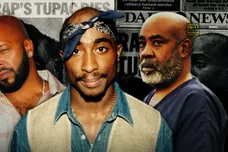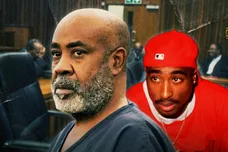
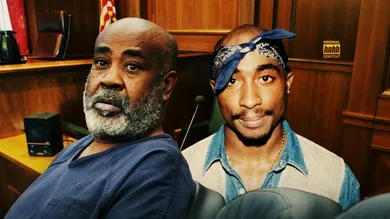


A Las Vegas jury needed less than three hours to do what no court had done in the nearly 30 years since Tupac Shakur was murdered. Duane “Keefe D” Davis was found guilty of orchestrating the 1996 shooting, making him the first person convicted in a case that spent decades without anyone being held criminally responsible. The verdict gives prosecutors something the investigation had never produced before. It also exposes how difficult it will be for any verdict to put the rest of Tupac’s murder to rest.
Jurors were not asked to solve every mystery that has attached itself to Shakur’s death. Prosecutors did not argue that Davis pulled the trigger, nor did they need to prove who did. Their case was that he supplied the gun and helped direct the retaliation that ended with Shakur being shot just off the Las Vegas Strip. The defense countered by emphasizing what investigators lacked, including surveillance footage, phone records, or other physical evidence placing Davis inside the white Cadillac. Yet some of the state’s most consequential evidence came from Davis himself, through accounts he had repeated in interviews, in conversations with investigators, and in a memoir.
Read More: Keefe D Found Guilty In Tupac Shakur Murder Trial
That is what makes the conviction such a strange endpoint for one of Hip Hop’s most persistent mysteries. Davis spent years presenting himself as one of the few people still alive who could explain what happened from inside the story. His connection to Orlando Anderson and his repeated claims that he rode in the Cadillac gave his words a weight that conspiracy theorists and outside observers could never quite claim. Eventually, those same stories followed him into a courtroom.
A guilty verdict settles the question Nevada prosecutors put before the jury. However, it can't erase the competing versions of the murder that have circulated since 1996, or the documentaries, interviews, and books that turned Shakur’s death into something larger than the criminal investigation itself. Tupac’s murder finally has its first conviction. What it does not have is the kind of ending capable of undoing everything built around it.
Keefe D Wasn’t Just Another Man With A Tupac Theory
Plenty of people have spent the last three decades claiming to know who killed Tupac Shakur. Former detectives have offered theories. Death Row associates have disputed one another’s versions of events. Documentaries and interviews introduced enough alleged insiders to make the case feel crowded with people who were somehow one conversation removed from the truth. Davis occupied a different position. He was Orlando “Baby Lane” Anderson’s uncle, a former leader of the South Side Compton Crips and, by his own repeated account, one of four men riding in the Cadillac when Tupac was shot.
That proximity is what made people listen. Davis was not working backward from police reports or recycling something he heard from somebody else. When he discussed the shooting, he described the night as someone who claimed to have witnessed it from inside the alleged murder vehicle. In a 2008 interview with investigators, he said he obtained the gun and passed it toward the back seat after the Cadillac pulled alongside the BMW carrying Tupac and Suge Knight. He identified Anderson as the shooter in that conversation, although the question of who fired the weapon remained outside what prosecutors ultimately needed to prove against Davis.
Read More: Keefe D Suffers Major Blow As Judge Allows 2008 Police Interview At Tupac Murder Trial
His connection to Anderson also made the account harder to dismiss as ordinary Tupac lore. The MGM Grand fight earlier that night was not a distant piece of the story to Davis. Anderson was his nephew, and prosecutors convinced jurors that the beating became the motive for retaliation. Davis’ descriptions put him with Anderson afterward, armed and looking for Tupac and Knight. Whatever contradictions emerged over the years, he was speaking about people in his own family and gang circle rather than inserting himself into a story populated by strangers.
Time made his position even more unusual. Anderson died in 1998. Terry Brown and DeAndre Smith, the other men prosecutors said were inside the Cadillac, also died before Davis was charged. By the time Nevada prosecutors brought the case to trial, Davis was the only surviving member of the group alleged to have been inside the car. For anyone trying to reconstruct what happened there, his voice carried a kind of access that was increasingly impossible to find elsewhere.
Being Close To The Mystery Became Its Own Currency
Access to one of Hip Hop’s most infamous unsolved murders carried its own value, and Keefe D eventually understood how much people wanted what he claimed to know. His account had already entered the public record through Greg Kading’s Murder Rap, which drew from Davis’ protected conversations with investigators. When Davis began speaking for himself years later, he was stepping into an audience that had already spent decades demanding answers about Tupac’s death.
He acknowledged that during BET’s Death Row Chronicles. “People have been pursuing me for 20 years. Newspapers, magazines,” Davis said while explaining why he had finally become willing to speak publicly, per Sky News. He also described himself as the only person still alive who could tell what happened that night. It established the role he would increasingly occupy in the Tupac story. Davis was selling proximity that almost nobody else could offer.
Read More: Tupac Told Police 'We’ll Take Care Of It' After 1996 Shooting, Officer Says
His 2019 memoir made the proposition even clearer. Compton Street Legend did not market Davis simply as a former gang figure telling his life story. Its full title promised “street-level accounts” of the Tupac and Biggie murders, Death Row Records, and some of the most long-lasting controversies of 1990s Hip Hop. Promotional material emphasized his firsthand connections, while his growing list of television appearances became part of the reason readers were supposed to trust him. The mystery surrounding Tupac was no longer just something Davis knew about. It had become part of his public identity.
Then, VladTV showed how large the appetite could be. Davis’ first full interview with the platform in 2019 was split into multiple clips focused on Tupac, Orlando Anderson, Suge Knight, and Diddy, and the full conversation also promoted his memoir. VladTV later ranked Davis among its biggest interviews of the year, reporting roughly 12 million combined YouTube views across the interview and its clips. He returned in 2023 to revisit old claims and offer still more details about a murder he had already discussed extensively.
That is the currency Davis possessed. His access gave him authority, and the absence of a conviction kept that authority renewable. For years, there was always another unanswered question about Tupac’s murder. Keefe D had positioned himself as someone who could answer it.
The Stories That Made Keefe D Valuable Became Evidence Against Him
The bargain changed once Keefe D was charged. Publicly, his value had depended on the idea that he possessed firsthand knowledge no one else could offer. In court, his defense needed jurors to see those same interviews and memoir passages as exaggeration or storytelling shaped by money and attention. The persona that had made him useful to documentaries and interview platforms suddenly became something his attorneys had to dismantle.
That reversal gave the prosecution an unusual advantage. They did not have to present Davis as a perfectly reliable narrator. His accounts changed over the years, and prosecutors acknowledged as much. What mattered to the state was that certain elements remained intact across versions, particularly his claim that he was involved in the retaliation after Orlando Anderson was attacked. His own archive gave prosecutors years of material to compare against itself.
The irony is difficult to miss. Keefe D spent years benefiting from audiences believing he knew the truth about Tupac’s murder. Once his freedom depended on it, the argument became that people had believed him too much. Jurors rejected that version and found him guilty in less than three hours. The storyteller had become part of the story he spent years helping keep alive.
A Guilty Verdict Still Cannot Untangle What Tupac’s Murder Became
A conviction can establish criminal responsibility without settling the story people have spent 30 years building around a murder. Keefe D is now legally responsible for Tupac’s killing, but that verdict does not make every account he gave over the years true, identify the gunman through a judicial finding, or erase the competing narratives that flourished while no one was being prosecuted. As Reuters noted after the verdict, prosecutors still have not publicly identified who fired the fatal shots.
The longer Tupac’s murder remained unsolved, the more people surrounding it became characters in a story that could be retold indefinitely. Former associates became interview subjects. Detectives became authors and documentary figures. Claims that might once have disappeared into old police files could be revived years later on television or YouTube. Keefe D was particularly effective inside that environment, but he did not create it. He became one of its most recognizable products.
Read More: Keefe D Demands An Appeal Following Conviction, Receives Sentencing Date
There is an uncomfortable consequence to all of that attention. Tupac can become secondary in conversations about his own murder. The focus shifts toward who was in the car, whose account changed, which investigator believed whom, and which new interview promises another revelation. A 25-year-old man was killed, yet nearly three decades without a conviction allowed the unanswered questions surrounding his death to become their own form of entertainment.
Keefe D’s conviction changes his place in that history, but it cannot dismantle the culture that grew around the absence of an answer. His attorney has already said the verdict will be appealed, and FOX5 Las Vegas reports that sentencing is scheduled for Oct. 13. The first conviction in Tupac Shakur’s murder is historic. Still, it can't make 30 years of competing stories disappear.