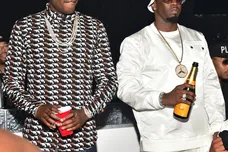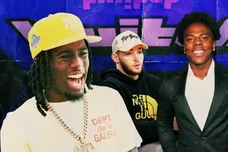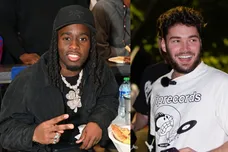


Who actually wants a camera in their face all the time? Not even celebrities who profit off visibility seem particularly interested in being perceived as permanently accessible. Yet, that’s where culture has drifted: every interaction potentially becoming content, every public outing carrying the possibility of virality. You can’t go to the gym, a restaurant, or even walk down the street anymore without the lingering feeling that somebody nearby is documenting something for an audience. We used to call it a big break. Now, it’s just infamy.
The shift from documenting experiences to broadcasting them in real time has fundamentally altered the way people interact with music, festivals, and each other. Concerts are no different. At one point, people complained that fans were too busy filming shows instead of actually experiencing them. Sometimes, those clips turned into internet-defining moments — Kanye West’s Pablo tour rants spreading across timelines within minutes, for example. But somewhere along the line, hip-hop festivals stopped feeling like celebrations of music and started feeling more like giant content farms engineered for clips, livestreams, and algorithmic moments.
It began with influencers, then content creators, and now streamers, who can’t really be written off as internet-adjacent figures anymore. Whether people like it or not, they’ve become part of hip-hop’s promotional infrastructure. They influence narratives, rollouts, fan perception, and increasingly, festival attention itself. Rolling Loud embodies that shift better than almost anything else because the festival sits directly at the intersection of internet virality and rap culture. Even its lineups reflect the tension between old and new rap industry priorities: legacy headliners sharing space with artists who built their notoriety almost entirely online, while personalities like Brittany Renner roam backstage chasing viral interactions.
And those interactions work. Renner barely needed more than a few seconds with artists backstage to generate headlines. J. Cole briefly stopping to speak with her became a moment in itself, while her relationship with Kevin Gates seemingly unfolded in front of the same cameras. Traditional media rarely generate those kinds of moments anymore because traditional media serves a different purpose. Journalists contextualize, critique, and occasionally challenge the people they cover. Streamers and internet personalities, by design, rarely need to. Their value comes from reach, immediacy, and access. For labels, artists, and publicists, that trade-off is obvious.
The “goofy promo appearance” economy is simply more entertaining to the average consumer than an artist sitting down for a deep conversation about their catalog. And it works both ways. Streamers pay enormous amounts of money to bring artists onto their platforms because even awkward interactions can become content. Adin Ross reportedly paid Playboi Carti an absurd amount of money for a stream that lasted only minutes, but it ended up becoming more valuable because it was so painfully underwhelming. The most entertaining part of the entire ordeal was watching Adin get scammed in real time.
That dynamic fundamentally changed the relationship between hip-hop and streamers. They were no longer adjacent to rap culture; they had become embedded within it. Someone like Kai Cenat represents the cleaner, more digestible version of that evolution—the family-friendly internet personality whose album reactions and artist interactions now carry an institutional level of attention once reserved for critics, radio DJs, and established music publications. That isn’t necessarily an indictment of Kai himself so much as it is an observation about the ecosystem around him. Streamer opinions increasingly carry the same weight as traditional criticism despite operating by entirely different standards. The format rewards access more than scrutiny, personality more than perspective.
Eventually, festivals adopted the same logic. Rolling Loud doesn’t necessarily book bad artists. The issue is that the festival often feels less curated than algorithmic. Its overcrowded lineups regularly prioritize immediacy, virality, chaos, and hype—the exact same values that drive streamer culture in the first place. Too many artists hit the stage without fully understanding how to command a crowd, while audiences increasingly attend with the expectation that they’re participating in content as much as a concert. At times, Rolling Loud feels less like a music festival than a physical manifestation of an Instagram feed or Spotify playlist: endless stimulation, endless turnover, endless noise.
But internet popularity doesn’t always translate into real-world presence. People like Adin Ross have appeared onstage at festivals to loud reactions, yet there’s often a lingering question about what role they actually occupy in those spaces beyond visibility itself. More recently, Kai Cenat affiliate Rakai was booed by crowds at Rolling Loud before lashing out at the audience. Even Plaqueboymax, who has arguably integrated himself into hip-hop more concretely through production and artist collaborations, struggled to get through a set without objects being thrown at him. The disconnect is revealing. Online influence creates proximity to rap culture, but proximity alone doesn’t automatically earn acceptance within it.
That’s also why the increasing overlap between streaming culture and live events feels so strange. There’s seemingly little value in physically being present anywhere anymore unless the experience is simultaneously being converted into content. Award shows, festivals like Rolling Loud, backstage areas, and even VIP sections increasingly feel designed around documentation rather than participation. Kai Cenat attending the Grammy Awards made sense from a business standpoint because award shows desperately want younger audiences. But watching streamers livestream their reactions while sitting inside the event itself captures the broader absurdity of modern entertainment culture: even presence alone no longer feels sufficient unless it’s immediately repackaged for consumption.
And that comes at a cost. Celebrities, artists, and public figures obviously rely on visibility, but there’s still an understood boundary between public access and constant surveillance. Streamers, unfortunately, thrive on collapsing that distinction. Adin Ross even claimed that Coachella organizers weren’t particularly happy about fellow streamer N3on broadcasting freely around the festival because of concerns surrounding VIP guests and artist privacy. It sounds minor on paper, but it reflects a much larger cultural shift: every room is now treated like potential content inventory.
And underneath all of it, the culture itself increasingly feels secondary. Hip-hop is youth culture, but not all youth culture is hip-hop. The distinction matters because the industry increasingly treats virality as cultural contribution when they’re not remotely the same thing. Festivals once functioned as places of discovery. Interviews contextualized artists instead of merely extending their rollouts. Even access to celebrities once carried meaning because it wasn’t endlessly available.
Now, access itself has become the product. That’s the real shift. Not that streamers entered hip-hop, but that hip-hop institutions increasingly reorganized themselves around the same incentives driving internet culture in the first place: visibility over substance, immediacy over engagement, virality over curation. Eventually, the algorithm stops reflecting the culture and starts shaping it.