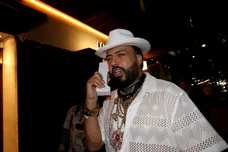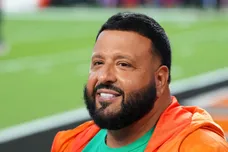


It gets really obvious when an artist lives in a bubble, especially those whose success can sometimes feel like a fluke. That isn’t to downplay anyone’s talent. But there are moments where an artist’s shelf life ends up being way longer than anyone would’ve predicted. Take French Montana, for example. His ability to tap into trends and hop on records with other artists has certainly worked in his favor when it comes to longevity. The issue is that, for some, French has slowly become more of a musical afterthought.
The thing is, French Montana makes music that lives in specific environments. Gym speakers, late-night parties, yacht decks, drunk group sing-alongs. His records tend to land best when they’re shared experiences. And the people who really connect with that sound are often tied to a very specific era—street hustlers who’ve grown out of it, ex-dancers who’ve left that life behind, New Yorkers who remember when he was actively soundtracking the city, or so it would seem. In that sense, French has become more of a nostalgic figure, with even his broader celebrity identity at one point orbiting his relationship with Khloé Kardashian and his friendship with Diddy.
All of this might sound harsh, but the reality is French Montana’s hustle and ear for talent arguably outweigh his solo artistic output, at least in recent years. For every project he drops, there’s usually one record that carries the weight—and more often than not, it leans heavily on features. That’s not to say he doesn’t have standalone hits. “FWMGAB” had a real moment on its own. But when you look at the records that define his mainstream peak, collaboration tends to do a lot of the heavy lifting. “Lockjaw” is as much Kodak Black’s energy as it is French’s, and “Unforgettable” doesn’t exist in the same way without Swae Lee.
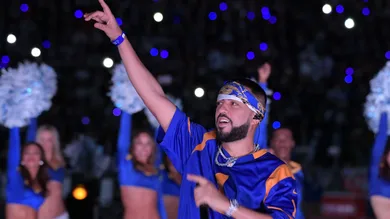
That concern followed him into last night’s Verzuz against Rick Ross. A few years ago, French Montana declared that he could go neck-and-neck with Kendrick Lamar in a Verzuz setting—a claim that raised eyebrows at the time, even as Hot 97 later put parts of that idea into an on-air comparison segment. While Kendrick and French operate in entirely different lanes, French was essentially arguing that his catalog of anthems could stand up against most hip-hop giants.
Last night, it proved to be more defensible than expected. Rick Ross had already claimed a win in the Verzuz space when he went up against 2 Chainz, and this matchup carried a similar sense of scale. The setup felt more collaborative than combative at points, especially given how many records both artists share or have touched in some form. But when the wins were tallied, and French emerged victorious by a margin, a noticeable portion of French Montana’s strongest moments came through collaboration—remixes like Ferg’s “Work,” Bobby Shmurda’s “Hot N****a,” along with “Lockjaw” and “Unforgettable,” which lean heavily on their featured counterparts. Even “Freaks” with Nicki Minaj and “Smoking Part 2” with Max B and Ross played into that same pattern.
His solo cuts, meanwhile, mostly pointed back to an earlier phase of his career, when he was still being championed in mixtape circuits and positioned as part of the next wave of Bad Boy-era momentum in the 2010s.
To be fair, Ross isn’t entirely removed from that same conversation. Many of his records also include features. But Ross has long demonstrated that his catalog carries weight beyond the single—album cuts, street anthems, and radio records that feel structurally complete on their own. And more importantly, he has enough solo moments where the verse alone becomes the centerpiece, whether on his own records or others’.
That’s where French still separates himself. His strength lies in hooks and moments rather than fully dominant bodies of work. He can offset weaker verses if the chorus lands, and sometimes a 30-second French Montana moment hits harder than a fully structured solo record built around him. Last night only reinforced how much sequencing and presentation matter when his catalog is placed alongside an artist like Rick Ross.
Verzuz ultimately gave his strengths a proper stage. Whether it leads to a renewed interest in his back catalog remains to be seen. But it did underline something that often gets flattened in the discourse: French Montana’s catalog does carry weight, not just for him, but for the era and audience that came up with him—from the Bronx mixtape run to his global crossover moment.
What’s interesting is that if you ask Kenyon Martin, Rick Ross already has a better catalog than Kendrick Lamar. And if that kind of framing holds any weight, then maybe French’s earlier claim about going neck-and-neck with Kendrick doesn’t look quite as absurd in hindsight, at least when measured through the lens of anthems, moments, and Verzuz mechanics rather than traditional album legacy.