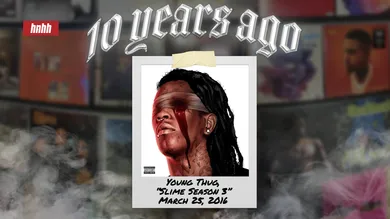


In an episode of CNBC’s Follow The Leader in 2016, Lyor Cohen underscored the stakes surrounding Young Thug’s run that year. Ahead of the release of Slime Season 3, his most anticipated project at the time, Cohen scolded Thug over his approach to writing and recording. But the real tension came from the expectations Thug set for himself. In typical fashion, he casually floated an outrageous goal for the year: ten No. 1 singles. It wasn’t necessarily unrealistic. Cohen just wasn’t convinced Thug was serious about achieving it without playing the games that normally help artists move up within an industry that already had structure. Young Thug’s appeal, after all, was unstructured.
“Ten? If you don’t freestyle, and you actually work on the singles and record great choruses and develop your songs,” Cohen told Young Thug. "You just record so many songs and leave them like little orphans out there. You have to come back to them.”
Thug, whose prolific output became an integral part of his enigma, fired back, “The critics come back to them!”
He wasn’t lying. By 2016, hip-hop was in a strange place, both deviating from its traditions while clinging to them at the same time. In the middle of that tension, Young Thug became the culture’s most effective agitator without even trying. Years later, someone like Lil Nas X would need a deliberately provocative moment—like kissing another man onstage—to spark industry-wide discourse. Young Thug just had to call his friends “babe.” His presence alone was disruptive. Fashion, vocal delivery, slang, melody—everything about him felt like a challenge to the boundaries hip-hop once treated as rigid.
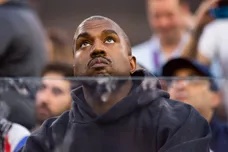
If there’s one moment that captured Thug’s cultural gravity during this stretch, it happened at Kanye West’s The Life of Pablo listening party at Madison Square Garden. On one side of the room stood Vic Mensa, a Roc Nation signee who at the time looked like Ye’s next protégé. Meanwhile, Young Thug sat on the platform alongside models wearing the latest Yeezy collection. When the album finished, Kanye began letting people preview music through the aux. Mensa stepped up first, debuting a track called “Danger.” The reaction was polite at best, the kind of moment where the room kept talking while the song played in the background. Then Kanye announced that Young Thug had something new to play. The bounce of “With Them” filled the arena, and as Thug yelled, “Thugger, Thugger, baby,” the energy in the building shifted instantly.
Moments like that didn’t make Young Thug’s career, but they quietly affirmed something the industry was still trying to process: he belonged in the same pantheon of creative weirdos that Kanye West had spent a decade carving space for. Around that same time, Slime Season 3 arrived to make the same statement in Young Thug’s own catalog. For an artist whose career had been defined by chaotic output, cult fandom, and constant controversy, the project marked something different. Slime Season 3 didn’t just extend his momentum. It was the moment that pulled Young Thug from abstract into the trajectory of a mainstream superstar.
The Slime Season mixtape series ultimately showed that progression. The first installment exemplified his hit-making potential through songs like “Power” and “Best Friend,” even if the sequencing reflected the directionless essence of mixtapes. Its sequel refined that formula with more noticeable intent. Across both projects, he simply unloaded the best music from his vault over the past year and packaged it for public consumption—and it worked.
But Slime Season 3 marked a critical turning point, and it was evident in the rollout. Despite a few delays, he formally announced the project at SXSW with a funeral march and the release date displayed on a casket. The spectacle was symbolic, signaling the end of that era of Young Thug—the one where, to quote Lyor Cohen, he would “record so many songs and leave them like little orphans out there.” A few months later, the Jeffrey era emerged, but Slime Season 3 remained the connective tissue of this transition. The artist who had been championed by hipsters and trappers alike for his oddities and uncanny musical brilliance became equally heralded by Elton John, demonstrating how Thug transcended genres, borders, and generations.
It’s difficult not to see why Slime Season 3 had that effect. The project was brief but colorful, never stagnant, and constantly pushing boundaries that Thug acted like never existed in the first place. “With Them” exemplified the type of focused songwriting Cohen wanted from him. The way it rattled Madison Square Garden before its official release only reinforced that vision. Structurally, the song felt more deliberate than much of Thug’s earlier work, weaving together bridges and pre-choruses before exploding into one of the most memorable intros of his catalog.
Even when he flirted with industry conventions, he never abandoned the eccentricities that made him compelling. He remained the experimental, surrealist rapper fans had fallen for—just with a bit more polish. The skrrt on “Memo” felt like a spiritual cousin to “Halftime,” amplified by the paranoia of his rising celebrity as street authority and fame blurred together. Then there were records like “Digits,” which birthed timeless—if often misunderstood—get-money aphorisms over London On Da Track’s piano-laden production.
“Drippin,” however, remains the crown jewel of Slime Season 3, a song where the elasticity of Thug’s melodies bursts through the seams. Staccato blurts build with intensity, and the kaleidoscopic imagery of drugs, fashion, violence, and money became a pinnacle in Young Thuggisms. There’s more passion and emotion in hearing Thug scream “drip” in different octaves than any amount of words could capture—a vocal performance that paved the way for songs like “Harambe” and feels absent from his more recent outings.
A level of clarity emerged with Slime Season 3 that extended into his more commercial efforts. In many ways, it’s hard to deem it his most influential project, as subsequent artists drew more clearly from earlier entries in his catalog. But the mixtape cemented the moment when Young Thug could no longer be denied. For as outlandish as he dressed and as incoherent as he sometimes sounded, Young Thug wasn’t here to match the lyrical density of someone like André 3000. Instead, he inherited the peculiar brilliance that made artists like 3000 so compelling. What emerged was a time capsule of Young Thug’s transitional period—the moment his chaotic brilliance hardened into the icon he remains today.