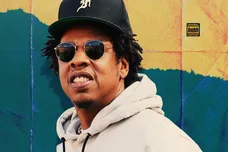
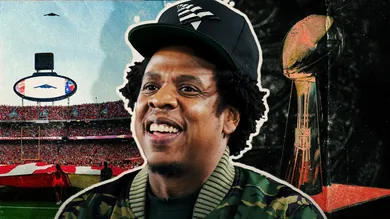


There are so many ways that JAŸ-Z can open up the Super Bowl Halftime Show next year. He might strike the stage with the electrifying intro of The Dynasty: Roc La Familia. He can bring it back to The Black Album with “What More Can I Say,” an apt reminder of all that he's accomplished. Hell, he could even come out to the Barney theme song, and it would be as iconic as you could imagine.
“What More Can I Say” feels like the most appropriate one, though. He opens the song with a declaration of his longevity and consistency, regardless of whether he's appealing to the streets or the pop charts. “There’s never been a n***a be this good for this long/ This hood or this pop, this hot or this strong/ With so many different flows, this one’s for this song/ The next one I switch up, this one will get bit up.” It's a fitting assessment of a career that has somehow managed to remain relevant across three decades of hip-hop, even as the genre and its audience have changed around him.
The irony of having his flows bitten would be addressed shortly after, when he reflects on the criticism of his constant homages to B.I.G. But those particular bars have had some real staying power. As the JAŸ30 celebrations have continued throughout the year, the Super Bowl announcement punctuated concerns, criticisms, and career milestones, all of which have held equal ground in the public discourse. This is the first time in years that Hov has been seriously discussed in the context of a new solo album, and the renewed appreciation for his catalog has given people another opportunity to revisit what made him such a formidable artist. The 4:44 era ended with Everything Is Love alongside Beyoncé, while his appearance on Jay Electronica's A Written Testimony helped bring another long-awaited album into existence. Perhaps there's a lot to say about how Hov's later-career efforts have been rather outstanding, especially compared to albums like The Blueprint 3 and Magna Carta Holy Grail, both of which demonstrated how his pop standing sometimes became more defining to the general public than his brilliance as a wordsmith.
Maybe that's exactly why witnessing JAŸ-Z on the Halftime Show stage makes as much sense today as it would have when Roc Nation finalized its deal with the NFL to executive produce the performance. Roger Goodell reportedly asked Hov whether he'd perform onstage at some point during the partnership, a possibility JAY never discounted. It was a matter of when. As each year passed, there didn't seem to be a good enough opportunity for him to tackle the performance without becoming a legacy act. Goodell's ask, though, probably wasn't rooted in the same reasons we all celebrate JAŸ-Z. It's because he has pull to his name.
The reality is that the Hov who's “this hood” has already struck fear in Middle America, even during his ascension to billionaire status. His deal with the NFL alone had Fox News up in arms, while Kid Rock called him a DEI hire. Despite the many reasons to criticize Andrew Cuomo, Sean Hannity chose to focus on his affiliation with Jigga Man because he's a guy who admits he sold crack. That sentiment was later echoed by Tomi Lahren, whom Hov would eventually sample on Pusha T's "Drug Dealers Anonymous."
On the other hand, this entire year has had very little to do with JAŸ-Z's success as someone who's “too pop.” In fact, it's been quite the opposite. Reasonable Doubt and The Blueprint are what they are because they're seminal bodies of work that have been cherished, sampled, and honored for their rightful impact. Neither album needed radio-friendly hits or pop-adjacent singalongs to justify its place in hip-hop history. It was the sheer grit of one of the genre's greatest talents showing his ass out at such a high level.
For someone like Roger Goodell, there's probably very little value in understanding the cultural significance of Reasonable Doubt and what that meant to a generation. The Super Bowl Halftime Show barely had any hip-hop representation outside of guest performers until Roc Nation stepped in. The NFL cashed in on hip-hop's cultural prowess, thanks to Hov, while trying to move past the controversy surrounding Colin Kaepernick's activism. "I think we've moved past kneeling. I think it's time for action," is what JAŸ said during the press conference announcing the partnership. Part of the deal also included advising on the league’s “Inspire Change” initiative. It's hard to imagine that a whole lot has materially changed for Black Americans since then, but the sentiment was revealing. The NFL wanted to move forward, and JAŸ-Z was willing to help it do so.
There was another situation that raised concerns about where his loyalties ultimately rested. When M.I.A. flipped the middle finger during her Super Bowl performance alongside Madonna in 2012, the NFL pursued damages over the incident. The league initially sought $1.5 million in arbitration for contract breach and reputational harm, but later amplified its financial demand to $16.6 million. Stupid? Absolutely. Was it worth that kind of money? F*ck no. But according to M.I.A., Hov, who was managing her at the time, encouraged her to accept a settlement with the NFL that she once described as modern day slavery.
"I was at Roc Nation at the time, and Jay-Z was managing me," she told Huck Magazine in 2018. “The lawsuit was so ridiculous, it proposed that they would keep one hundred percent of my earnings for the rest of my life if I ever earned more than $2 million dollars.” JAŸ-Z reportedly encouraged her to sign it. She refused.
The NFL and M.I.A. eventually reached a confidential settlement, but M.I.A.’s account raises an uncomfortable question about the relationship between an artist and the executive responsible for representing her interests. M.I.A. was one of JAŸ-Z's own artists, and the alleged agreement would have had enormous implications for her livelihood.
Perhaps, for years, JAŸ-Z was already planting the seeds for the NFL deal. It's hard to look at both the situations involving Colin Kaepernick and M.I.A. without considering that Hov ultimately benefited from circumstances that weren't necessarily favorable to either of them. The Kaepernick situation is particularly complicated because JAŸ-Z didn't create the circumstances surrounding his exclusion from the league. But his willingness to partner with the NFL, while publicly suggesting that kneeling was no longer the answer, helped the league move into a different chapter without necessarily addressing the grievances that started the conversation. And if M.I.A.'s account is accurate, there's another example of Hov's business interests seemingly taking precedence over those of someone he was supposed to represent.
It's not that JAŸ-Z is necessarily playing both sides of the fence, but his eventual Super Bowl performance feels inevitable. It’s worth wondering whether he would have had to put his own business acumen behind the NFL to make it happen. He can face criticism from Fox News and maintain a relationship with the league that once excluded Kaepernick. He can advocate for free expression while allegedly encouraging one of his artists to sign away a substantial portion of her future earnings to the same institution. These aren't necessarily contradictions that can be reconciled, but they're part of the legacy that comes with his position.
Sacrifices, compromises, however you want to put it, there were far more people who had to bear the brunt of the deal for Hov to take the Super Bowl stage. The question remains: why. For someone who's been at the forefront of pop culture for as long as he has, it's strange that we've reached a point where his catalog is being re-litigated alongside his business decisions. But perhaps that's the consequence of becoming more than an artist. JAŸ-Z is an institution that has its own interests, shareholders, and expectations.
When Dr. Dre and Snoop Dogg took the stage in 2022, they delivered a celebration of West Coast hip-hop that didn't compromise the regional identity responsible for making them household names. Kendrick Lamar's performance in 2025 was similarly rooted in his own artistic vision, even if some of its references weren't necessarily familiar to everyone watching. He didn't need to abandon the music that defined his career to deliver a performance that resonated beyond his core audience. The spectacle was there, but so was the culture.
For JAŸ-Z, the safety net probably looks like the more agreeable decision to pander to NFL shareholders. He has enough hits to deliver a performance that pleases just about everyone, and his catalog is deep enough to give longtime fans something to appreciate. But it wouldn't be surprising if he delved into some deeper cuts to do something for the culture at large. The problem is that he'll be criticized one way or another, and that's something he probably understands better than most.
There's a difference between being a billionaire who happens to have come from hip-hop and being someone whose career has been built around hip-hop's ability to challenge the establishment. JAŸ-Z has spent decades proving that he can exist in rooms that weren't built for him. But his relationship with the NFL raises more complicated feelings about what happens when he's responsible for opening those doors for everyone else.
Maybe that's why "What More Can I Say" feels like the right way to start the show. It served as the third song on The Black Album, which was marketed as a final album in 2003. JAŸ-Z has spent his career answering that question through his music, his business ventures, and his ability to remain relevant long after many of his peers have faded from the conversation. But at this point, it's not necessarily what more he can say. It's what more he has to prove, and whether the institution he's helped build a relationship with will allow him to say it.