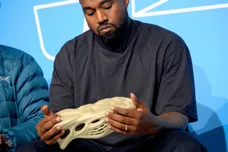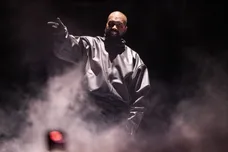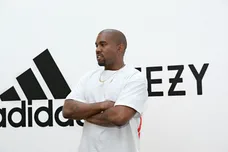
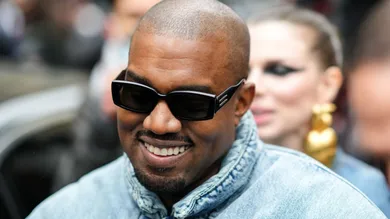


Kanye West and his lawyers, Andrew Cherkasky and Katie Cherkasky, have argued that his support for Adolf Hitler and the Nazis was merely part of his "intentionally provocative and thematically charged" public persona. In turn, they believe the First Amendment should protect him in a Jewish marketing specialist’s workplace discrimination lawsuit.
“The communications she challenges — creative directives, conceptual drafts, provocative imagery, marketing strategy, and staffing decisions shaping a public-facing message — were not collateral to Ye’s art; they were part of its development,” they wrote in an appeal filed on Monday, as obtained by Billboard.
Jane Doe originally sued West in 2024, claiming that he subjected her to “antisemitic vitriol.” In her filing, she referenced messages West allegedly sent her, which include “I am a Nazi” as well as “Welcome to the first day of working for Hitler.”
Addressing the messages in the new filing, West's lawyers further wrote: “For an artist at that level, internal exchanges with a publicist about marketing, imagery and thematic presentation are not ‘private musings’ disconnected from public concern; they are the collaborative process through which expressive works are shaped for public reception."
Kanye West's Apology
The latest filing comes after Kanye West took out a full-page ad in the Wall Street Journal to apologize to the Jewish community for antisemitic antics in recent years. In the letter, West asked for "patience and understanding" while detailing his struggles with his mental health. He also claimed to have suffered neurological damage during his infamous car crash in 2002.
"I lost touch with reality," he admitted. "Things got worse the longer I ignored the problem. I said and did things I deeply regret. Some of the people I love the most, I treated the worst. You endured fear, confusion, humiliation, and the exhaustion of trying to have someone who was, at times, unrecognizable. Looking back, I became detached from my true self." Some fans accused him of apologizing to help the marketing of his next album, Bully. He later denied the claim in a statement to Vanity Fair.