
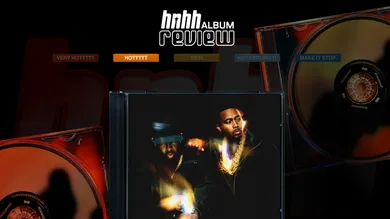


For a rapper whose discography has long been framed as his Achilles heel, Nas has spent the past six years steadily dismantling that narrative. What once felt like a career defined by chasing the impossible standard set by Illmatic has, in the 2020s, become something closer to reclamation. Nasir—his terse, Kanye West–produced 2018 album—now reads like the last truly forced entry in his catalog, less a failure of creative ambition than a mismatch of chemistry. The run that followed, however, told a different story. Across six albums with Hit-Boy, Nas reframed himself not as a legacy act grasping for relevance, but as a veteran sharpening his pen, winning his first Grammy, and proving that longevity in rap doesn’t have to mean dilution.
Still, Illmatic remains both a blessing and a burden. Every Nas album released since 1994 has existed in its shadow, judged not on its own terms but against a debut widely regarded as untouchable. The endless anniversary cycles—20, 25, now 30 years—have only reinforced that fixation, occasionally surfacing a bitterness in Nas that’s understandable. Yet in 2025, there’s also something newly seductive about that era: a longing for hip-hop’s rawness in a post-algorithm, post-genre-collapse landscape where “timeless” feels like a lost language.
That longing is the backbone of Light-Years, the long-anticipated full-length collaboration between Nas and DJ Premier. Released as part of Mass Appeal’s Legend Has It series, the album arrives after a broader movement of reconnecting with hip-hop’s architects. The series has already pulled Slick Rick out of dormancy, reunited Wu-Tang pillars like Raekwon and Ghostface Killah with inspired results, and even ushered in posthumous moments from Big L, Trugoy, and Prodigy. Still, nothing carried the weight of expectation quite like Nas and Premier finally committing to a full project together.
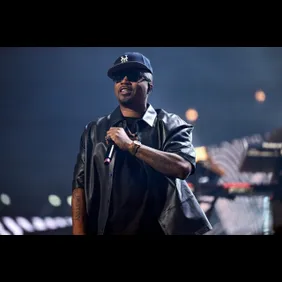
The stakes are high for good reason. Their chemistry is foundational to East Coast rap: “NY State of Mind,” “Memory Lane,” “Represent.” Premier doesn’t just understand Nas—he helped encode his artistic DNA. Unlike Nas’s partnerships with Kanye or Hit-Boy, this collaboration isn’t about reinvention so much as excavation. And that’s both Light-Years’ greatest strength and its most limiting flaw.
Premier’s production is unapologetically rooted in a specific era. His beats rely on straightforward loops and dusty samples that feel lifted intact rather than deconstructed into something new. For crate diggers and oldheads, that’s the appeal. These beats function like museum pieces—carefully preserved, reverent, heavy with history. References to classic hip-hop records are woven throughout, nods that reward listeners fluent in liner notes and WhoSampled rabbit holes, like “Droppin' Science” by Marley Marl feat. Craig G on “Pause Tapes” or Fat Joe and Beastie Boys references intertwining with Steve Miller Band’s “Fly Like An Eagle” on “It’s Time.” But at times, that fidelity curdles into stasis. Tracks like “Welcome to the Underground” feel less like timeless throwbacks than exercises in reenactment.
When it works, though, it really works. “Writers” is a standout, marrying Premier’s jazz-inflected grit with Nas’s deep affection for New York’s unseen architects—graffiti writers, tunnel artists, and underground tastemakers who shaped the city’s cultural fabric. The beat moves like a subway car cutting through darkness, all tension and momentum. “Madman” channels classic Gang Starr energy, complete with scratches that sound tailor-made for Guru, while still giving Nas room to maneuver.
The album’s lone guest highlight comes from AZ on “My Story Your Story,” a reunion that feels almost ceremonial. Since Illmatic, Nas and AZ have shared a rare lyrical symmetry, and here they return to the granular storytelling that made “Life’s a Bitch” immortal. It’s a reminder of how natural this world once felt—and how rarely it’s been replicated with this level of ease.
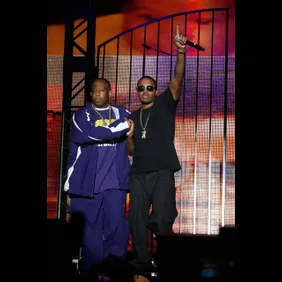
Lyrically, Nas remains committed to vivid, cinematic detail. His pen is still sharp, capable of rendering entire neighborhoods in a few bars. But there’s tension beneath the surface. His depictions of broken, disappearing New York are complicated by his own role in reshaping the city, from controversial development projects to global investments that sit uneasily alongside his street-level nostalgia. “Git Ready” is emblematic of that contradiction, juxtaposing crypto wealth with memories of dreaming about affording a bottle of Moët. It’s technically impressive, but emotionally hollow—Nas catering to crypto-bro aspirations feels like a misuse of a generational voice.
Where the album regains its footing is in Nas’s self-awareness as a performer. On “Nasty Esco Nasir,” he cycles through his past personas with tonal precision, slipping between eras like a rap Dr. Jekyll and Mr. Hyde. That shape-shifting becomes a motif. “New York State of Mind, Pt. III” doesn’t try to recreate the original so much as interrogate the city’s evolution—nightlife landmarks erased, neighborhoods sanitized, Queens residents wary of the casino bids bearing Nas’s name. “Third Childhood,” a sequel to the Stillmatic cut, positions rap veterans as the modern equivalent of legacy rock bands, arguing that hip-hop doesn’t age so much as accumulate.
Ultimately, Light-Years fulfills its mission—but that mission is narrower than decades of anticipation might suggest. This isn’t a masterclass meant to redefine either artist’s legacy. It’s an indulgent exercise in preservation, a love letter to a raw, restless New York that no longer exists in the same way. The album’s aura is unmistakably ’90s: graffiti-scarred trains, flickering streetlights, stoop conversations buzzing with tension and creativity. For listeners who lived in that moment—or mythologize it—this project will feel comforting, even necessary.
But nostalgia cuts both ways. Premier’s production, while impeccable, is rigidly committed to freezing time. And while Nas’s pen rarely falters, the album doesn’t reach the heights of Magic or King’s Disease. Instead, it occupies a parallel lane in his 2020s canon—one where honoring hip-hop’s past takes precedence over pushing it forward. That tension is the gift and the curse of Light-Years. In an era where “underground” often means something unrecognizable to its origins, Nas and DJ Premier choose memory over momentum. They remind us who built the foundation, even if they don’t expand the house. And perhaps that’s the point: ensuring that when future generations look back, they remember the trailblazers—not just the trends.
User Reviews:
HotNewHipHop users rated Nas and DJ Premier's Light-Years 4.38 out of 5 stars based on 20 reviews. Users praised how the duo executed the album in its totality, with one user writing, "Amazing Album. Enjoyable Concepts and lyrics are always." Another one wrote, "still sounding really good three decades later."