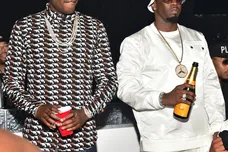


Diddy was one of the biggest names in music for a long time. However, if there is anything that the countless lawsuits and allegations have suggested, it's that he was quite abusive with his powers. Somehow though, there's another way in which the mogul was able to loom large.
According to The Post Millennial, some undercover video footage hears a record executive accuse Diddy of blacklisting musicians. Or he at least had the power to do so says Motti Shulman, former senior VP of Rhythm Promotion at Atlantic Records. The conversation was recorded in secret by O’Keefe Media Group.
Shulman says Diddy would take videos of artists at his parties, potentially the freak-offs, and use that against them if they tried to get better record deals. "[Sean Combs] had more to do than just whether you got a record deal or not, like, he could blacklist you. Especially after you went to one of his parties and it seemed fun, and there were girls and drugs, but now he’s got you on video doing weird sh*t."
But he didn't stop there. Shulman goes on to say that he did work with the Bad Boy CEO at one point. But from the beginning, he didn't like him one bit.
How Was Footage Obtained For Diddy Netflix Series?
"Diddy at his core, is a bad guy. I did work with him. He’s a f*cking a*shole and I knew that from the get go."
As of yet, the incarcerated rapper hasn't responded to the footage. Moreover, there's no verification that this tactic was put to use. But it doesn't mean that people won't continue to view him in a negative light.
Interestingly, though, this new undercover clip surfaces amid questions of how 50 Cent's Netflix docuseries was put together. In Sean Combs: The Reckoning, there's a moment where Diddy speaks to his lawyer, Marc Agnifilo, right before his September 2024 arrest.
Michael Oberlies, Diddy's personal videographer cleared the air as to how that piece of content came to be. "For over two years, we have been working on a project profiling Sean ‘Diddy’ Combs. The footage in question was not released by me or anyone authorized to handle Sean Combs’ materials; it was by a third party who covered for me for three days while I was out of state. This incident had nothing to do with any fee dispute or contract issue. The actions of the parties involved reflect the lack of integrity every storyteller should uphold. Taking footage intended for our project to advance a narrative that was not our own is both unethical and unacceptable."