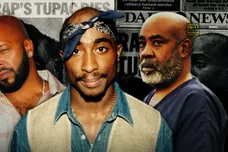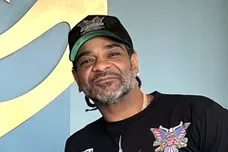


A witness whose reluctant testimony became one of the tensest moments of Duane “Keffe D” Davis’ murder trial is now facing a credibility attack from outside the courtroom. Suge Knight told TMZ Live that James “Mob James” McDonald never worked for him or Death Row Records, disputing part of the background McDonald gave jurors while testifying about the night Tupac Shakur was shot. Knight also accused McDonald of being an FBI informant, though TMZ did not report evidence supporting that allegation.
Knight argued that McDonald’s supposed ties to Death Row would have left a visible trail. “If he did work for me, he would've had a Death Row chain. He would've had a ring,” Knight told TMZ, adding that photographs would show McDonald around the label’s circle if his account were accurate. The distinction between the jobs described in court, however, is important. McDonald testified that he was working as head of security for Knight’s Club 662 in Las Vegas on September 7, 1996. Reggie Wright Jr., who followed him to the stand, identified himself as Death Row Records’ head of security.
Read More: Tupac Murder Trial: Everything You Need To Know About Keefe D's Case
Differing Accounts Of One Of Hip Hop's Greatest Msteries
McDonald’s value to the case comes from his position within the orbit surrounding Knight, Death Row, and the Mob Piru Bloods. He told jurors that he was at Club 662 on the night Shakur was shot and was not present at the shooting itself. His testimony instead dealt with the atmosphere surrounding the rival factions and what unfolded in Compton afterward. McDonald said violence escalated after Shakur’s death and testified that Orlando Anderson, Davis, and others became targets as tensions spread between neighborhoods.
Getting that testimony out of him was another matter. McDonald repeatedly made clear that he had appeared only because he was subpoenaed, at one point telling attorneys to treat him as a hostile witness. He also addressed Davis directly from the stand, saying, “I don’t want to send you to prison, even though we don’t like each other.” When questioning moved toward who he believed participated in Shakur’s killing, McDonald resisted giving names and complained that the attorneys were pushing him toward answers he did not want to provide.
The clash over McDonald’s history lands in a trial already centered heavily on credibility. Prosecutors allege Davis helped organize the September 1996 shooting as retaliation after Shakur and members of his entourage attacked Davis’ nephew, Orlando Anderson, at the MGM Grand. They say Davis later described his own role in interviews and his 2019 memoir, including handing a gun to men riding in the back of the white Cadillac involved in the attack. Davis’ defense has taken the opposite approach, arguing that his public accounts were exaggerated and cannot be sufficiently corroborated.
Read More: Witness Testifies 'All Hell Broke Loose' During Tupac Shooting
Davis has pleaded not guilty to murder with a deadly weapon with the intent to promote, further or assist a criminal gang. Prosecutors are continuing to present their case in Clark County District Court, where a conviction could result in life in prison.