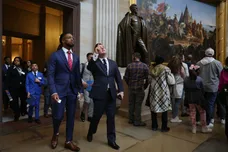
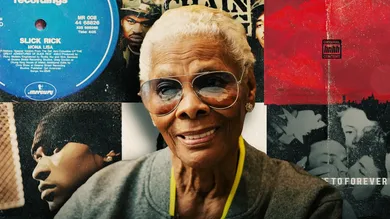


The relationship between Hip Hop and soul music runs deep, with generations of producers turning to earlier recordings for inspiration. Dionne Warwick's catalog has been part of that tradition for decades, although her connection to the culture hasn't always been strictly musical. In the 1990s, she famously confronted Snoop Dogg and Tupac Shakur over misogynistic lyrics, inviting them to her home to discuss how their music portrayed women. By 2020, she was entertaining a younger generation on Twitter, questioning Chance the Rapper and The Weeknd about their stage names. Chance welcomed the attention, and their exchange eventually led to a musical collaboration. Warwick's online humor also extended to Billie Eilish, whom she mistakenly called "William Eyelash", much to the internet's amusement.
The 85-year-old singer's recent health concerns have offered another reason to revisit her contributions to music. After canceling an October 2026 Carnegie Hall appearance because of leg and foot pain, Warwick's representative confirmed she was feeling better. Her influence on Hip Hop is particularly worth examining, considering how many familiar Rap tracks have borrowed from songs she recorded decades earlier. Some feature her actual performances, while others sample reinterpretations by fellow Soul artists. Moving from Slick Rick's "Mona Lisa" to Doja Cat's "Paint The Town Red," Warwick's music has found its way into records that sound remarkably different from the originals.
"Walk On By" (1964): One Soul Classic, Two Hip Hop Legacies
A broken heart gave Hip Hop one of its most enduring samples. Written by Burt Bacharach and Hal David, "Walk On By" became a defining hit for Warwick in 1964, with its restrained delivery of romantic disappointment offering plenty for later musicians to reinterpret. The song found an early home in Rap through Slick Rick's 1988 classic "Mona Lisa," which sampled Warwick's recording for a far less sentimental tale about a woman he meets at a pizza shop. Rick has never hidden his admiration for the singer. Speaking with NME, he acknowledged using "Walk On By" and compared Warwick to a female Frank Sinatra.
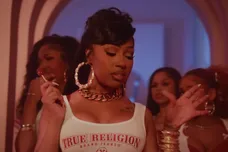
Her original recording would continue finding its way into Hip Hop, including Logic's 2013 track "Walk On By." A decade later, Doja Cat brought Warwick's voice to an entirely different audience with "Paint The Town Red," the Grammy-nominated single from her 2023 album Scarlet. Producer Earl on the Beat told REVOLT that he first heard Warwick when he sampled her on Usher's "Throwback." That discovery led him to explore her catalog and eventually produce the instrumental that became Doja's hit. Warwick welcomed the sample, praising younger musicians for listening to the music of earlier generations. She later admitted to Entertainment Tonight that she hadn't known who Doja was until her granddaughter told her about the record.
Read More: Dionne Warwick Reveals Why She Didn't Enjoy Kendrick Lamar's "Not Like Us"
However, another version of "Walk On By" had already established its own remarkable history in Hip Hop. Isaac Hayes transformed the composition into a sprawling, nearly 12-minute soul arrangement for his 1969 album Hot Buttered Soul. His interpretation replaced much of Warwick's understated elegance with dramatic orchestration and a heavier groove, giving producers an entirely different recording to work with. Compton's Most Wanted sampled Hayes' version on "Hood Took Me Under" in 1992, followed by The Notorious B.I.G. on "Warning" in 1994 and 2Pac featuring Dramacydal on "Me Against The World" in 1995. The connection continued through Foxy Brown's "Chyna Whyte" and MF DOOM's "Dead Bent" in 1999, before Wu-Tang Clan enlisted Hayes himself for "I Can't Go To Sleep" in 2000. These recordings sampled Hayes' performance rather than Warwick's original, illustrating how one composition developed separate musical histories through two distinctive interpretations.
"Anyone Who Had A Heart" (1963): From Heartbreak To Black Star
The emotional weight of Warwick's music didn't escape the producers shaping underground Hip Hop. Her 1963 recording of "Anyone Who Had A Heart," another Burt Bacharach and Hal David composition, became the foundation for "Know That," featuring Mos Def and Talib Kweli. Produced by Ayatollah, the track appeared on Mos Def's acclaimed 1999 debut, Black On Both Sides. Rather than borrowing the song's romantic subject matter, Ayatollah reworked Warwick's recording into a backdrop for the two Brooklyn emcees to trade verses about their lyrical abilities and standing in Hip Hop. The contrast between Warwick's pleading original and the rappers' self-assured delivery gave the sample an entirely different purpose.
The song resurfaced in CyHi The Prynce's "Napoleon," another recording built around Warwick's original. Its appearance in CyHi's catalog reinforced the enduring appeal of her early material among lyric-focused rappers. Both recordings drew on a song Warwick helped turn into a major 1960s hit, showing how producers could repurpose a familiar vocal performance without carrying over the story it originally told.
"Make It Easy On Yourself" (1963): A Different Kind Of Love Story
The complicated history of "Make It Easy On Yourself" began well before it reached Hip Hop. Warwick originally recorded the Burt Bacharach and Hal David composition as a demo, expecting it to become her debut single. Instead, Jerry Butler released the song in 1962, while Warwick's version appeared on her 1963 debut album, Presenting Dionne Warwick. Nearly four decades later, producer Ayatollah sampled her recording for Masta Ace's 2001 album Disposable Arts, "Hold U," featuring Jean Grae.
The sample becomes part of a playful exchange about romantic commitment. Ace describes falling for a woman he initially thought was out of his league, only to discover that maintaining the relationship comes with its own complications. Warwick's familiar plea to make a breakup easier briefly enters the conversation, but Ace ultimately decides he'd rather stay. Jean Grae adds the woman's perspective, turning what could have been a straightforward love song into a conversation between two people who aren't always seeing eye to eye. Warwick's recording also resurfaced on Stack Bundles' "Breaking Up," cataloged as a 2019 release, though the late rapper's death in 2007 means the recording predates that listing.
"Do You Know The Way To San Jose" (1968): From Pop Classic To Bay Area Rap
The search for success in California gave Warwick another unlikely connection. Her 1968 hit "Do You Know The Way To San Jose," written by Burt Bacharach and Hal David, tells the story of someone reconsidering the pursuit of Hollywood fame. Two decades later, San Jose rapper MC Twist found a different use for the song, incorporating Warwick's recording into "I Like It Loud" from his group's 1989 album Comin' Thru Like Warriors. The connection was especially fitting given Twist's hometown, although the finished track sounded considerably different from Warwick's breezy original.
Released through Luke Skyywalker Records, "I Like It Loud" became part of the Bay Area's lesser-known early Rap history. KQED highlighted the record in its retrospective on San Jose's underground scene, noting how Twist and his collaborators incorporated Warwick's familiar recording into their production. He returned to the sample on 1990's "Cold Chillin' In San Jo," once again borrowing from a song that had put his hometown into the national musical conversation.
"We Can Work It Out" (1969): From The Beatles To Wu-Tang
The Beatles probably weren't anticipating a Wu-Tang Clan connection when they released "We Can Work It Out" in 1965. John Lennon and Paul McCartney wrote the song, and it became one of the group's most recognizable hits before Warwick recorded her own interpretation for her 1969 album Soulful Dionne. Her version brought a distinctly soulful approach to the British pop composition, which would eventually surface in a considerably harder-edged setting.
Thirty years later, U-God incorporated Warwick's recording into "Rumble," featuring Method Man, Inspectah Deck, and Leatha Face, from his 1999 solo debut, Golden Arms Redemption. The track samples Warwick's "We Can Work It Out" alongside Queen's "Another One Bites the Dust," bringing together two unlikely sources within the same production. It's a fitting example of how far Warwick's recordings traveled beyond their original audience, especially when a Beatles composition could find its way into Wu-Tang's catalog through her interpretation.
"You're Gonna Need Me" (1973): From J Dilla To A New Generation Of R&B
There's something particularly satisfying about hearing Warwick tell someone they'll regret losing her, especially when a producer knows exactly what to do with that warning. Her 1973 recording of "You're Gonna Need Me" from Just Being Myself became a favorite among musicians. Just Blaze brought the song into the 2000s with "Throwback," from Usher's 2004 blockbuster Confessions. The production paired Warwick's original performance with Usher's account of a relationship he wanted back, creating a memorable contrast between regret and romantic confidence.
J Dilla took a different approach on "Stop!" from his 2006 instrumental album Donuts. He chopped Warwick's vocals into a hypnotic loop, repeatedly returning to her warning that someone would eventually need her again. The song also incorporates fragments of Jadakiss and other Rap recordings, giving Warwick's voice an unexpected setting. Released just three days before Dilla's death, Donuts has since become one of Hip Hop's most celebrated instrumental albums.
Warwick's influence returned to contemporary R&B in 2023 when Chlöe Bailey and Chris Brown released "How Does It Feel". Produced by Hitmaka and Cardiak, the duet revisited "You're Gonna Need Me" while drawing on the musical approach established by Usher's "Throwback." The recording also had an unexpected connection to Doja Cat's "Paint The Town Red." Producer Earl on the Beat told REVOLT that hearing Usher's record inspired him to investigate Warwick's catalog. "I was thinking, 'This is a good a** voice. Who is this?'" he recalled. His search eventually led him to "Walk On By," which, as we already know, he sampled for Doja's hit nearly two decades after "Throwback" was released.
"Move Me No Mountain" (1975): A Soulful Connection To Southern Rap
Southern Rap found another piece of Warwick's catalog worth revisiting with "Move Me No Mountain," a soulful declaration of devotion from her 1975 album Then Came You. Barry White's vocal group Love Unlimited originally recorded the song in 1974, but Warwick, under producer Jerry Ragovoy, gave it a different treatment. Her version eventually appeared in Big K.R.I.T.'s "Egypt Cotton" from his 2014 mixtape King Remembered In Time. The Mississippi rapper and producer sampled Warwick's recording, drawing on the warmth of her vocals for a track rooted in his soulful production style.
Warwick's rendition also appeared in Premo Rice's 2019 track "Silk Sh*t," another recording that borrowed from "Move Me No Mountain". Although the two artists approached the sample differently, both reached beyond Warwick's best-known hits to find material in her 1970s catalog. The connection also stretches to CyHi The Prynce, whose 2012 track "James Harden" sampled the same track.
Read More: Dionne Warwick Asks Saweetie About Her Name: “Why Is It Not Sweetie?”
Warwick's relationship with Hip Hop has always involved more than lending her voice to the occasional sample. She's never hesitated to challenge artists when she disagreed with their message, as Snoop Dogg learned during their famous meeting in the 1990s. Reflecting on the encounter decades later, Warwick explained that the rappers' willingness to hear her out wasn't about intimidation. "No, that is the power of respect," she said, emphasizing their openness to learning from her perspective.
The exchange speaks to something Warwick herself has come to appreciate about sampling. Younger artists are finding new possibilities in recordings that were already classics before many of them were born, and their audiences are discovering the originals in return. As she explained while celebrating Doja's single, "I'm thrilled that you're discovering us, that you're keeping us alive." Her enthusiasm reflects a relationship with Hip Hop that has endured for decades, with each new sample introducing Warwick's music to listeners who might otherwise never have encountered her original recordings.
Read More: Billie Eilish Called "William Eyelash" By Dionne Warwick & Twitter Can't Handle It